

BoJ’s Ueda: There is uncertainty on how far we can eventually raise interest rates
โดย Dhwani Mehta
วันที่เผยแพร่: 4 Dec 2025 | วันที่แก้ไข: 4 Dec 2025


บทความยอดนิยม
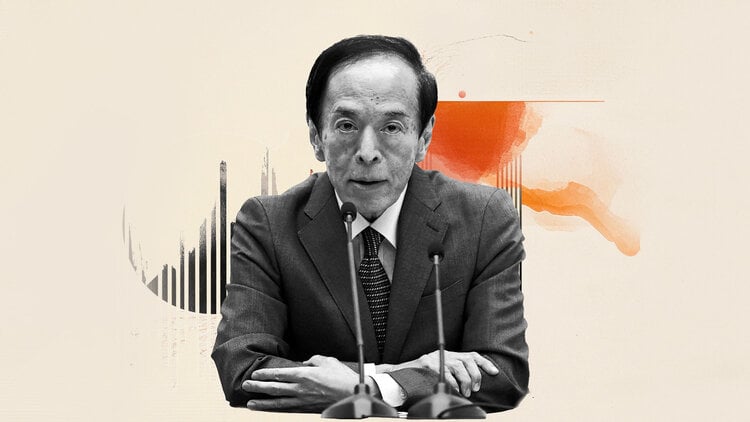
Bank of Japan (BoJ) Governor Kazuo Ueda said on Thursday, “there is uncertainty on how far we can eventually raise interest rates.”
Bank of Japan (BoJ) Governor Kazuo Ueda said on Thursday, “there is uncertainty on how far we can eventually raise interest rates.”
Additional comments
We are working on narrowing our estimate on neutral interest rate, will disclose findings if we can successfully do so.
For now, we have to work with our current estimate set in a fairly wide range.
There is uncertainty on how far we can eventually raise interest rates.
Current monetary conditions still accommodative.
Govt's economic package likely to push up economic growth.
Package will likely work both ways in terms of impact on inflation.
Market reaction
At the time of writing, USD/JPY is inching 0.09% higher on the day to trade at 155.46.
Bank of Japan FAQs
The Bank of Japan (BoJ) is the Japanese central bank, which sets monetary policy in the country. Its mandate is to issue banknotes and carry out currency and monetary control to ensure price stability, which means an inflation target of around 2%.
The Bank of Japan embarked in an ultra-loose monetary policy in 2013 in order to stimulate the economy and fuel inflation amid a low-inflationary environment. The bank’s policy is based on Quantitative and Qualitative Easing (QQE), or printing notes to buy assets such as government or corporate bonds to provide liquidity. In 2016, the bank doubled down on its strategy and further loosened policy by first introducing negative interest rates and then directly controlling the yield of its 10-year government bonds. In March 2024, the BoJ lifted interest rates, effectively retreating from the ultra-loose monetary policy stance.
The Bank’s massive stimulus caused the Yen to depreciate against its main currency peers. This process exacerbated in 2022 and 2023 due to an increasing policy divergence between the Bank of Japan and other main central banks, which opted to increase interest rates sharply to fight decades-high levels of inflation. The BoJ’s policy led to a widening differential with other currencies, dragging down the value of the Yen. This trend partly reversed in 2024, when the BoJ decided to abandon its ultra-loose policy stance.
A weaker Yen and the spike in global energy prices led to an increase in Japanese inflation, which exceeded the BoJ’s 2% target. The prospect of rising salaries in the country – a key element fuelling inflation – also contributed to the move.

ผู้ใช้กว่าหนึ่งล้านคนพึ่งพา FXStreet สำหรับข้อมูลตลาดเรียลไทม์ เครื่องมือกราฟ การวิเคราะห์จากผู้เชี่ยวชาญ และข่าวฟอเร็กซ์ ปฏิทินเศรษฐกิจที่ครอบคลุมและเว็บบินาร์การศึกษาช่วยให้เทรดเดอร์ทันเหตุการณ์และตัดสินใจอย่างรอบคอบ FXStreet มีทีมงานประมาณ 60 คน แบ่งระหว่างสำนักงานใหญ่บาร์เซโลนาและภูมิภาคต่าง ๆ ทั่วโลก
อ่านเพิ่มเติม








