[TMGM Financial Breakfast] Fed Turns More Hawkish, but Gold Holds Firm Amid Bearish Pressure
The Federal Reserve kept its benchmark interest rate unchanged at 3.5%–3.75% during its April policy meeting, in line with market expectations. However, the meeting stood out for its increasingly hawkish tone and rare internal divisions among policymakers.
Notably, the meeting saw four dissenting votes—the highest since October 1992—with three officials advocating for a rate hike. These hawkish members pushed to remove language in the policy statement regarding the pace and timing of future rate adjustments. Instead, they favored clearer guidance that the next move could be either a rate hike or a cut, effectively weakening expectations of one-sided monetary easing and underscoring heightened concerns over inflation risks.

Compared with the March meeting, more policymakers supported adjustments toward a hawkish stance. The Fed also highlighted the broad and uncertain implications of geopolitical tensions in the Middle East, stressing that it would wait for clearer signals on the balance between inflation and employment before altering its policy path.
Fed Chair Jerome Powell emphasized that energy supply shocks pose dual risks to the Fed’s mandate of maximum employment and price stability. He noted that the current policy stance is sufficient to address these challenges, signaling that the Fed will not rush into easing in response to growth pressures and will instead maintain a cautious, data-dependent approach.
Despite the combination of hawkish signals, rising Treasury yields, and a stronger U.S. dollar, gold prices have remained notably resilient. Markets had already priced in fading expectations for rate cuts, and while the Fed’s hawkish tone was strong, it did not exceed expectations. This has led to a “sell the rumor, buy the fact” dynamic, where bearish pressure has largely been absorbed.
Ongoing geopolitical risks in the Middle East and uncertainty surrounding energy supply continue to support gold through safe-haven demand, partially offsetting the impact of higher interest rates. In addition, global central banks are continuing to diversify reserves, with countries such as China steadily increasing gold holdings, providing longer-term support and limiting downside risks.
Market Analysis:
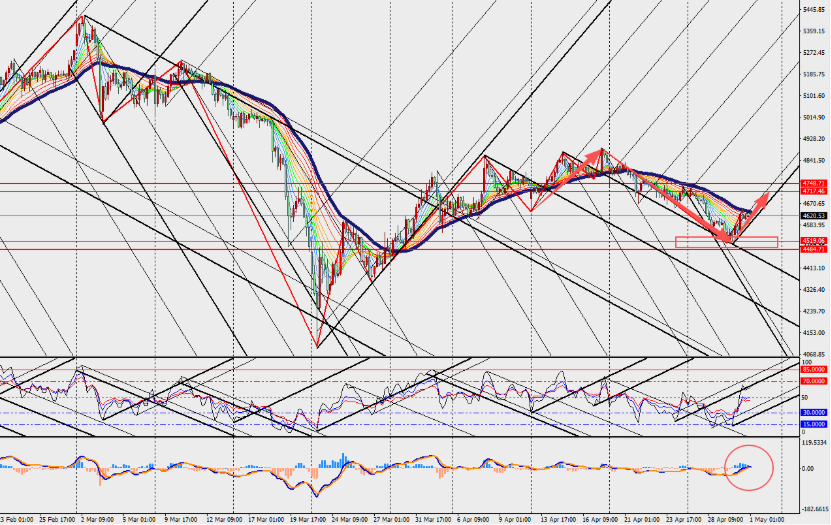
On the four-hour chart, gold is showing a gradual rebound, with the MACD indicator hovering near the zero line and momentum declining. Investors are increasingly weighing the long-term view that high interest rates will eventually weigh on economic growth. While rate cuts may be delayed in the short term, expectations for eventual monetary easing remain intact. Should economic data weaken or inflation ease, gold prices could rebound quickly, prompting some investors to position early and support current price levels.