[TMGM Financial Breakfast] Top Wall Street Institutions Converge: Gold Prices Could Jump Another 20% by 2026
Wall Street believes that the record-breaking rally in gold seen this year is likely to extend into 2026, with many institutions forecasting that prices could rise by as much as another 20% in 2026.
Bank of America noted in a recent report that the structural forces pushing gold higher are expected to remain in place next year. These include the US’s widening fiscal deficit and President Trump’s unconventional macro policy agenda. Although gold has seen a pullback recently, from a long-term perspective it remains an under-owned asset.

Goldman Sachs expects the two main drivers that supported gold this year to continue into next year.
The first is stronger central bank buying. After Russia’s foreign exchange reserves were frozen following the outbreak of the Russia-Ukraine conflict in 2022, reserve managers around the world were shocked. They now feel a greater urgency to diversify into gold as a truly safe asset, especially gold stored in their own domestic vaults.
The second is global rate cuts by central banks. The Federal Reserve is expected to cut rates by around 75 basis points next year, which would stimulate investment demand for gold. Other major central banks are also expected to ease policy in sync. Rate cuts tend to push up inflation expectations, and investors are likely to flock into gold to hedge against the depreciation of fiat currencies.
Private investors are also set to provide an additional tailwind for gold, particularly via the “currency devaluation trade”: as the US dollar and other fiat currencies weaken, USD-denominated assets lose value. The key upside potential from private-sector portfolio diversification lies in the relatively small size of the gold market. The total gold ETF market is only about one-seventieth the size of the US Treasury market. This is a core reason why we view gold as one of our most preferred long commodity trades.
Deutsche Bank Research points out that although there has been a recent correction, fund flows have largely stabilized, and several technical signals suggest that the position adjustment phase is largely complete. However, if equity markets experience a deeper correction, the Fed cuts by less than expected, or geopolitical tensions ease, gold prices could come under pressure.
Market Commentary:
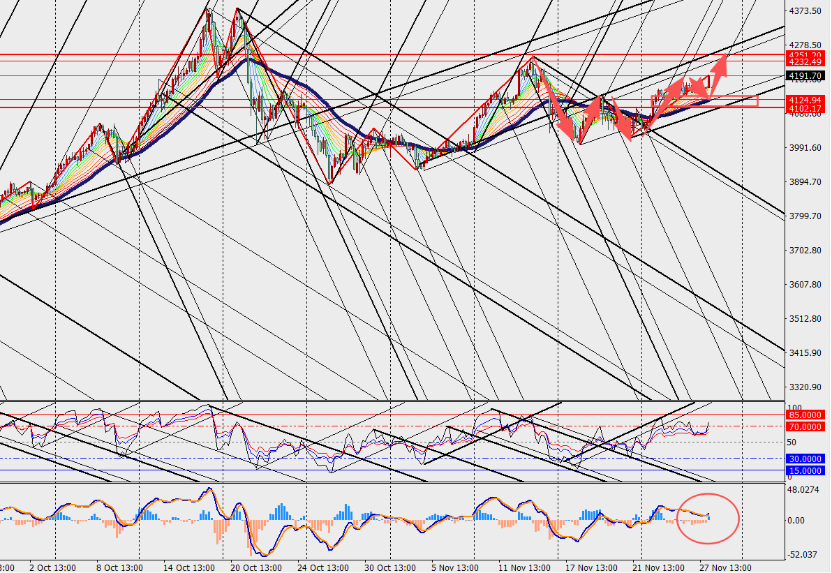
On the 4-hour chart, gold has resumed its rise, with the MACD lines and histogram expanding above the zero line. The prospect of a sharp and lasting shift in the global geopolitical landscape, together with a more assertive wave of nationalism, financial market turbulence, and growing questions over the Fed’s independence and monetary policy framework, are all factors that could continue to drive gold prices higher over the medium to long term.