Gold Crashes to Two-Month Low! Renewed US-Iran Conflict and Fed Rate Hike Fears Deliver Double Blow — Is Gold’s Rebound About to Fade Early?
Trump’s hawkish remarks cast fresh doubt over the prospects for a peace agreement, while a stronger US dollar added further pressure on gold. Within just a single day, bullish sentiment surrounding gold was severely shaken, as markets shifted from earlier safe-haven optimism toward renewed concerns over inflation and monetary tightening. This latest decline was not an isolated event, but rather the combined result of escalating Middle East geopolitical tensions and a sharp shift in US monetary policy expectations. Investors are now turning their focus toward upcoming US April PCE inflation data, durable goods orders, and weekly jobless claims figures. Although gold remains under short-term pressure, the metal still retains long-term safe-haven value amid persistent geopolitical risks and structural inflation concerns.

The Middle East situation remains the primary driver of current gold price movements. Since the United States and Israel launched strikes against Iran, the conflict has now lasted three months. The effective blockade of the Strait of Hormuz — one of the world’s most critical energy routes — has directly pushed Brent crude prices higher, feeding through into broader global inflation pressures. Markets initially held some optimism that the conflict could end quickly, but that optimism is now fading rapidly.
Iranian state television previously reported that both sides planned to restore shipping through the Strait of Hormuz to pre-war levels within one month under a framework agreement jointly managed by Iran and Oman, while also calling for US military withdrawal from surrounding regions. The report briefly helped gold recover part of its earlier losses. However, President Trump quickly dismissed the reports as “completely fabricated” and responded with a hardline stance, stating that no one could control the international waterway and warning that Oman “must follow the rules” or potentially face severe consequences. Trump also emphasized that the United States is unwilling to ease sanctions on Iran, would not allow Russia or China to take control of Iran’s highly enriched uranium stockpile, and insisted that no major concessions would be made on nuclear issues.
These sharply conflicting positions suggest that a peace agreement remains far from reality. Trump even attempted to link a future war-ending agreement to expanding participation in the Abraham Accords, but several countries reportedly rejected the proposal. The prolonged conflict is not only sustaining expectations of tighter global energy supply, but is also weakening gold’s traditional safe-haven appeal, as investors increasingly fear that prolonged uncertainty may evolve into long-term inflation rather than temporary defensive demand. Gold has historically been viewed as a hedge against inflation, but in a high-interest-rate environment, its non-yielding nature leaves it vulnerable to pressure. Markets are now broadly betting that energy-driven inflation will force the Federal Reserve to raise rates by 25 basis points before year-end.
Federal Reserve Governor Lisa Cook stated in her latest remarks that keeping interest rates unchanged remains the correct policy decision for now, but emphasized that the Fed stands ready to raise rates if necessary. She specifically pointed to tariffs, rising oil prices caused by the Iran conflict, and surging AI-related investment as factors collectively driving prices higher.
Gold is currently facing pressure from two directions simultaneously. On one side, unresolved geopolitical tensions are causing fluctuations in safe-haven demand. On the other, the possibility of future Fed rate hikes is driving real interest-rate pressure higher. A stronger US dollar and relatively stable Treasury yields are also adding additional downside pressure on gold.
Market Analysis:
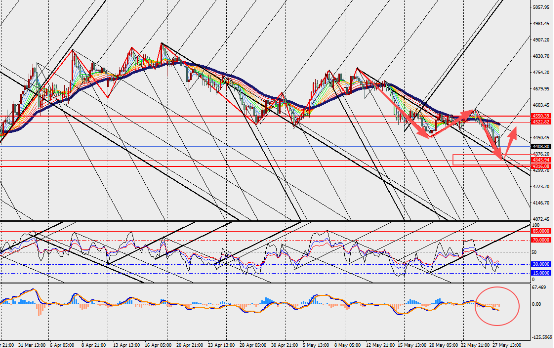
Gold declined again on the 4-hour chart timeframe, while both the MACD lines and histogram continued expanding below the zero axis. However, gold has not completely lost its support base. If US-Iran negotiations fully collapse and the Strait of Hormuz remains blocked for an extended period, causing oil prices to return to triple-digit levels, inflation expectations could spiral further out of control. Under such a scenario, gold’s role as the ultimate safe-haven asset could once again become highly attractive.