




Four Big Catalysts Are About to Hit—Brace for a Wild Ride! “Super Week” Preview (Oct 27–31): Roller-Coaster Risk Alert! How Will US-China Talks, a Fed Rate Cut, Big Tech Earnings, and NVIDIA’s GTC Conference Steer the Market?
Focus 1: A US-China “Framework Agreement” Lifts Risk Appetite—But Risks Remain
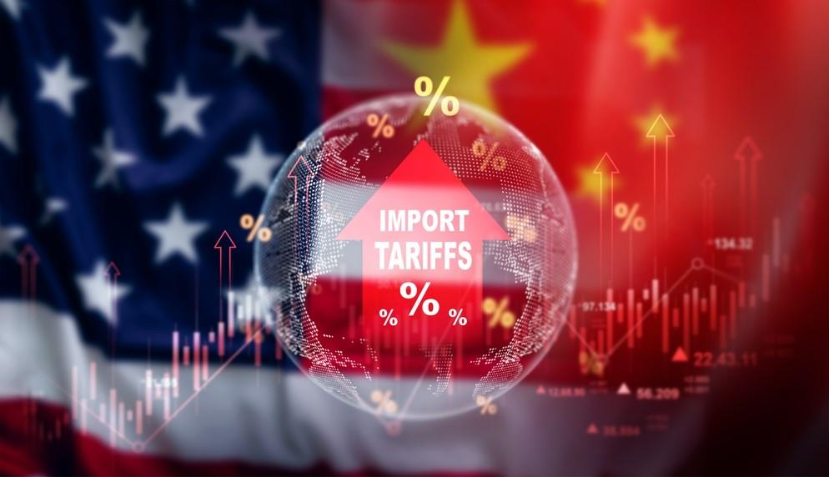
Over the weekend, the U.S. and Chinese economic/trade teams signaled they had reached agreement on a “preliminary framework” to resolve core trade issues. The contents reportedly include, among other items, the U.S. postponing plans to levy 100% tariffs on Chinese goods, and China delaying export controls on rare-earth minerals and magnetic materials. This upbeat signal significantly buoyed sentiment.
Futures: Equity index futures gapped higher at the open in Asia, reflecting optimism over easing tensions between the world’s two largest economies.
Commodities & Crypto: Risk assets broadly strengthened. Crude oil rose on improved global demand prospects. Crypto also climbed—typical when expectations for easier macro liquidity or risk-on appetite improve.
Gold: Gold also advanced, partly due to a slight pullback in the U.S. Dollar Index as haven demand eased. Markets may also expect normalized trade relations to help relieve global supply-chain pressures, clearing a path for a more accommodative Fed (rate cuts), which is supportive for gold.
That said, markets are trading on expectations. The key risk lies in the framework’s substance. According to Li Chenggang—Vice Minister of Commerce and China’s international trade negotiator—there is still uncertainty over the final outcome. While he noted “preliminary consensus” on multiple issues, he also stressed that “the U.S. side’s stance is tough and China is firm in defending its interests,” a sign both sides remain at loggerheads.
If the details released this week (e.g., the exact scope of tariff relief and enforcement mechanisms) fall short of expectations—or if talks hit a snag—the current optimism could quickly reverse. Markets that have partially priced in good news may face “buy the rumor, sell the news” pressure, or even a sharp setback on disappointment.

Focus 2: The Fed Decision—A 25 bp Cut Looks Locked In, But There’s Much More to Watch
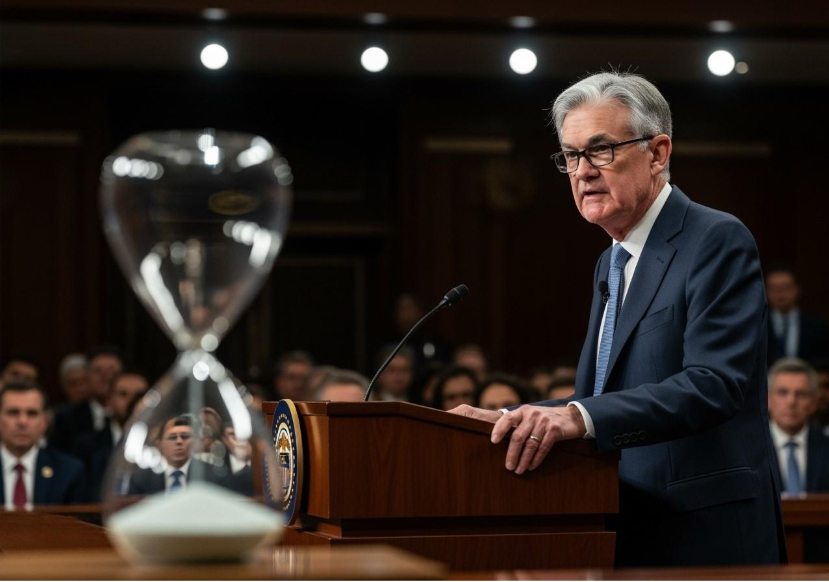
The FOMC meets Tuesday–Wednesday (ET). The statement is due 2:00 a.m. Beijing Time on Oct 30, with Chair Powell’s press conference at 2:30 a.m. the same day.
According to CME “FedWatch,” fed funds futures currently assign 90%+ odds to a 25 bp cut. With that largely priced, volatility may hinge on:
QT (balance-sheet runoff):
A Huatai Securities report suggests recent quantity/price indicators have hit the threshold where the Fed could halt QT. Powell may even announce a stop to runoff at this meeting. Ending QT would mark a key turning point in the dollar-liquidity tightening cycle and could stabilize or improve USD liquidity—potentially a medium- to long-term tailwind for risk assets.
Internal divisions:
Watch how Powell balances concerns over a cooling labor market with vigilance on persistent inflation, and whether the path for future cuts is clearly communicated. The September dot plot showed notable dispersion: of 19 participants, 9 favored at most one more cut this year, while 7 preferred no further cuts.
Inflation composition:
Some officials worry services inflation remains sticky—for instance, non-housing core services inflation has exceeded 3% year-over-year for four straight months. Such “stickiness” is a key reason for cautious easing.
Government shutdown & data gaps:
A prolonged U.S. government shutdown has disrupted many official data releases, complicating the Fed’s assessment. In this context, the Fed may lean more on high-frequency series (e.g., initial jobless claims) and regional Fed surveys. Powell may explain how the Fed assesses the economy during data outages.
Focus 3: Five Mega-Cap Tech Earnings Roll In
This week is the heart of Q3 earnings season. The five tech giants—whose combined market cap is roughly a quarter of the S&P 500—report results. Given AI-driven valuations, their prints and Q4 guidance are the litmus test for whether the market can keep climbing.
Meta — After market, Oct 29 (ET)
AI ROI: Can robust ads growth justify massive AI spend?
Revenue & profits: Street looks for about $49.4B revenue—can high growth persist? Also watch cost controls.
New hardware: Early read-through on the late-September AI smart glasses launch.
Microsoft — After market, Oct 29 (ET)
Cloud growth: Spotlight on “Intelligent Cloud” revenue; y/y growth expected 25%+.
Segment trends: Productivity & Business Processes; More Personal Computing.
Outlook: Color on forward guidance.
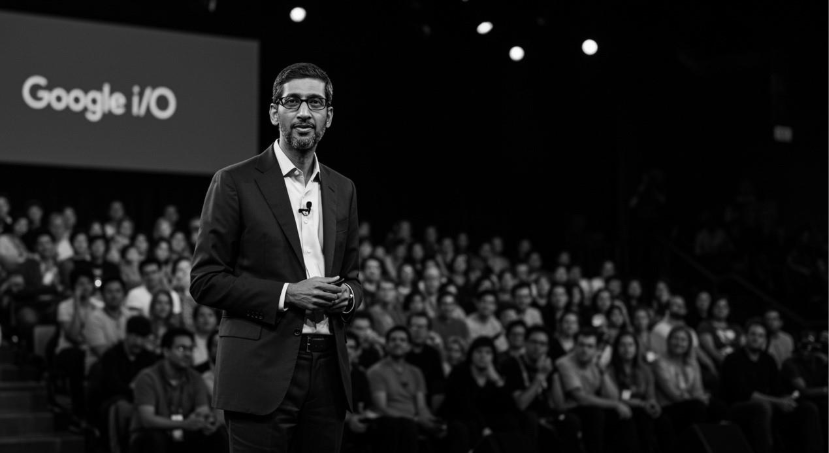
Alphabet — After market, Oct 29 (ET)
Cloud & AI: Progress with Google Cloud and tie-ups like Anthropic; enterprise AI integration.
Financials: Street expects ~$84.6B Q3 revenue.
Amazon — After market, Oct 30 (ET)
AWS & ads: The two high-margin pillars; last quarter AWS +17.5%, ads +23%.
Capex & FCF: Heavy capex pressure on FCF (down from $53B a year ago to $18.2B).
Valuation: Shares have lagged this year, but cloud and ads growth keep the multiple compelling.

Apple — After market, Oct 30 (ET)
iPhone 17 early read: This quarter will include ~10 days of iPhone 17 sales—first key gauge of the cycle.
Services resilience: High-margin engine; can y/y double-digit growth hold? App Store spend may slow, but subscriptions (iCloud+, AppleCare+, etc.) could offset.
Tariff costs: Prior guidance embedded $1.1B in tariff costs—confirm the actual gross-margin hit.
Forward guide: More important than the print is management’s view for FY2026 Q1—holiday-season demand and new iPhone momentum.
With rates expectations turning more dovish, growth hopes for tech are lofty. A cautious Q4 guide from any one of the giants—hinting at macro softness—could spark sharp sector-wide selling.
Focus 4: AI Weathervane—NVIDIA GTC (Washington, D.C.)
For the first time, NVIDIA is hosting GTC Oct 27–29 in Washington (GTC DC), with a heavy political tint in themes and guests.
Key takeaway: Policy–industry convergence
The agenda centers on U.S. leadership in global AI innovation. The crux is how NVIDIA links its tech roadmap (AI infrastructure, robotics, quantum, etc.) with U.S. industrial policy.
Jensen Huang’s keynote—“How NVIDIA Helps U.S. Tech Drive Global Innovation”—underscores the message. The guest list includes officials from the U.S. Department of Energy, state governments, and members of Congress—quite a shift from supplier-heavy rosters of past events—highlighting NVIDIA’s push to deepen ties with policymakers.
Market impact & expectations
While this D.C. edition may not debut blockbuster products like the March GTCs typically do, its policy signaling matters. Some analysts believe the D.C. venue is meant to cement NVIDIA’s primacy in U.S. AI infrastructure build-out. Any positive hints on policy support or partnership plans could bolster long-term confidence in NVIDIA, its ecosystem, and the broader AI complex.













