Forex Today: Focus remains on US-Iran news as markets await Warsh testimony
Ni Eren Sengezer
Na-update: 21 Apr 2026


Sikat na Artikulo
Here is what you need to know on Tuesday, April 21:
Here is what you need to know on Tuesday, April 21:
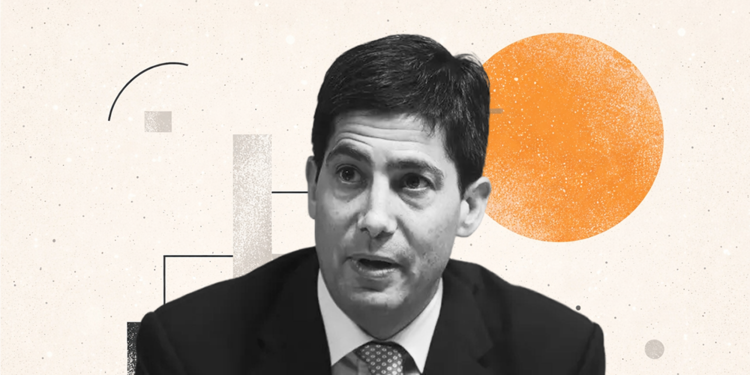
Financial markets stay relatively quiet early Tuesday following Monday's choppy action. Investors await clarity on the next round of talks between the United States (US) and Iran, while gearing up for Kevin Warsh's testimony, United States (US) President Donald Trump’s nominee to lead the Federal Reserve (Fed).
President Trump said on Monday that an extension to the US-Iran ceasefire, which is due to expire on Wednesday, was "highly unlikely." Although there are reports suggesting that the second round of talks between the US and Iran could take place before the deadline, Mohammed Bagher Ghalibaf, Iran’s chief negotiator and parliament speaker, said that they will not accept negotiations "under the shadow of threats,” and added that they have been preparing “to reveal new cards on the battlefield.” US news outlets report that Vice President JD Vance is set to travel to Pakistan on Tuesday but the Iranian side is yet to confirm that they will be sending a delegation.
US Dollar Price Today
The table below shows the percentage change of US Dollar (USD) against listed major currencies today. US Dollar was the strongest against the Australian Dollar.
| USD | EUR | GBP | JPY | CAD | AUD | NZD | CHF | |
|---|---|---|---|---|---|---|---|---|
| USD | 0.14% | 0.12% | 0.06% | 0.04% | 0.25% | -0.28% | 0.12% | |
| EUR | -0.14% | -0.01% | -0.06% | -0.11% | 0.11% | -0.43% | -0.01% | |
| GBP | -0.12% | 0.01% | -0.04% | -0.07% | 0.12% | -0.41% | 0.00% | |
| JPY | -0.06% | 0.06% | 0.04% | -0.02% | 0.17% | -0.39% | 0.05% | |
| CAD | -0.04% | 0.11% | 0.07% | 0.02% | 0.19% | -0.36% | 0.08% | |
| AUD | -0.25% | -0.11% | -0.12% | -0.17% | -0.19% | -0.54% | -0.11% | |
| NZD | 0.28% | 0.43% | 0.41% | 0.39% | 0.36% | 0.54% | 0.43% | |
| CHF | -0.12% | 0.01% | -0.01% | -0.05% | -0.08% | 0.11% | -0.43% |
The heat map shows percentage changes of major currencies against each other. The base currency is picked from the left column, while the quote currency is picked from the top row. For example, if you pick the US Dollar from the left column and move along the horizontal line to the Japanese Yen, the percentage change displayed in the box will represent USD (base)/JPY (quote).
After posting marginal losses on Monday, the US Dollar (USD) Index trades marginally higher on the day above 98.00 in the European morning on Tuesday. The US Census Bureau will publish Retail Sales data for March later in the day. In the meantime, US stock index futures trade flat after Wall Street's main indexes closed in the red on the first day of the week.
The UK's Office for National Statistics (ONS) reported earlier in the day that the ILO Unemployment Rate declined to 4.9% in the three months to February from 5.2%. This print came in better than the market expectation of 5.2%. Other details of the report showed that wage inflation, as measured by the change in the Average Earnings Excluding Bonus, softened to 3.6% from 3.8% in this period. GBP/USD largely ignored this report and was last seen trading marginally lower on the day near 1.3520. Early Wednesday, the ONS will release the Consumer Price Index (CPI) data for March.
EUR/USD struggles to build on Monday's gains and trades in the red below 1.1800 in the European morning on Tuesday. Later in the session, Germany ZEW - Survey Economic Sentiment data for April will be watched closely by market participants.
USD/JPY continues to move sideways near 159.00 after closing flat on Monday. Japanese Finance Minister Satsuki Katayama reiterated on Tuesday that the government will continue to closely monitor financial markets and take measures if needed.
Gold (XAU/USD) stays on the back foot and trades below $4,800 in the European session on Tuesday.
Fed FAQs
Monetary policy in the US is shaped by the Federal Reserve (Fed). The Fed has two mandates: to achieve price stability and foster full employment. Its primary tool to achieve these goals is by adjusting interest rates. When prices are rising too quickly and inflation is above the Fed’s 2% target, it raises interest rates, increasing borrowing costs throughout the economy. This results in a stronger US Dollar (USD) as it makes the US a more attractive place for international investors to park their money. When inflation falls below 2% or the Unemployment Rate is too high, the Fed may lower interest rates to encourage borrowing, which weighs on the Greenback.
The Federal Reserve (Fed) holds eight policy meetings a year, where the Federal Open Market Committee (FOMC) assesses economic conditions and makes monetary policy decisions. The FOMC is attended by twelve Fed officials – the seven members of the Board of Governors, the president of the Federal Reserve Bank of New York, and four of the remaining eleven regional Reserve Bank presidents, who serve one-year terms on a rotating basis.
In extreme situations, the Federal Reserve may resort to a policy named Quantitative Easing (QE). QE is the process by which the Fed substantially increases the flow of credit in a stuck financial system. It is a non-standard policy measure used during crises or when inflation is extremely low. It was the Fed’s weapon of choice during the Great Financial Crisis in 2008. It involves the Fed printing more Dollars and using them to buy high grade bonds from financial institutions. QE usually weakens the US Dollar.
Quantitative tightening (QT) is the reverse process of QE, whereby the Federal Reserve stops buying bonds from financial institutions and does not reinvest the principal from the bonds it holds maturing, to purchase new bonds. It is usually positive for the value of the US Dollar.

Higit sa isang milyong user ang umaasa sa FXStreet para sa real-time market data, charting tools, expert insights, at Forex news. Ang komprehensibong economic calendar at educational webinars nito ay tumutulong sa mga trader na manatiling may alam at gumawa ng kalkuladong mga desisyon. Sinusuportahan ang FXStreet ng humigit-kumulang 60 propesyonal sa pagitan ng Barcelona HQ at iba’t ibang rehiyon sa buong mundo.
Magbasa pa