

Trade The World
Demand for Gold as a Safe-Haven Eases, but Buying Near $4,000 Remains Strong!
Ni Abel Gao
Petsa ng Pag-publish: 23 Oct 2025 | Petsa ng Pag-edit: 15 Dec 2025


POPULAR ARTICLES

After the Drop from Gold’s Historical High of 4381, Multiple Support Levels Are Seen, and Further Fluctuation and Rebound May Follow.
TMGM points out that in the past few trading days, gold has dropped from its historical high of $4,381, reaching a low near $4,000. Investors have started to look back as concerns about price correction and consolidation rise. The true strength of the market often becomes evident during adjustment periods, and this time is no exception. Potential buying interest may limit the extent of any pullbacks.
With the U.S. government still in a shutdown, commodity traders have also lost their most valuable tool, the weekly reports from the Commodity Futures Trading Commission, which show the positions of hedge funds and other money managers in the U.S. gold and silver futures markets. Without this data, speculators may be more inclined to build unusually large positions in one direction. The options volume for the largest gold exchange-traded fund (ETF) has reached a new high.
Investors seem to have two options: either hedge against potential price declines in other parts of their portfolios or attempt to profit from the decline. The options contracts linked to the world’s largest gold-backed ETF saw a combined volume of over 2 million contracts last Thursday and Friday, breaking previous records.
However, as of now, the absolute scale of gold holdings in ETFs has not yet reached previous peak levels, and the upward trend may continue for a while. Nonetheless, momentum will eventually fade, and in most cases, buying pressure will turn into selling. If delayed data eventually shows that the U.S. economy is more robust than expected, a larger pullback in gold prices may be imminent.
Gold has risen by 54% so far this year and is on track to post its largest annual gain since 1979. Gold prices broke through $3,000 in March and surpassed $4,000 in October, among other key psychological resistance levels.
Market Interpretation:
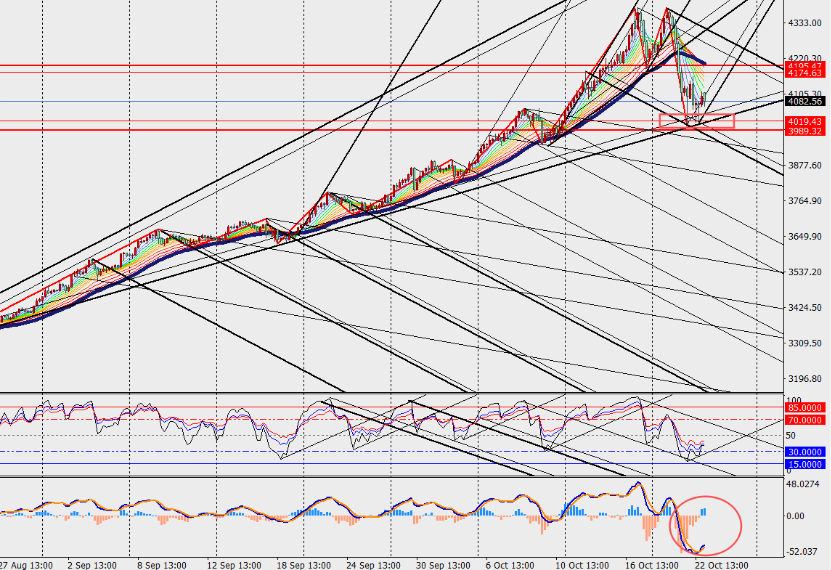
After a sharp pullback on the 4-hour chart, gold has temporarily found support at $4,000. The rally was driven by political tensions and uncertainty surrounding U.S. tariffs, which led to another wave of fear-of-missing-out buying. The nature of the rally has changed; it is now driven by Western investors, not the more stable emerging market buyers that dominated most of the past two years. This means more uncertainty and volatility, even though the factors pushing gold prices higher may continue.

FXStreet
Higit sa isang milyong user ang umaasa sa FXStreet para sa real-time market data, charting tools, expert insights, at Forex news. Ang komprehensibong economic calendar at educational webinars nito ay tumutulong sa mga trader na manatiling may alam at gumawa ng kalkuladong mga desisyon. Sinusuportahan ang FXStreet ng humigit-kumulang 60 propesyonal sa pagitan ng Barcelona HQ at iba’t ibang rehiyon sa buong mundo.
Read More








