

Pound Sterling slipped after hot US CPI with PPI still ahead
- UK political risk climbed as 70+ Labour MPs urged PM Starmer to resign, pushing 30-year gilt yields to a 1998 high.
- US headline CPI rose to 3.8% YoY in April with core CPI at 2.8%, both beating estimates and lifting the US Dollar.
- Wednesday's US PPI release and the BoE's Mann speech could shape near-term direction before Thursday's UK GDP print.
GBP/USD lost about 0.7% on Tuesday, sliding from prior session highs near 1.3650 to test the 1.3500 round figure before a modest late-session rebound. Price recovered close to 1.3540, with the steady move lower through European and US trade leaving the pair at the lower end of its recent multi-day range.
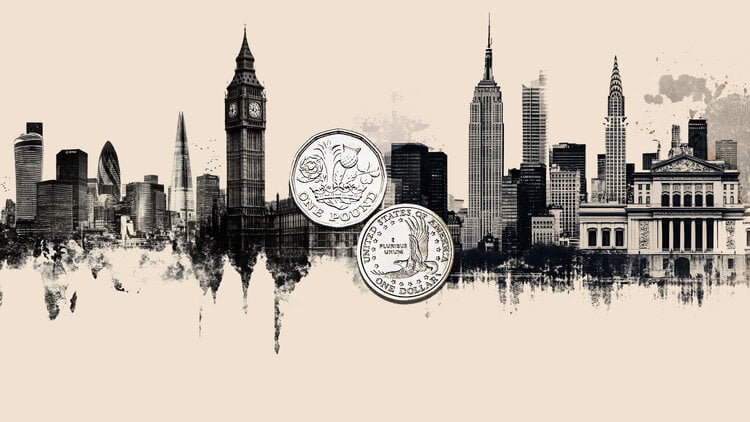
The Pound came under pressure on Tuesday as political instability in Westminster deepened, with more than 70 Labour Members of Parliament (MPs) publicly urging Prime Minister Keir Starmer to resign after heavy local election losses. UK gilts sold off across the curve, with the 30-year yield briefly touching 5.81%, its highest level since 1998, amid worries that a leadership transition could mean looser fiscal policy. Wednesday's focus shifts to Catherine Mann at the Bank of England (BoE), the most committed hawk on the rate-setting committee, who has stated she would vote to lift the main Bank Rate if inflation expectations stay elevated into 2027. With the BoE itself projecting UK inflation to breach 5% this year on Iran-driven energy pass-through, Thursday's preliminary first-quarter UK Gross Domestic Product (GDP) release rounds out the calendar, expected at 0.6% QoQ.
On the US Dollar side, April Consumer Price Index (CPI) data printed hot, with headline CPI rising 3.8% YoY and core CPI at 2.8% YoY, both above consensus. Core CPI also gained 0.4% MoM, with shelter and energy components continuing to reflect feed-through from the Strait of Hormuz closure and elevated Brent crude prices. The release prompted broad US Dollar strength against major peers. Wednesday's Producer Price Index (PPI) print will test whether wholesale price pressures echo the upside CPI surprise, with retail sales and weekly jobless claims due Thursday.
GBP/USD 15-minute chart
Technical Analysis
In the fifteen-minute chart, GBP/USD trades at 1.3540, maintaining a bearish intraday tone after staying below the day’s open at 1.3608, which now acts as overhead resistance. The Stochastic RSI hovers deep in overbought territory near 92, suggesting that the latest bounce is losing quality and that upside attempts could struggle while the pair remains capped beneath the opening print.
On the topside, initial resistance is located at the day open around 1.3608, and a sustained break above this level would be needed to ease the current downside bias and allow for a more meaningful recovery. With no clear nearby support levels from moving averages or other structures in this dataset, traders may look to intraday price swings and prior session lows to gauge potential demand zones if selling pressure resumes from current levels.
In the daily chart, GBP/USD trades at 1.3540, holding a modest bullish near-term bias as it extends above both the 50-day and 200-day exponential moving averages (EMAs) at 1.3482 and 1.3380 respectively. The recovery is underpinned by this reclaimed moving-average structure, while the Stochastic RSI easing back toward the midline around 50 suggests that immediate upside momentum is consolidating rather than accelerating.
On the topside, the first technical reference is the 50-day EMA at 1.3482, now acting as a nearby dynamic floor that reinforces the pair’s constructive tone as long as it holds above it. A deeper pullback toward the 200-day EMA at 1.3380 would still keep the broader recovery structure intact, with only a sustained break back below this longer-term average hinting at a more meaningful loss of bullish control.
(The technical analysis of this story was written with the help of an AI tool.)
Pound Sterling FAQs
The Pound Sterling (GBP) is the oldest currency in the world (886 AD) and the official currency of the United Kingdom. It is the fourth most traded unit for foreign exchange (FX) in the world, accounting for 12% of all transactions, averaging $630 billion a day, according to 2022 data. Its key trading pairs are GBP/USD, also known as ‘Cable’, which accounts for 11% of FX, GBP/JPY, or the ‘Dragon’ as it is known by traders (3%), and EUR/GBP (2%). The Pound Sterling is issued by the Bank of England (BoE).
The single most important factor influencing the value of the Pound Sterling is monetary policy decided by the Bank of England. The BoE bases its decisions on whether it has achieved its primary goal of “price stability” – a steady inflation rate of around 2%. Its primary tool for achieving this is the adjustment of interest rates. When inflation is too high, the BoE will try to rein it in by raising interest rates, making it more expensive for people and businesses to access credit. This is generally positive for GBP, as higher interest rates make the UK a more attractive place for global investors to park their money. When inflation falls too low it is a sign economic growth is slowing. In this scenario, the BoE will consider lowering interest rates to cheapen credit so businesses will borrow more to invest in growth-generating projects.
Data releases gauge the health of the economy and can impact the value of the Pound Sterling. Indicators such as GDP, Manufacturing and Services PMIs, and employment can all influence the direction of the GBP. A strong economy is good for Sterling. Not only does it attract more foreign investment but it may encourage the BoE to put up interest rates, which will directly strengthen GBP. Otherwise, if economic data is weak, the Pound Sterling is likely to fall.
Another significant data release for the Pound Sterling is the Trade Balance. This indicator measures the difference between what a country earns from its exports and what it spends on imports over a given period. If a country produces highly sought-after exports, its currency will benefit purely from the extra demand created from foreign buyers seeking to purchase these goods. Therefore, a positive net Trade Balance strengthens a currency and vice versa for a negative balance.














