




On Tuesday U.S. Eastern time, Trump convened a cabinet meeting and announced:
“We will nominate a new Federal Reserve Chair early next year.”
This remark puts a clearer timeline around what is usually a lengthy selection process. Trump further revealed that, after discussions with Treasury Secretary Besent and Commerce Secretary Lutnik, the original shortlist of around ten candidates has now been narrowed down to a single primary choice.
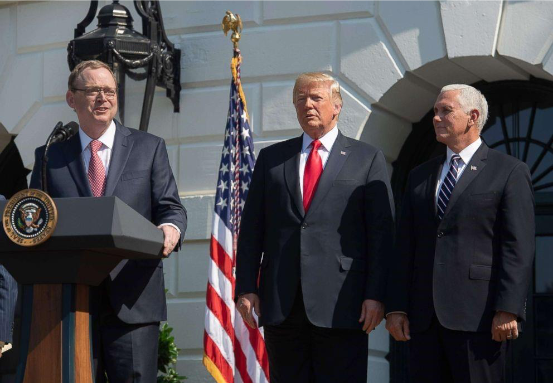
Shortly after the meeting, at a public event, Trump turned to Kevin Hassett, who was present, and said meaningfully:
“I think we have a future Fed Chair sitting right here. He’s a very respected man. Thank you, Kevin.”
This comment is almost an explicit endorsement and closely matches media reports from a few days earlier that had already floated Hassett as the “top choice.”
However, the suspense is not completely over. Given Trump’s well-known, unpredictable decision-making style, nothing is final until the formal nomination papers are submitted to the Senate, and changes remain possible. Reportedly, other names that made it to the last round include current Fed Governors Christopher Waller and Michelle Bowman, former Governor Kevin Warsh, and BlackRock executive Rick Rieder.
At its core, this personnel change is about far more than one individual switching roles; it directly affects the future path of U.S. monetary policy over the coming years. For months, Trump has been pressuring the Fed to cut rates, publicly criticizing current Chair Jerome Powell as “too slow and too cautious,” and even calling him a “stubborn bull.” It is clear that Trump hopes a more “like-minded” new Chair will preside over a faster and more aggressive rate-cutting cycle.
Whoever is ultimately nominated will still need Senate confirmation. If the nominee comes from outside the current Fed system, he could receive a 14-year term as Governor starting in February next year, giving him policy influence that extends well beyond a single presidential term.
Tesla the Only Loser Among the “Magnificent Seven” as Apple Hits a New High
Led by Apple and Nvidia, most of the mega-cap tech names provided the main upside momentum for the market. The semiconductor sector was particularly strong, with the Philadelphia Semiconductor Index surging 1.83%. Intel (INTC) soared more than 8% to a new high for the year, driven by better-than-expected orders for its next-generation AI server chips and news that it will expand manufacturing capacity at its U.S. plants. Synopsys (SNPS) also rallied sharply on the back of a strategic partnership with Nvidia.
Aerospace giant Boeing (BA) jumped more than 10%, marking its biggest single-day gain since April, after the company issued an upbeat outlook on restoring positive cash flow next year.
In sharp contrast, electric-vehicle leader Tesla was the only stock in the group to end lower, edging down 0.21%. Although there was no major negative headline specific to the company that day, market commentators point to several potential reasons for the drop:
Ongoing digestion of previous pressures
Concerns about slowing growth in the EV sector — particularly in the Chinese market — and about Tesla’s own valuation remain unresolved. The massive trading value of $29.598 billion in Tesla shares also highlights the intense tug-of-war between bulls and bears at current levels, amplifying volatility.
Macro policy expectations
On the same day, Trump’s remarks about “planning to announce the new Fed Chair pick in early 2026” and his clear hint toward the dovish candidate Hassett drew widespread market attention.
Markets interpret a potentially more accommodative monetary policy environment as especially favorable for unprofitable, high-growth tech companies. By contrast, for companies like Tesla that have already reached a sizable scale but now face growth bottlenecks, the marginal benefit is seen as more limited.
Overhang from recent bearish factors
Recent negative drivers — such as well-known “Big Short” investor Michael Burry reiterating his short position and weak sales figures in Europe — coincided with Tesla’s share price testing a key resistance zone. This timing amplified technical selling pressure and helps explain why Tesla fell even as the broader environment was supportive for tech stocks.
Technical Analysis
Tesla’s share price is still trading above a key support band at $404–$408, with short-term moving averages in a bullish alignment and the RSI in a healthy range. This suggests that the immediate downside may be limited. The standalone decline on December 2 is more likely a technical pullback ahead of major resistance, rather than the start of a deep reversal.
That said, a sustained upside breakout will not be easy. The stock remains well below its historical highs and continues to face resistance from a long-term descending trendline as well as overhead supply from previously trapped holders. Without major upside surprises in the fundamentals — such as quarterly deliveries or meaningful progress on FSD — it will be difficult for the price to stage an immediate, sustained reversal higher.
For the bullish case, the share price needs to hold above $430 and then break out, on strong volume, through the $433–$440 zone. If that happens, the next upside target would be the prior high around $480–$490. A successful breakout there could even open a path toward levels above $500.
On the downside, if the stock fails to hold the $425–$428 area, it could retreat toward the key support band at $404–$408. A decisive break below that band would likely signal a deeper medium-term correction.
In summary, while short-term technical indicators have not deteriorated, Tesla’s share price is being pulled in multiple directions by macro expectations, industry competition, and its own evolving narrative. As a result, its technical trajectory is likely to remain more volatile and uncertain than that of many other mega-cap tech names.







