

GBP/USD pulls back as bull run hesitates
Ni Joshua Gibson
Petsa ng Pag-publish: 5 Dec 2025 | Petsa ng Pag-edit: 5 Dec 2025


Sikat na Artikulo

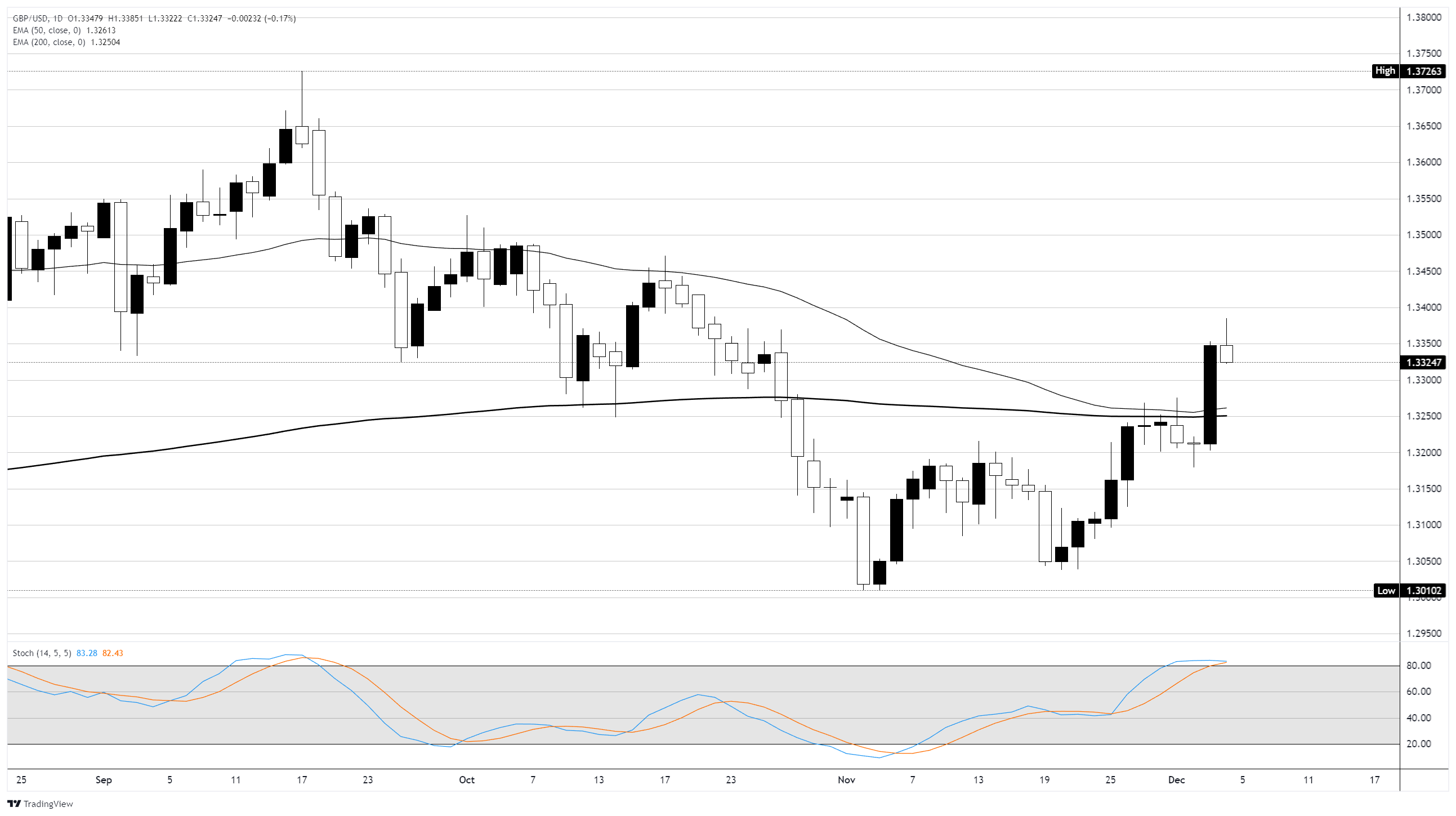
GBP/USD flubbed a technical run at the 1.3350 handle on Wednesday, falling back below the key technical level and trimming some of the ground gained during a strong rebound earlier in the week.
- GBP/USD fell back below 1.3350 on Wednesday, trimming the top off recent gains.
- Bullish momentum behind the Pound Sterling remains hesitant despite a seven-session slide in the Dollar index.
- Backdated US PCE inflation data due on Friday could hint at the late-year trajectory of US inflation pressures.
GBP/USD flubbed a technical run at the 1.3350 handle on Wednesday, falling back below the key technical level and trimming some of the ground gained during a strong rebound earlier in the week. The Pound Sterling (GBP) has climbed against the US Dollar (USD), but a seven-session backlide in the US Dollar Index (DXY) has not translated into one-to-one gains on the Cable chart.
The key event for December will be the latest interest rate call from the Federal Reserve (Fed) slated for December 10. Markets remain fully committed to expecting a third straight interest rate trim from the Fed on December 10. According to the CME’s FedWatch Tool, rate traders are pricing in nearly 90% odds of a quarter-point rate cut next week. Official datasets are still lagging well behind the curve as federal agencies struggle to play catchup following the longest US federal government shutdown in history. Recent private datasets have teased that the US labor market could be crumbling further heading into the year’s end, keeping trader expectations of further rate cuts on the high side.
Before the Fed can gather to deliberate on interest rates, the latest Personal Consumption Expenditures Price Index (PCE) inflation report will drop on Friday. The figures are from September, and are far too backdated to be immediately relevant to the Fed’s deliberations for a December interest rate cut. However, a hard upswing, even in old data, could throw a wrench in the works for a third straight interest rate trim.
GBP/USD daily chart
Pound Sterling FAQs
The Pound Sterling (GBP) is the oldest currency in the world (886 AD) and the official currency of the United Kingdom. It is the fourth most traded unit for foreign exchange (FX) in the world, accounting for 12% of all transactions, averaging $630 billion a day, according to 2022 data. Its key trading pairs are GBP/USD, also known as ‘Cable’, which accounts for 11% of FX, GBP/JPY, or the ‘Dragon’ as it is known by traders (3%), and EUR/GBP (2%). The Pound Sterling is issued by the Bank of England (BoE).
The single most important factor influencing the value of the Pound Sterling is monetary policy decided by the Bank of England. The BoE bases its decisions on whether it has achieved its primary goal of “price stability” – a steady inflation rate of around 2%. Its primary tool for achieving this is the adjustment of interest rates. When inflation is too high, the BoE will try to rein it in by raising interest rates, making it more expensive for people and businesses to access credit. This is generally positive for GBP, as higher interest rates make the UK a more attractive place for global investors to park their money. When inflation falls too low it is a sign economic growth is slowing. In this scenario, the BoE will consider lowering interest rates to cheapen credit so businesses will borrow more to invest in growth-generating projects.
Data releases gauge the health of the economy and can impact the value of the Pound Sterling. Indicators such as GDP, Manufacturing and Services PMIs, and employment can all influence the direction of the GBP. A strong economy is good for Sterling. Not only does it attract more foreign investment but it may encourage the BoE to put up interest rates, which will directly strengthen GBP. Otherwise, if economic data is weak, the Pound Sterling is likely to fall.
Another significant data release for the Pound Sterling is the Trade Balance. This indicator measures the difference between what a country earns from its exports and what it spends on imports over a given period. If a country produces highly sought-after exports, its currency will benefit purely from the extra demand created from foreign buyers seeking to purchase these goods. Therefore, a positive net Trade Balance strengthens a currency and vice versa for a negative balance.

Higit sa isang milyong user ang umaasa sa FXStreet para sa real-time market data, charting tools, expert insights, at Forex news. Ang komprehensibong economic calendar at educational webinars nito ay tumutulong sa mga trader na manatiling may alam at gumawa ng kalkuladong mga desisyon. Sinusuportahan ang FXStreet ng humigit-kumulang 60 propesyonal sa pagitan ng Barcelona HQ at iba’t ibang rehiyon sa buong mundo.
Magbasa pa








