

BoJ’s Ueda: Approaching policy normalization path gradually
作者 Sagar Dua
發布日期: 9 Dec 2025 | 修改日期: 9 Dec 2025


熱門文章
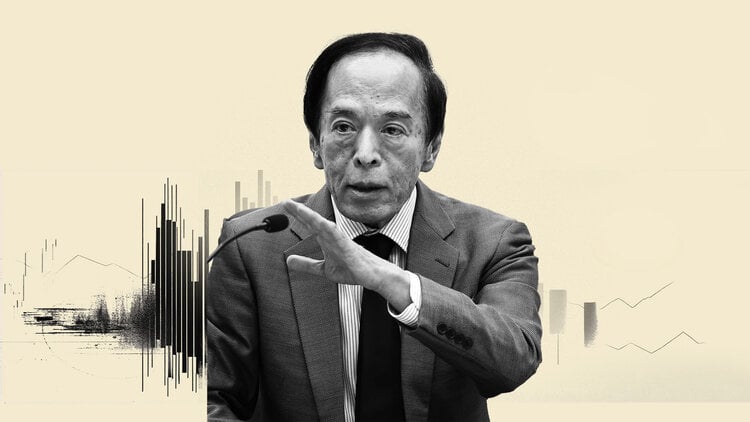
Bank of Japan (BoJ) Governor Kazuo Ueda said at a London event during the European trading session on Tuesday that the central bank is tightening monetary conditions gradually as underlying inflationary pressures are accelerating in wake of fiscal stimulus.
Bank of Japan (BoJ) Governor Kazuo Ueda said at a London event during the European trading session on Tuesday that the central bank is tightening monetary conditions gradually as underlying inflationary pressures are accelerating in wake of fiscal stimulus.
Additional remarks
Believe the economy will go back to positive growth in Q4 and beyond.
Because we are foreseeing convergence to 2% of underlying component, we've been adjusting the degree of easing slowly.
As Japanese automakers have chosen to lower export prices without passing them to US consumers, that has stabilized the volume of auto exports, not creating large negative effects on employment and production here.
There's strong enough momentum in domestic price and wage dynamics to prevent negative shocks from having a large impact on inflation.
At the moment, not seeing very high risk of inflation, especially underlying inflation accelerating in wake of fiscal stimulus.
FX Implications
The initial reaction from BoJ Ueda’s comments appear to be positive for the Japanese Yen (JPY). The USD/JPY pair drops 0.18% from its intraday high of 156.45. Still, the pair is 0.12% higher around 156.10 as of writing.
Bank of Japan FAQs
The Bank of Japan (BoJ) is the Japanese central bank, which sets monetary policy in the country. Its mandate is to issue banknotes and carry out currency and monetary control to ensure price stability, which means an inflation target of around 2%.
The Bank of Japan embarked in an ultra-loose monetary policy in 2013 in order to stimulate the economy and fuel inflation amid a low-inflationary environment. The bank’s policy is based on Quantitative and Qualitative Easing (QQE), or printing notes to buy assets such as government or corporate bonds to provide liquidity. In 2016, the bank doubled down on its strategy and further loosened policy by first introducing negative interest rates and then directly controlling the yield of its 10-year government bonds. In March 2024, the BoJ lifted interest rates, effectively retreating from the ultra-loose monetary policy stance.
The Bank’s massive stimulus caused the Yen to depreciate against its main currency peers. This process exacerbated in 2022 and 2023 due to an increasing policy divergence between the Bank of Japan and other main central banks, which opted to increase interest rates sharply to fight decades-high levels of inflation. The BoJ’s policy led to a widening differential with other currencies, dragging down the value of the Yen. This trend partly reversed in 2024, when the BoJ decided to abandon its ultra-loose policy stance.
A weaker Yen and the spike in global energy prices led to an increase in Japanese inflation, which exceeded the BoJ’s 2% target. The prospect of rising salaries in the country – a key element fuelling inflation – also contributed to the move.

超過一百萬用戶依賴 FXStreet 獲取即時市場數據、圖表工具、專家洞見與外匯新聞。其全面的經濟日曆與教育網路研討會協助交易者保持資訊領先、做出審慎決策。FXStreet 擁有約 60 人的團隊,分布於巴塞隆納總部及全球各地。
閱讀更多








