

Trade The World
Is the Middle East Powder Keg About to Ignite? Gold Rallies First! How Turmoil in Iran and Trump’s War Options Could Shake Global Markets
作者 Abel Gao
發布日期: 12 Jan 2026 | 修改日期: 12 Jan 2026


POPULAR ARTICLES

Street protests in Iran have rapidly escalated into a geopolitical crisis gripping the world. Reports suggest the Trump administration has put multiple intervention options on the table, including military strikes while Iran has warned it will treat Israel and US bases in the Middle East as legitimate targets.
On 11 January, when US media reported that Donald Trump was seriously considering several intervention plans against Iran, traders around the globe instantly went on high alert. What makes this crisis different is that it did not begin with an external surprise attack, but with domestic unrest triggered by Iran’s economic woes — unrest that outside powers quickly seized on and amplified.
On one side is the United States, rolling up its sleeves and weighing a spectrum of options from cyberattacks to deploying carrier strike groups. On the other side is Iran, beset by internal and external pressure but vowing a tough response and claiming it is “ready for war.” This dangerous interaction is pushing the world back to a familiar edge: a flashpoint in geopolitical risk — and markets hate nothing more than this kind of uncertainty.
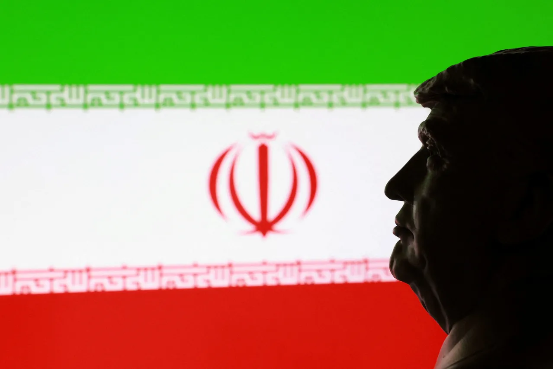
Snapshot of the Unrest in Iran
The immediate trigger was large-scale protests inside Iran over soaring prices and a plunging currency. But the situation was quickly recast in geopolitical terms. Tehran has accused the US and Israel of orchestrating events behind the scenes and turning peaceful protests into violent riots. Washington, in turn, has accused the Iranian government of repression, with Trump repeatedly taking to social media to issue threats, claiming the “gun is loaded.”
The key turning point came between 10 and 11 January. US media outlets revealed that Trump had been briefed on military strike options against Iran, including plans that would target non-military sites in Tehran. Subsequently, authoritative sources confirmed that the US administration had held internal meetings to discuss a “combo punch” of measures: everything from announcing the deployment of a carrier strike group as a show of force, to launching cyber and information warfare, and even contemplating direct military strikes. While there is still internal disagreement over immediate military action, all options are now clearly on the table.
Iran’s response has been swift and hardline. Parliamentary Speaker Mohammad Bagher Ghalibaf warned that if Iran were attacked, the entire territory of Israel, as well as US military bases and naval vessels in the Middle East, would be treated as “legitimate targets.” This is not an empty threat. The brief but intense 12-day clash between the US, Iran and Israel in June 2025 — with missile exchanges and civilian casualties — already demonstrated how quickly the conflict can escalate in practice.
The Strategic Calculus on Both Sides
Many observers view Iran as being in its “most severe crisis in decades.” From Trump’s perspective, exerting pressure or striking now could be highly effective. If he were able to topple the Iranian regime, it would fundamentally rewrite the geopolitical map of the Middle East — an enormous prize both for his personal political legacy and for Israel’s security. It is also seen as a move to ride the momentum after the intervention in Venezuela, showcasing his unpredictable “art of the deal” on the global stage.
However, even within the Trump administration there are voices arguing that major military action at this point would “undermine the protests” and actually help Tehran by shifting attention to an external enemy. More importantly, Iran is not Venezuela. It is a regional power with significant military capability, complex geography and a long track record of forceful retaliation. Once a war starts, the US risks being dragged into another Middle Eastern quagmire — a losing proposition Trump would be “extremely reluctant to buy into.”
For Iran, this is a battle for regime survival. Years of sanctions have strangled the economy and pushed people’s livelihoods to the brink — the root cause of the unrest. At this moment, any external military intervention could become a catalyst for rallying domestic unity and diverting internal anger. Hence the dual strategy: on one hand, the president publicly pledges to listen to people’s grievances and address economic hardship; on the other, the military and parliament project a “ready to fight at all costs” stance, using public mourning for fallen security personnel and arrests of alleged Mossad agents to reinforce the narrative of “resisting foreign aggression.”
What This Means for Financial Markets
Whether or not shooting actually starts, this high-stakes standoff is already enough to have a real impact on global markets in three main areas:
1. Energy Markets
This is the most direct and potentially lethal transmission channel. Roughly 34.6% of global seaborne crude oil trade passes through the Strait of Hormuz, which is tightly controlled by Iran. If conflict escalates, any disruption or risk premium attached to shipping through the strait would immediately ignite global oil prices. History shows that tensions in this region translate directly into violent swings in crude futures. For central banks fighting inflation and governments hoping for a soft landing, this is the stuff of nightmares.
2. Safe-Haven Assets
Judging by gold’s reaction, traditional safe havens are already benefiting. Capital is flowing into gold as a shelter from uncertainty. The outlook for the US dollar, however, is more nuanced. In the short term, the dollar may strengthen on safe-haven demand. But over the medium to long term, if the US becomes embroiled in another costly war, adding to its fiscal deficits and debt burden, this could erode confidence in the dollar’s credit foundation. These conflicting expectations in themselves will amplify volatility in FX markets.
3. Global Supply Chains
The Middle East is a critical supplier of energy and chemicals to the world. Prolonged tension in the region threatens not only oil, but also the supply of liquefied natural gas (LNG) and various petrochemical products. For a global manufacturing sector that has only just begun to recover from recent supply chain crises, this poses a fresh source of uncertainty. Companies may be forced to reassess inventory strategies and supply chain resilience, which could push up costs in certain sectors and complicate the global fight against inflation.
Trump is scheduled to receive a detailed briefing on potential actions on 13 January, while Israel’s security cabinet will also meet that day. The coming days will be a critical window that could determine whether this crisis escalates or de-escalates — and markets will be watching every headline.

FXStreet
超過一百萬用戶依賴 FXStreet 獲取即時市場數據、圖表工具、專家洞見與外匯新聞。其全面的經濟日曆與教育網路研討會協助交易者保持資訊領先、做出審慎決策。FXStreet 擁有約 60 人的團隊,分布於巴塞隆納總部及全球各地。
Read More








