The immediate driver behind gold’s surge is heightened geopolitical and military risk, particularly following the formal launch of military action against Iran by the U.S. and Israel. The escalation has significantly boosted safe-haven demand, lifting prices of gold, silver, and other precious metals.
Following the death of Iran’s Supreme Leader, whether hardliners or pro-Western factions emerge domestically, it is unlikely that U.S. and Israeli political and military pressure on Iran will ease in the short term. In fact, internal political imbalances could trigger further instability and unrest within Iran. From the perspective of escalating geopolitical uncertainty, structural bullish factors supporting gold remain intact.
Since January, gold’s rally has been largely driven by expectations of Federal Reserve rate cuts and a weaker U.S. dollar, fueling concerns about future inflation and strengthening gold’s appeal as an inflation hedge.
Escalating tensions in the Middle East are likely to weigh on investor sentiment and could pressure global equity markets. Market participants will closely monitor developments. If the situation deteriorates further, volatility in crude oil, gold, and silver prices, as well as downside risks for global stock markets, may intensify.
The current Middle East situation has clearly triggered a global flight to safety. Gold, as an asset free from sovereign credit risk, has become a preferred destination for capital flows. Since February 23, holdings in the world’s largest gold ETF have continued to rise, helping propel gold prices sharply higher. In addition, ongoing geopolitical tensions have pushed up international oil prices since mid-month, gradually transmitting through supply chains and raising inflation expectations, further reinforcing gold’s inflation-hedging appeal.
From a medium-term perspective, weakening in the U.S. dollar and Treasury yields, along with strengthening expectations of Fed rate cuts, reduce the opportunity cost of holding non-yielding gold, providing monetary support for prices. Over the longer term, continued central bank gold purchases, evolving supply-demand dynamics, and de-dollarization trends offer structural support.
Market Interpretation:
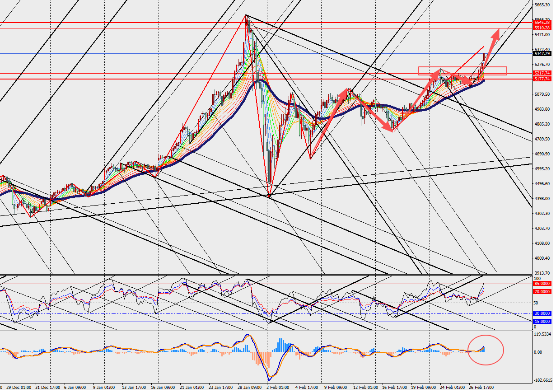
On the four-hour chart, gold has surged sharply, with MACD lines and histogram expanding further. The sustainability of this rally will largely depend on how geopolitical risks evolve. In the short term, gold may enter a phase of heightened volatility near elevated levels, with the risk of pullbacks increasing after sharp advances. In the medium term, the key variable will be the pace at which Fed rate-cut expectations are realized. Over the long term, while price fluctuations may normalize, the broader high-level cycle in gold has not yet come to an end.