

EU: Competitiveness summit sets reform path – Deutsche Bank
作者 FXStreet Insights Team
發布日期: 11 Feb 2026 | 修改日期: 11 Feb 2026


熱門文章
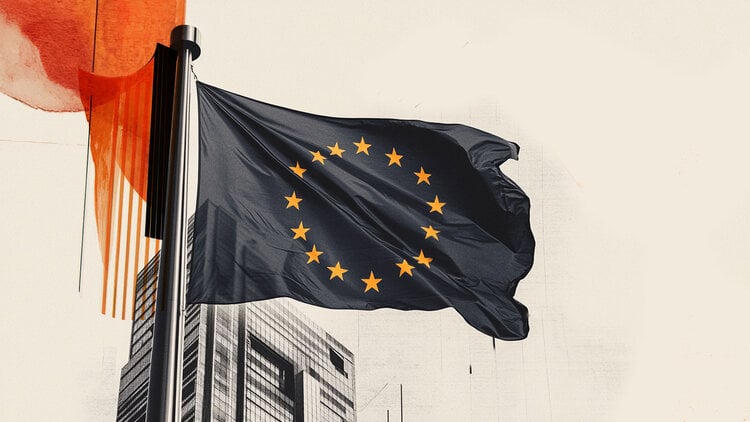
Deutsche Bank’s Marion Muehlberger and Ursula Walther preview the February 12 EU competitiveness summit, stressing leaders’ urgency over weak EU competitiveness and Single Market reforms.
Deutsche Bank’s Marion Muehlberger and Ursula Walther preview the February 12 EU competitiveness summit, stressing leaders’ urgency over weak EU competitiveness and Single Market reforms. The meeting is expected to define broad policy direction, including deregulation and possible protectionism, with concrete decisions delayed to the March 19–20 EU Council, leaving sizeable political execution risks.
Leaders weigh competitiveness and protectionism
"Thursday's summit could set the course for a reorientation of EU economic policy. There is an increasing sense of urgency among EU leaders that tackling weak EU competitiveness and leveraging the Single Market has to speed up. The summit is meant to set the future policy course, mixing both a pivot towards more deregulation but potentially also towards more protectionism."
"Reviving the Single Market will be at the centre of the summit. The second main priority will be how to deal with economic coercion and strategic dependencies. The summit will mainly be about finding a political compromise on the broad direction of travel rather than advancing specific pieces of legislation. Formal decisions are only expected at the March 19-20 EU Council meeting and political execution risks remain sizeable."
"Reviving the Single Market will be at the centre of the competitiveness summit. The second main priority will be how to deal with economic coercion and strategic dependencies (see invite). The summit will mainly be about finding a political compromise on the broad direction of travel rather than advancing specific pieces of upcoming legislation. Formal decisions are only expected at the March 19-20 EU Council meeting."
"Progress with implementing the Commission’s competitiveness agenda has been rather incremental and limited so far, as we noted here, and the EPC think tank reported here. Last year was mostly about non-legislative action like strategies and action plans (like the SIU strategy, the Horizontal Single Market Strategy and the White Paper on EU defence, see Figure 14 in the annex). This year, the Commission plans to put forward multiple legislative proposals like the Industrial Accelerator Act, the Innovation Act or the 28th Regime, which we consider to be substantial reforms."
"The European Commission will continue to be the main driving force behind reforms. It will mostly rely on the standard legislative procedure, where decisions cannot be blocked by a single Member State (e.g. in case of domestic political paralysis). However, majorities in the fragmented parliament have become more fluid, at times slowing down implementation (e.g., Mercosur deal sent for judicial review, delays in finding a position on the EU-US trade deal or first compromise on Omnibus I sent back to the committee). On top, complex political negotiations between the Council and Parliament often tend to result in lowest-common-denominator compromises and have a certain status-quo bias."
(This article was created with the help of an Artificial Intelligence tool and reviewed by an editor.)

超過一百萬用戶依賴 FXStreet 獲取即時市場數據、圖表工具、專家洞見與外匯新聞。其全面的經濟日曆與教育網路研討會協助交易者保持資訊領先、做出審慎決策。FXStreet 擁有約 60 人的團隊,分布於巴塞隆納總部及全球各地。
閱讀更多








