

Trade The World
Forex Today: All eyes on Fed Chair Powell speech as shutdown continues
作者 Eren Sengezer
發布日期: 9 Oct 2025 | 修改日期: 9 Oct 2025


POPULAR ARTICLES
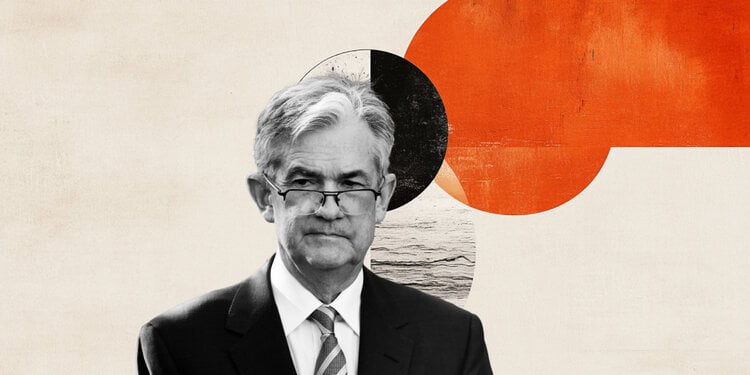
Here is what you need to know on Thursday, October 9: With key data releases from the US getting postponed because of the ongoing government shutdown, market participants will focus on comments from central bank officials, including Federal Reserve (Fed) Chair Jerome Powell, on Thursday.
Here is what you need to know on Thursday, October 9:
With key data releases from the US getting postponed because of the ongoing government shutdown, market participants will focus on comments from central bank officials, including Federal Reserve (Fed) Chair Jerome Powell, on Thursday.
US Dollar Price This week
The table below shows the percentage change of US Dollar (USD) against listed major currencies this week. US Dollar was the strongest against the Japanese Yen.
| USD | EUR | GBP | JPY | CAD | AUD | NZD | CHF | |
|---|---|---|---|---|---|---|---|---|
| USD | 0.92% | 0.67% | 2.39% | 0.01% | 0.09% | 0.82% | 0.83% | |
| EUR | -0.92% | -0.35% | 1.35% | -0.93% | -0.87% | -0.14% | -0.13% | |
| GBP | -0.67% | 0.35% | 1.84% | -0.58% | -0.52% | 0.21% | 0.23% | |
| JPY | -2.39% | -1.35% | -1.84% | -2.28% | -2.29% | -1.60% | -1.55% | |
| CAD | -0.01% | 0.93% | 0.58% | 2.28% | 0.13% | 0.80% | 0.83% | |
| AUD | -0.09% | 0.87% | 0.52% | 2.29% | -0.13% | 0.73% | 0.75% | |
| NZD | -0.82% | 0.14% | -0.21% | 1.60% | -0.80% | -0.73% | 0.01% | |
| CHF | -0.83% | 0.13% | -0.23% | 1.55% | -0.83% | -0.75% | -0.01% |
The heat map shows percentage changes of major currencies against each other. The base currency is picked from the left column, while the quote currency is picked from the top row. For example, if you pick the US Dollar from the left column and move along the horizontal line to the Japanese Yen, the percentage change displayed in the box will represent USD (base)/JPY (quote).
After posting gains for three consecutive days, the US Dollar (USD) Index holds steady at around 99.00 in the European morning on Thursday. Fed Chair Powell will deliver welcoming remarks via pre-recorded video at the Community Bank Conference in Washington. Fed Governor Michelle Bowman, Minneapolis Fed President Neel Kashkari and Fed Governor Michael Barr will be other Fed speakers of the day. Late Wednesday, the minutes of the Fed's September policy meeting showed that policymakers are leaning toward further rate cuts this year, citing heightened labor market risks and a more balanced inflation outlook.
Meanwhile, the Senate, once again, failed to advance Republicans' stopgap funding bill in a 54 to 45 vote on Wednesday. US President Donald Trump told reporters most federal workers effected by the government shutdown will get back pay.
Early Thursday, Trump also announced that Israel and Hamas agreed on a peace plan and that hostages could be released by next Monday. Qatar media confirmed that the deal will include the release of hostages and the withdrawal of Israeli troops. Israeli Prime Minister Benjamin Netanyahu is expected to convene parliament on Thursday to present and then to approve the plan. Following this development, US stock index futures trade marginally higher on the day.
EUR/USD stays on the back foot and declines toward 1.1600 in the European session on Thursday. The European Central Bank will release the minutes of the September policy meeting later in the day.
After rising more than 1% on Wednesday, Gold edges lower amid easing geopolitical tensions early Thursday but manages to hold comfortably above $4,000.
GBP/USD remains under bearish pressure and trades in negative territory below 1.3400 in the European morning on Thursday.
USD/JPY extends its bullish rally and trades at its highest level since mid-February above 153.00 to begin the European session.
Fed FAQs
Monetary policy in the US is shaped by the Federal Reserve (Fed). The Fed has two mandates: to achieve price stability and foster full employment. Its primary tool to achieve these goals is by adjusting interest rates. When prices are rising too quickly and inflation is above the Fed’s 2% target, it raises interest rates, increasing borrowing costs throughout the economy. This results in a stronger US Dollar (USD) as it makes the US a more attractive place for international investors to park their money. When inflation falls below 2% or the Unemployment Rate is too high, the Fed may lower interest rates to encourage borrowing, which weighs on the Greenback.
The Federal Reserve (Fed) holds eight policy meetings a year, where the Federal Open Market Committee (FOMC) assesses economic conditions and makes monetary policy decisions. The FOMC is attended by twelve Fed officials – the seven members of the Board of Governors, the president of the Federal Reserve Bank of New York, and four of the remaining eleven regional Reserve Bank presidents, who serve one-year terms on a rotating basis.
In extreme situations, the Federal Reserve may resort to a policy named Quantitative Easing (QE). QE is the process by which the Fed substantially increases the flow of credit in a stuck financial system. It is a non-standard policy measure used during crises or when inflation is extremely low. It was the Fed’s weapon of choice during the Great Financial Crisis in 2008. It involves the Fed printing more Dollars and using them to buy high grade bonds from financial institutions. QE usually weakens the US Dollar.
Quantitative tightening (QT) is the reverse process of QE, whereby the Federal Reserve stops buying bonds from financial institutions and does not reinvest the principal from the bonds it holds maturing, to purchase new bonds. It is usually positive for the value of the US Dollar.

FXStreet
超過一百萬用戶依賴 FXStreet 獲取即時市場數據、圖表工具、專家洞見與外匯新聞。其全面的經濟日曆與教育網路研討會協助交易者保持資訊領先、做出審慎決策。FXStreet 擁有約 60 人的團隊,分布於巴塞隆納總部及全球各地。
Read More








