

[TMGM Financial Breakfast] Fresh Record Highs: Russell 2000 Outperforms S&P 500 for 15 Straight Sessions!
作者 Sarah Chen
發布日期: 23 Jan 2026 | 修改日期: 23 Jan 2026


熱門文章

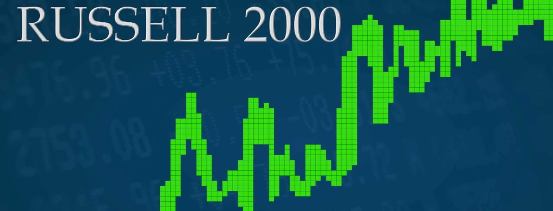
As of 22 January, the Russell 2000 index – widely seen as the bellwether for US small caps – has outperformed the large-cap benchmark S&P 500 for 15 consecutive trading days, marking the longest winning streak since May 1996.
The Russell 2000 has been powering to record highs with remarkable resilience. As of 22 January, the index is up 9.6% year-to-date, compared with just 0.9% for the S&P 500 over the same period – a striking divergence.
This is far from a random technical rebound. It is the result of a powerful confluence of monetary policy, fiscal stimulus, valuation re-rating and shifting market sentiment. Taken together, these forces may be signalling a structural rotation in market leadership in the post-AI era.
Why the Russell 2000 Is Rallying
This explosive move in small caps is being driven by several overlapping tailwinds. At the core, the upside can be distilled into four main drivers:
1.A “Goldilocks” Moment for the Macro Economy
The latest economic data paints an almost ideal picture. US Q3 2025 GDP growth was revised up to an annualised 4.4%, underscoring the economy’s resilience. At the same time, the Fed’s preferred inflation gauge – the core PCE price index – is running at 2.9%, broadly in line with expectations. This combination of strong growth and contained inflation offers a perfect backdrop for rising risk appetite.
Small caps are typically cyclicals with highly domestic revenue exposure, making them far more sensitive to US economic activity than globally diversified mega-caps. Once markets gain conviction that the US can avoid recession and achieve a “soft landing,” small caps naturally become a prime beneficiary.
2.A Direct Gift from Falling Rate Expectations
Although market expectations for Fed rate cuts have fluctuated recently, three consecutive cuts in Q4 2025 have already marked the start of an easing cycle.
Small-cap companies usually carry a higher share of floating-rate debt, so lower rates feed directly into reduced interest expense and improved earnings expectations.
Morgan Stanley notes that even as the implied probability of future rate cuts has swung around, small caps have increasingly decoupled from rates. The core driver now is improving earnings fundamentals, not just the rate path.
In addition, the prospect of a more dovish-leaning Fed Chair (for example, Kevin Warsh) has provided an extra layer of sentiment support.
3. Fiscal Policy and the “Reshoring” of Manufacturing
A key catalyst came from the “Big and Beautiful Act”, passed in July 2025. The legislation permanently restored 100% bonus depreciation for capital expenditure on fixed assets, and allowed R&D spending to be expensed immediately.
This policy mix has provided a powerful incentive for capital spending, especially among small and mid-sized manufacturers. It also reduces the perceived risk of investing after a period of higher interest rates, encouraging companies to bring forward expansion and upgrade plans.
As a result, capital is flowing into sectors such as industrials, construction, and electrification-related infrastructure. These segments stand to benefit directly from domestic infrastructure build-out and the reshoring of manufacturing activity to the US.
4. Extreme Valuation Gaps and the Unwinding of Crowded Trades
By the end of 2025, the valuation gap between mega-cap tech and small/mid caps had blown out to levels rarely seen in the past 25 years.On a forward earnings basis, the Russell 2000 was trading at a discount of more than 30% to the S&P 500 – far wider than its historical average. Such extreme dispersion creates powerful mean-reversion pressure.
At the same time, trades heavily concentrated in the “Magnificent Seven” had become extremely crowded. Investors were increasingly hungry for new, under-owned opportunities.
Taking profits in richly valued mega-cap tech and rotating into cheap cyclicals and small caps has therefore become a rational reallocation choice for institutional money.
Key Risks to Watch
1. Earnings Quality Will Decide If the Rally Lasts
For now, small-cap earnings growth looks strong. But sceptics argue that parts of the rally have been fuelled by seasonal tax effects and technical buying rather than a clean fundamental story.
The upcoming earnings season will be the true litmus test. Small-cap companies will need to deliver on promised earnings improvement to justify the magnitude of the recent re-rating.
2. Macro Wildcards
If economic data starts to soften meaningfully, or if inflation proves sticky enough to delay the Fed’s easing path, small caps – given their high sensitivity to growth – would likely be the first to come under pressure.
External shocks such as geopolitical flare-ups could also flip risk sentiment quickly, prompting a rotation back into defensive large caps.
3. A Split in Long-Term Competitiveness
Whether this rally evolves from a broad-based small-cap surge into a sustained structural bull market will ultimately depend on the strength of the US manufacturing revival and domestic investment cycle.
Within the small-cap universe, not all companies are created equal. Those with clear order visibility, genuine technological advantages, or a direct line of benefit from policy support are far better positioned.
Such firms are much more likely to ride through the full economic cycle, rather than simply being lifted temporarily by excess liquidity and shifting market sentiment.

超過一百萬用戶依賴 FXStreet 獲取即時市場數據、圖表工具、專家洞見與外匯新聞。其全面的經濟日曆與教育網路研討會協助交易者保持資訊領先、做出審慎決策。FXStreet 擁有約 60 人的團隊,分布於巴塞隆納總部及全球各地。
閱讀更多








