

XRP’s $88 billion question: Real utility or just misplaced belief?
XRP has one of the most loyal communities in the crypto space. That conviction has helped it survive the woes from lawsuits and bear markets. But this fan-based culture can lead traders to overlook several big risks. Is XRP’s power based on fundamentals… or misplaced belief?
XRP is one of the earliest cryptocurrencies, aside Bitcoin (BTC) and Ethereum (ETH), that has managed to maintain mainstream relevance. Boasting an $89.3 billion market capitalization, the remittance-based token, issued in 2012, ranks as the fourth-largest cryptocurrency.
While the popularity of several cryptos launched around the same time – Namecoin, Peercoin, Litecoin, etc. – has faded and lost ground to newer, more scalable blockchain protocols, XRP has held firm, proving its resilience amid the crypto market's evolution.

One of the main factors behind XRP's success is its strong cult-like investor community. If you've ever surfed crypto-based subreddits or navigated crypto groups on X, then you must have witnessed the energy from this group.
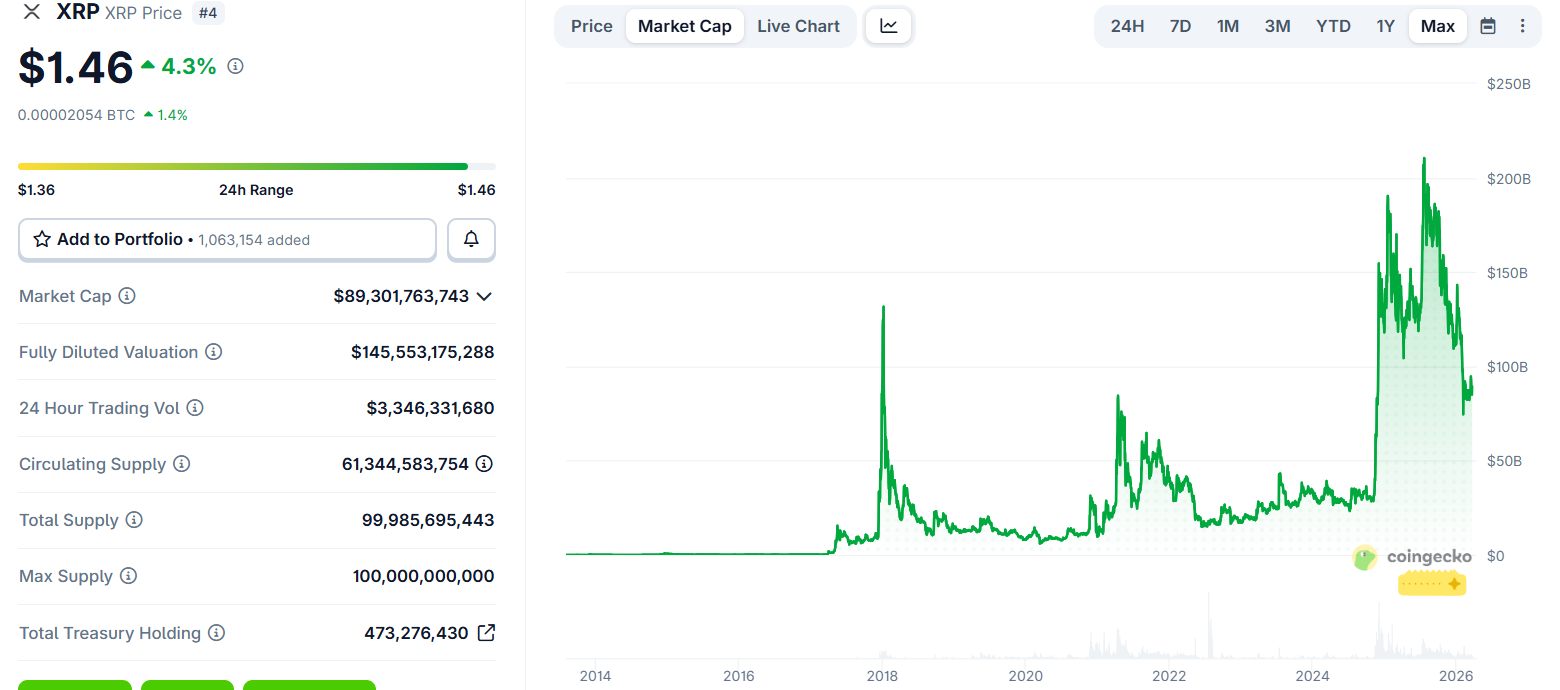
The XRP Army, as they are fondly called, moves with high conviction, preaching the gospel of XRP's utility as a bridge currency for cross-border payments across social media platforms. Despite the SEC's nearly five-year legal battle with Ripple, this group never stopped believing.
"What makes XRP unique is that its investor base has historically been extremely persistent even during significant price drawdowns," Dean Chen, analyst at Bitunix, told FXStreet.
The sheer force of their belief and commitment kept XRP in the conversation among top cryptos throughout its regulatory battle. But what if that belief is largely misplaced?
The major argument from critics so far is around two key areas:
- XRP suffers from centralization risk due to Ripple's control over a large chunk of its supply — an 80% allocation at creation.
- XRP Ledger’s Unique Node List (UNL) consensus mechanism doesn't honour the crypto code of decentralization.
While valid, I'll lean toward other risks investors should also be sceptical about.
XRP's tech is outdated
XRP's underlying blockchain, the XRP Ledger, is often marketed as a Layer 1 ecosystem for building decentralized applications and use cases. However, it lags behind most crypto chains.
"Many holders prioritize the utility narrative to justify long-term positions, though aggressive marketing often overshadows technical limitations," Samer Hassan, analyst at asset broker XS, told FXStreet.
For example, the total value locked (TVL) on the XRP Ledger is about $54 million, or less than 0.1% of the entire DeFi TVL as of writing – a figure observed only among assets outside the top 100 by market cap. A similar trend is noticeable in the total DeFi volume and active dapp users on the chain. For a top 10 asset, such a tiny amount of TVL and onchain activity raises questions.
"A large portion of the innovation and developer activity has shifted toward platforms that support a broader range of economic activity," said Daniel Reis-Faria, CEO of ZeroStack.
In comparison, Ethereum and Solana (SOL) boast TVLs of over $56.2 billion and $6.85 billion, respectively. Newer chains like Base and Hyperliquid far outpace the XRP Ledger.
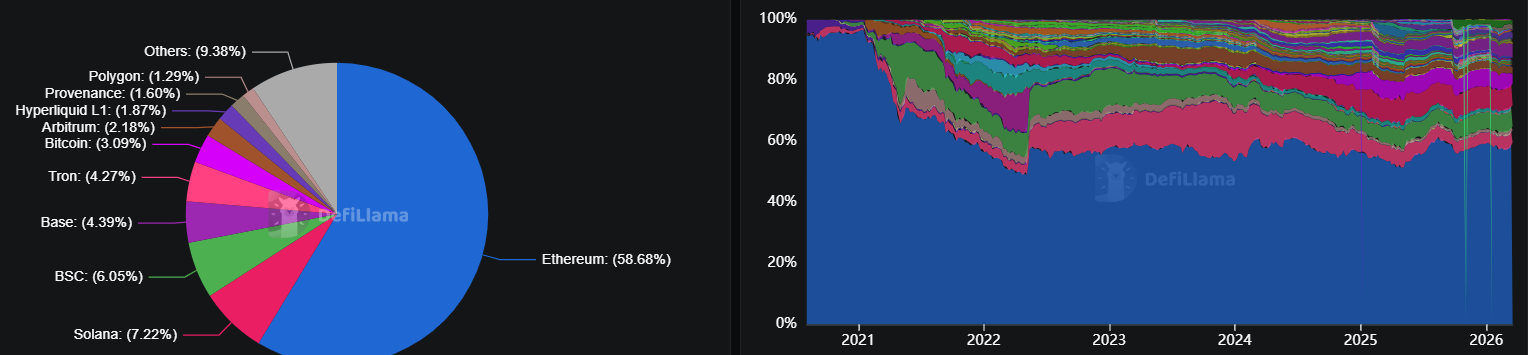
"XRP is essentially attempting to retrofit smart contract utility onto a legacy payment rail, which carries inherent technical debt compared to the native, high-performance environments offered by [newer chains]," said Hassan.
But many will argue that the value proposition of being a smart contract blockchain isn't the main use case of XRP and the XRP Ledger.
For such investors, they're betting on XRP’s promise to disrupt SWIFT via On-Demand Liquidity (now known as Ripple Payments), serving as a bridge currency in the Ripple ecosystem to enable low-cost, scalable cross-border transactions for banking institutions.
Bitcoin only serves as a digital alternative to gold without even having a DeFi ecosystem, yet its market capitalization is above $1.5 trillion. Why can't XRP follow the same playbook?
XRP's relevance in the Ripple ecosystem may be at risk
On-Demand Liquidity (ODL) involves banks converting a fiat payment transaction into XRP and sending it to its destination via the XRP Ledger in a few seconds. On the receiving end, XRP is converted to the local currency by a network of liquidity providers. Innovative, right?
Yeah, it was when XRP initially launched over a decade ago. But currently, I don't think it is anymore.
While Ripple says it has established partnerships with over 300 financial institutions that use the product, demand for ODL remains weak. Most of these institutions run the product as a pilot programme for experimentation rather than as a full service.
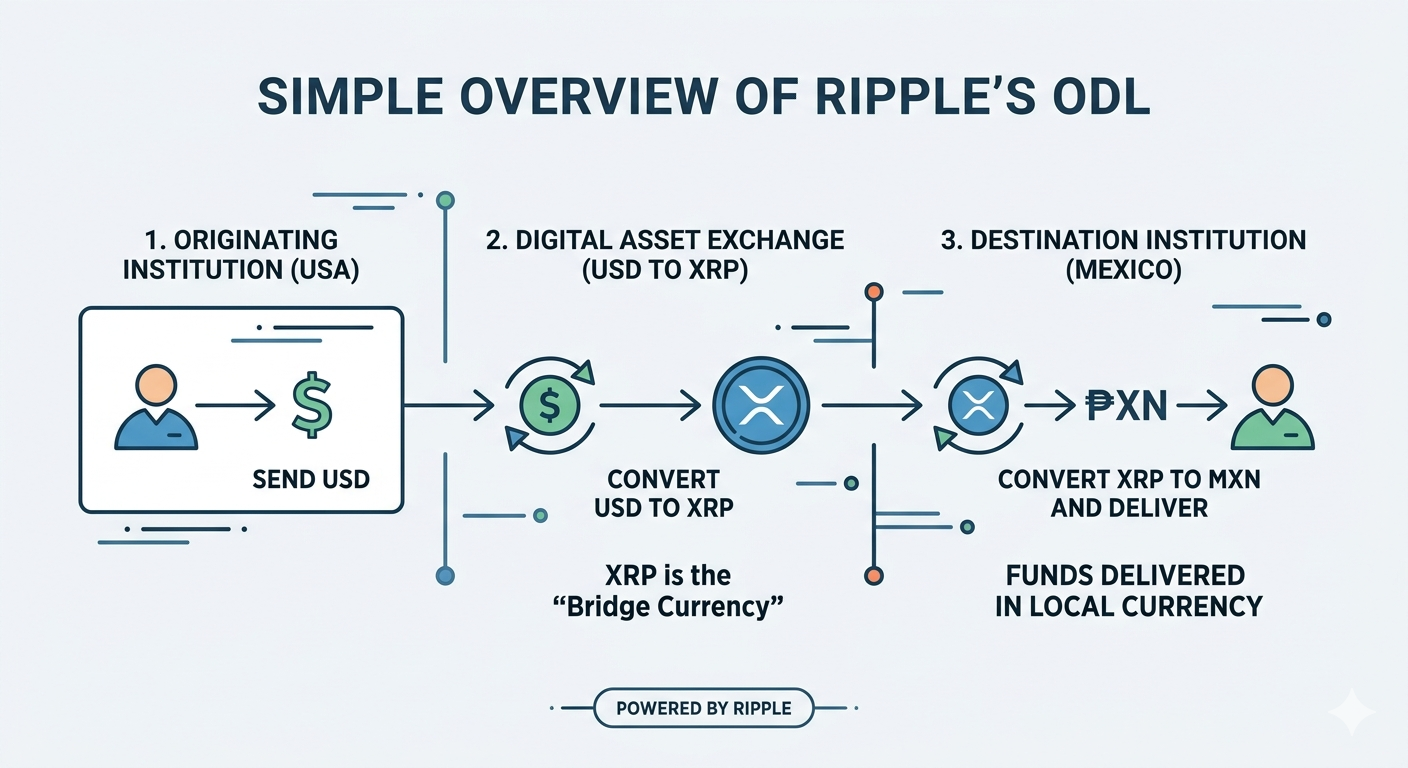
Critics have also raised concerns about XRP's volatility as a bridge asset, preferring stablecoins instead.
With stablecoin payments gaining regulatory greenlight in the United States via President Trump's passage of the GENIUS Act in 2025, most fintechs are currently facilitating near-instant cross-border payments – the same promise as ODL. These firms, including Stripe, are leveraging stablecoins on Ethereum, Solana and other top chains without touching the XRP Ledger or XRP.
Ripple itself appears to be pivoting with the launch of its RLUSD dollar-backed stablecoin over a year ago and the $200 million acquisition of B2B stablecoin payment startup Rail last December. With RLUSD potentially serving as the bridge asset for ODL transactions, Ripple eliminates volatility risks, without compromising on speed or cost. That puts the role of XRP at risk within the Ripple ecosystem.
What is good for Ripple is good for XRP?
Despite these shortcomings, XRP has attracted more community members and maintained its position as a top-5 crypto.
A potential reason for the strength stems from how investors interpret Ripple's ambitious acquisitions and expansion over the past few years. The company spent a combined $2.45 billion last year to acquire prime brokerage firm Hidden Road, stablecoin startup Rail, and corporate treasury manager GTreasury.
Ripple has also obtained conditional approval for a US banking charter from the Office of the Comptroller of the Currency (OCC).
While these developments are great for Ripple and its shareholders, they don't have the same impact on XRP as community members claim.
Ripple is a private company with equity, and XRP isn't its native token or share ticker. As a result, the relationship is different from that of a crypto project and a Foundation that develops products for its ecosystem, say the Ethereum or Solana Foundation's relationship with ETH and SOL.
XRP community lacks crypto thought leaders
The investor base of XRP also raises serious questions about the technical knowledge of its community. Compared to other top crypto assets, which feature a diverse community of top developers and a wide range of professional institutional investors who are major voices within the crypto ecosystem, the XRP community is dominated by non-crypto-native investors.
The token is hardly in the conversation when top crypto experts hint at their portfolio composition. Also, some of the self-acclaimed XRP experts with dedicated YouTube and Reddit accounts are only regarded as experts by these non-crypto native investors.
A counter argument is that sustained inflows into recently launched XRP ETFs, despite the general crypto market drawdown, shows institutional demand. However, Bloomberg ETF analysts noted that retail investors were the main drivers of these flows.
"My guess is this is largely XRP super fans vs casual retail," noted Bloomberg's Eric Balchunas in a March 10 post on social media platform X. Critics added that these super fans are potentially leveraging in-kind creation to drive inflows rather than fresh capital.
"Institutional ownership represents only about 16% of total XRP ETF assets, meaning the majority of demand is still driven by retail investors," said Bitunix analyst Dean Chen. "In other words, XRP does have institutional exposure, but structurally it behaves more like a retail-anchored asset with selective institutional participation, rather than a core institutional crypto allocation like BTC or ETH."
In addition, analysts suggest that, apart from Bitcoin, institutional investors often show a bias toward tokens from chains that support larger ecosystems.
"When institutional investors build long-term portfolios, they tend to prioritize networks that sit at the center of larger ecosystems," said ZeroStack CEO Daniel Reis-Faria. "In that context, XRP is more often viewed as a thematic or sentiment-driven allocation, rather than a core infrastructure asset like Bitcoin or Ethereum."
Conclusion
While these arguments question the long-term value of XRP, Ripple remains one of the token's largest holders and has also used it as part payment in some of its recent acquisitions. As a result, the company could always find ways to make the token relevant within the finance ecosystem it is building, especially since it holds a large supply of the asset.
The conviction of the XRP community has carried it very far, but conviction alone isn’t likely to determine where it goes next. In the long term, XRP’s value will depend less on sentiment and more on whether it becomes relevant in the future’s payment ecosystem, something that isn’t clear for now.














