Double Top und Double Bottom im Überblick
Ein Double Top ist ein bärisches Chartmuster, das sich nach einem Aufwärtstrend bildet.
Ein Double Bottom ist ein bullisches Chartmuster, das sich nach einem Abwärtstrend bildet.
Die wichtigsten Merkmale des Musters sind zwei Tests eines Schlüsselniveaus, ein klarer vorheriger Trend, eine gut erkennbare Nackenlinie und eine Bestätigung beim Ausbruch.
Höhere Zeitrahmen liefern in der Regel klarere Signale.
Was sind Double-Top- und Double-Bottom-Muster?
Double-Top- und Double-Bottom-Muster sind Trendumkehr-Chartmuster. Ein Umkehrmuster signalisiert, dass der vorherige Trend an Kontrolle verliert und eine Bewegung in die entgegengesetzte Richtung beginnen könnte.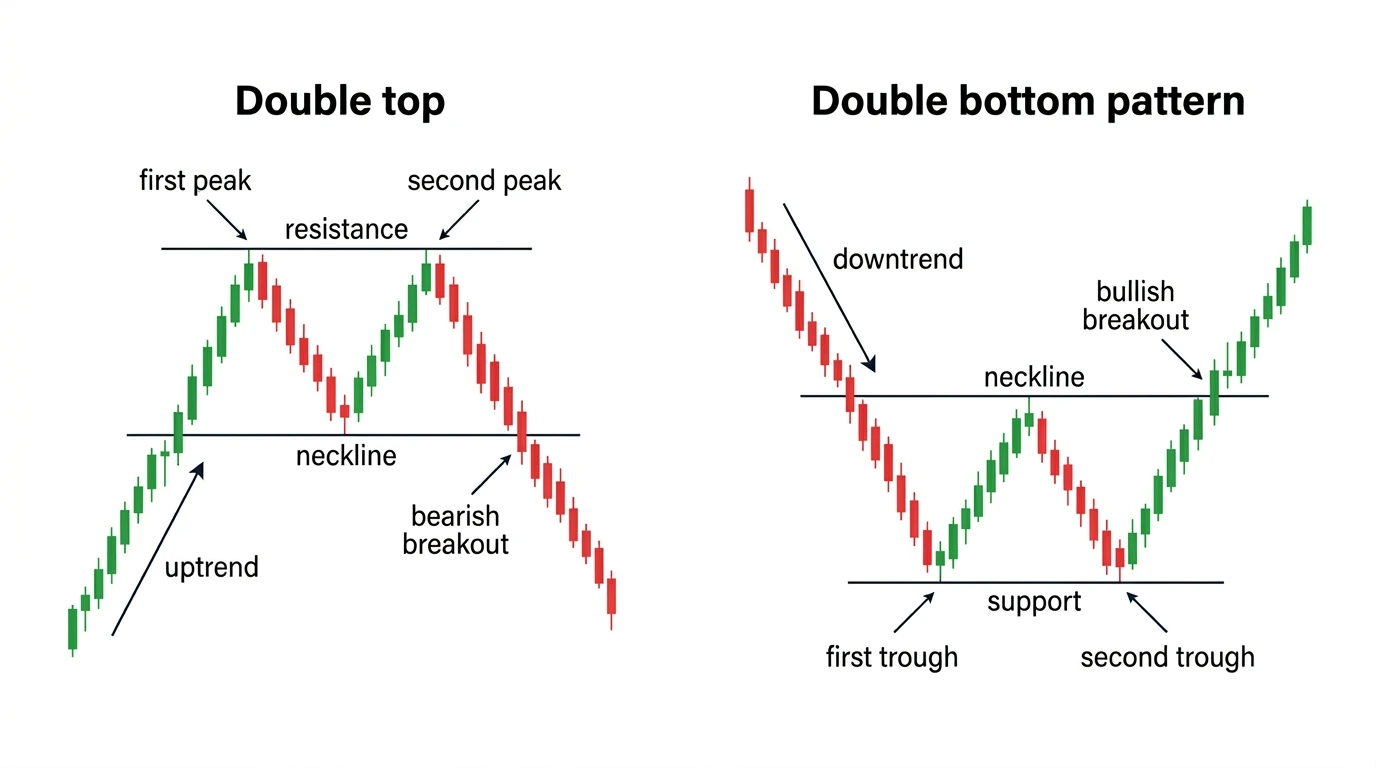
Double-Top-Muster erklärt
Ein Double Top ist ein bärisches Umkehr-Chartmuster, das sich nach einem Aufwärtstrend bildet. Es ähnelt der Form eines M, weil der Kurs zweimal einen Widerstandsbereich erreicht, beide Male scheitert und dann beginnt, nach unten zu drehen.
Double-Bottom-Muster erklärt
Ein Double Bottom ist ein bullisches Umkehr-Chartmuster, das sich nach einem Abwärtstrend bildet. Es ähnelt der Form eines W, weil der Kurs zweimal einen Unterstützungsbereich erreicht, beide Male hält und dann beginnt, nach oben zu drehen.
Warum gelten diese als Umkehrmuster?
Diese Muster gelten als Umkehrmuster, weil sie beide den Price-Action-Mechanismus zeigen, bei dem der aktuelle Trend an einem wichtigen Kursniveau an Stärke verliert. Ein Double Top zeigt, dass es den Käufern beim zweiten Test nicht gelingt, den Widerstand zu durchbrechen. Ein Double Bottom zeigt, dass es den Verkäufern beim zweiten Test nicht gelingt, die Unterstützung zu durchbrechen.
So erkennen Sie Double-Top- und Double-Bottom-Muster im Chart
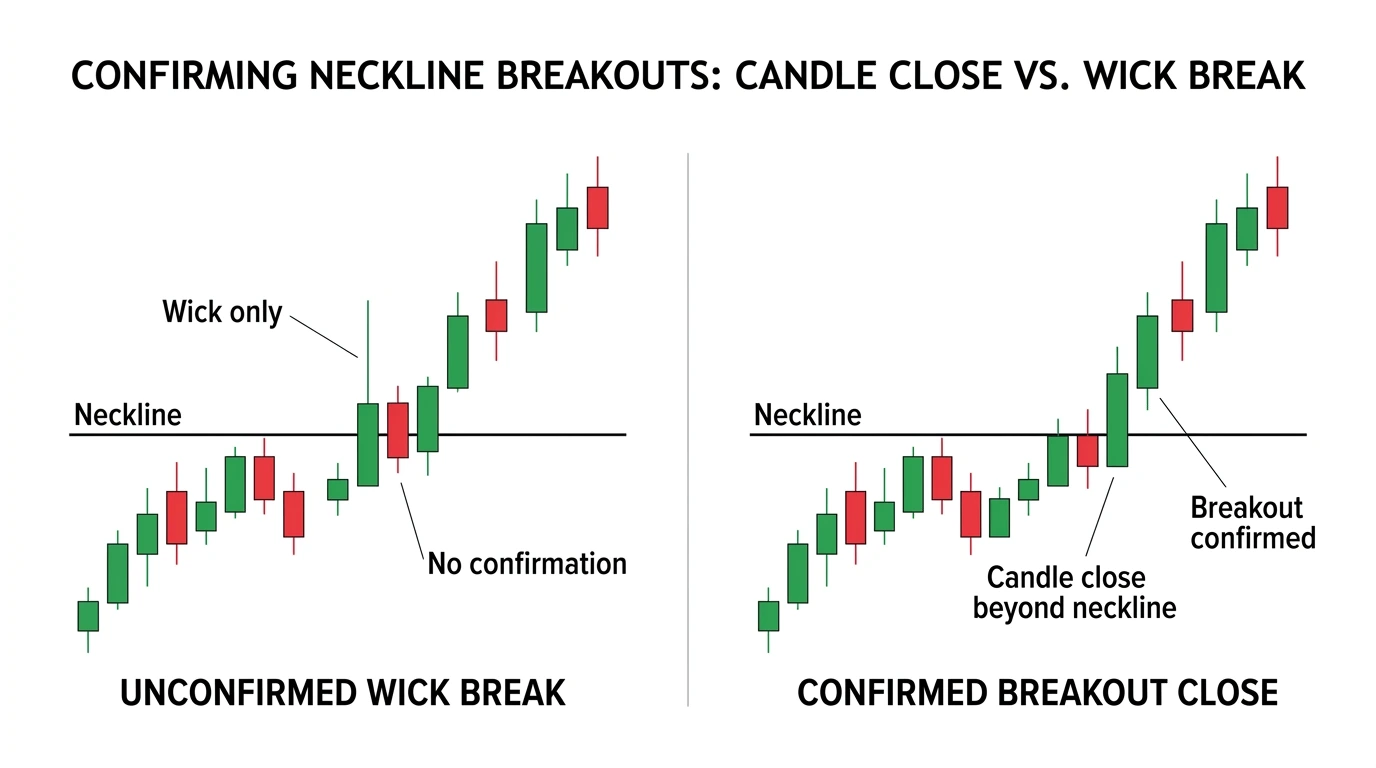
Wie sich ein Double Top in fünf Schritten bildet
Ein Double Top ist erst dann gültig, wenn sich die Struktur gebildet hat und der Kurs den Ausbruch bestätigt.
Bestätigen Sie vor dem ersten Hoch einen klaren Aufwärtstrend.
Markieren Sie das erste Hoch und die darauf folgende Korrektur.
Achten Sie auf ein zweites Hoch nahe demselben Widerstandsniveau, statt auf einen klaren Ausbruch darüber.
Zeichnen Sie die Nackenlinie am Korrekturtief zwischen den beiden Hochs ein.
Behandeln Sie das Setup als potenzielles Double Top, bis die Nackenlinie durchbrochen wird.
Wie sich ein Double Bottom in fünf Schritten bildet
Ein Double Bottom folgt derselben Logik in umgekehrter Richtung.
Bestätigen Sie vor dem ersten Tief einen klaren Abwärtstrend.
Markieren Sie das erste Tief und die darauf folgende Erholung.
Achten Sie auf ein zweites Tief nahe demselben Unterstützungsniveau, statt auf einen klaren Durchbruch darunter.
Zeichnen Sie die Nackenlinie am Erholungshoch zwischen den beiden Tiefs ein.
Behandeln Sie das Setup als potenzielles Double Bottom, bis die Nackenlinie durchbrochen wird.
Double Top vs. Double Bottom: Kurzer Vergleich
Handel des Double-Top-Musters (bärisch)
Wann das bärische Signal bestätigt ist
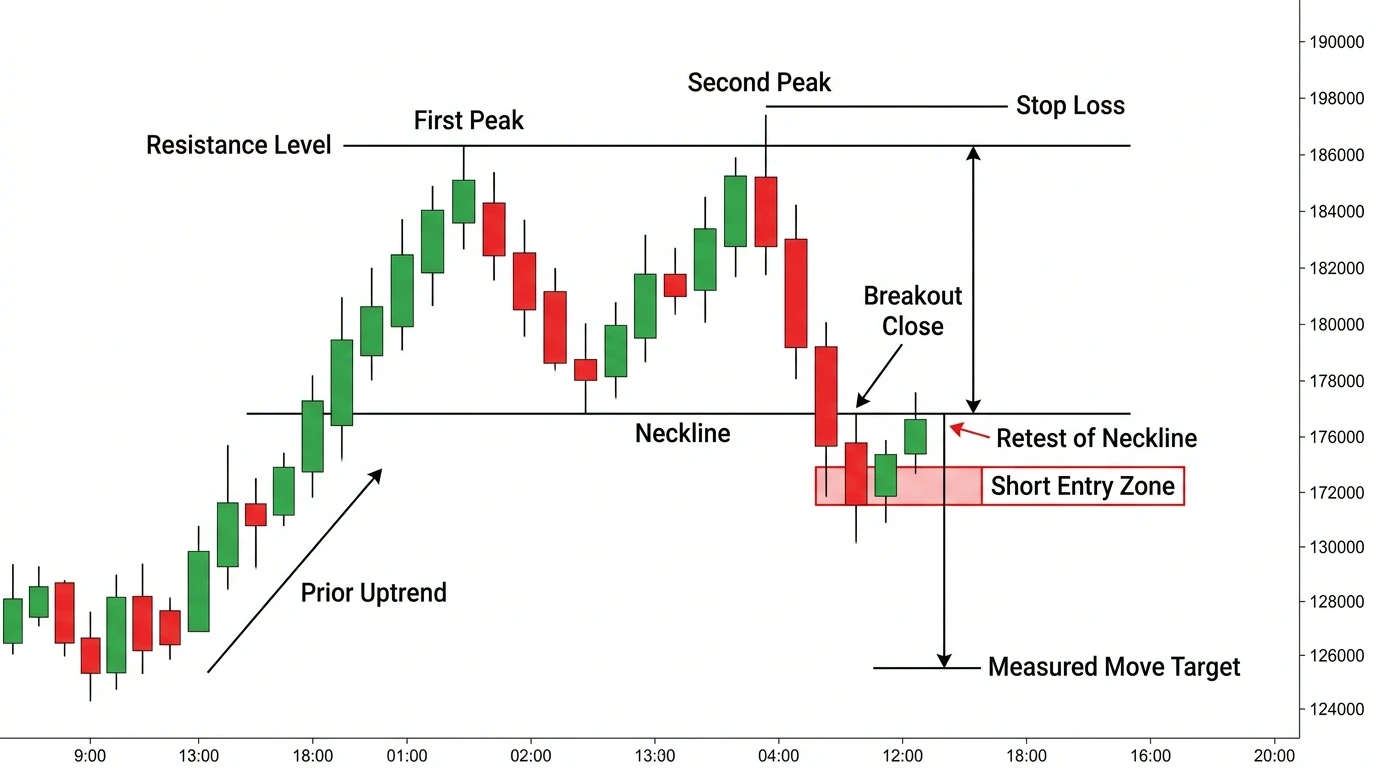
Das bärische Signal ist bestätigt, wenn der Kurs unter der Nackenlinie schließt. Ein Docht unter der Nackenlinie bestätigt das Muster nicht, weil der Kurs vor dem Ende der Kerze wieder drehen kann.
Einstiegspunkt
Sie können beim Schluss der Ausbruchskerze oder bei einem Retest der Nackenlinie von unten einsteigen. Der Schluss des Ausbruchs ermöglicht eine frühere Teilnahme. Der Retest kann jedoch ein geringeres Risiko bieten, muss aber nicht eintreten.
Platzierung des Stop-Loss
Das Stop-Loss-Niveau kann über dem zweiten Hoch platziert werden. Dieses Niveau macht das bärische Setup ungültig, wenn die Käufer die Kontrolle zurückgewinnen.
Projektion des Kursziels (Measured-Move-Formel)
Das Kursziel basiert auf der Höhe des Musters. Messen Sie den Abstand von der Nackenlinie bis zum höchsten Hoch. Projizieren Sie denselben Abstand von der Nackenlinie nach unten. Das Ergebnis ist die minimale erwartete Bewegung nach dem Ausbruch.
Formel: Ziel = Nackenlinie − (Hoch − Nackenlinie)
Beispiel: Nackenlinie bei 100, Hoch bei 110. Der Abstand beträgt 10. Das Ziel liegt bei 90.
Profi-Tipp: Das Measured-Move-Ziel ist ein Minimum, keine Obergrenze. Viele Trader realisieren am Ziel Teilgewinne und ziehen den Stop für den verbleibenden Teil nach.
Handel des Double-Bottom-Musters (bullisch)
Wann das bullische Signal bestätigt ist
Ein Double Bottom ist bestätigt, wenn der Kurs über der Nackenlinie schließt. Ein Docht über der Nackenlinie bestätigt das Muster nicht, weil der Kurs vor dem Ende der Kerze weiterhin scheitern kann.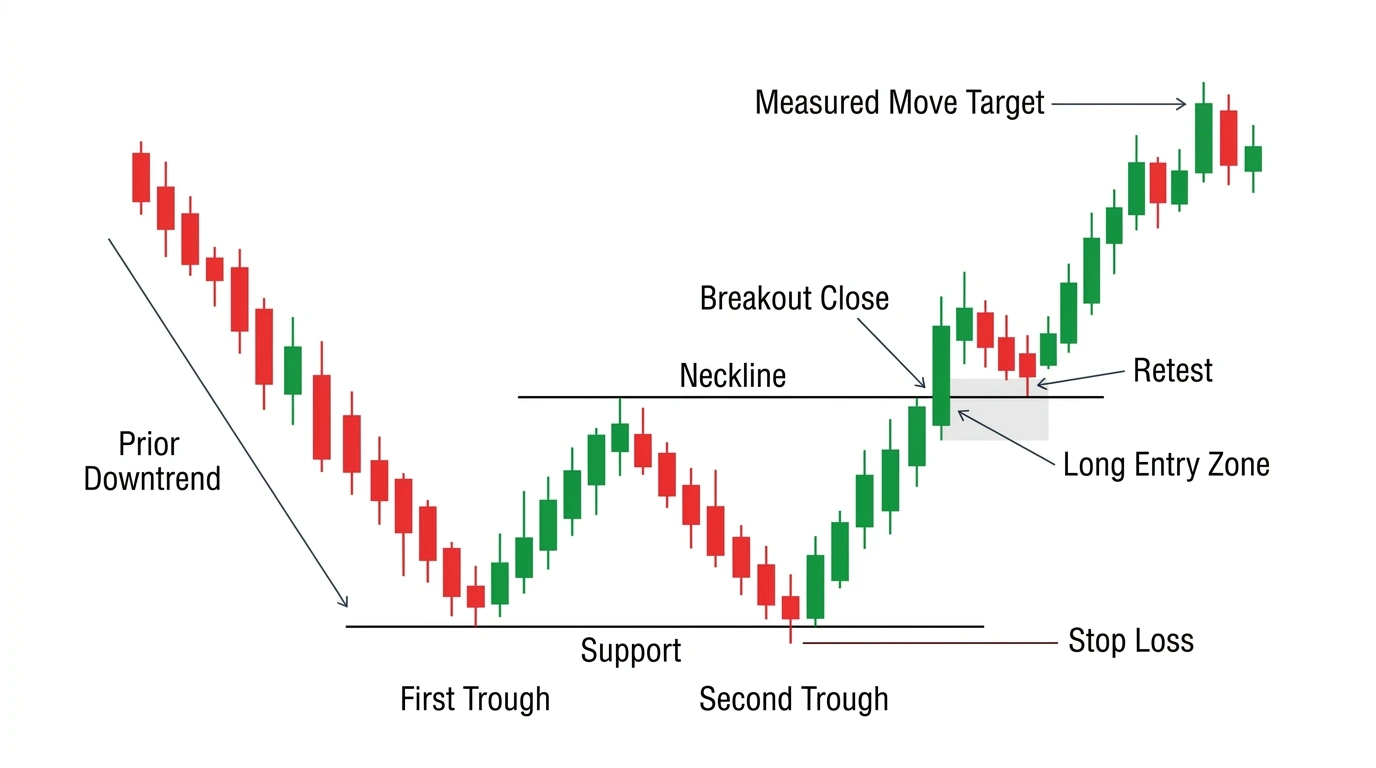
Einstiegspunkt
Trader steigen in der Regel beim Schluss der Ausbruchskerze oder bei einem Retest der Nackenlinie von oben ein. Der Schluss des Ausbruchs ermöglicht einen früheren Einstieg. Der Retest kann das Risiko reduzieren, muss aber nicht stattfinden.
Platzierung des Stop-Loss
Der Standard-Stop-Loss liegt knapp unter dem zweiten Tief. Dieses Niveau macht das bullische Setup ungültig, wenn die Verkäufer die Unterstützung erneut durchbrechen.
Projektion des Kursziels (Measured-Move-Formel)
Das Kursziel folgt derselben Logik wie beim Double Top, nur umgekehrt angewendet. Messen Sie den Abstand vom Tief bis zur Nackenlinie. Projizieren Sie denselben Abstand von der Nackenlinie nach oben. Das ergibt die minimale erwartete Bewegung nach dem bullischen Ausbruch.
Formel: Ziel = Nackenlinie + (Nackenlinie − Tief)
Beispiel: Tief bei 90, Nackenlinie bei 100. Der Abstand beträgt 10. Das Ziel liegt bei 110.
Überlegungen zum Trading
Zuverlässigkeit des Zeitrahmens
Höhere Zeitrahmen liefern in der Regel zuverlässigere Double-Top- und Double-Bottom-Muster, weil Tages- und Wochencharts weniger Marktrauschen enthalten als Intraday-Charts. Ein Muster auf einem Tages- oder Wochenchart hat in der Regel mehr Aussagekraft als dieselbe Form auf einem Fünf-Minuten-Chart.
RSI- und Volumenbestätigung
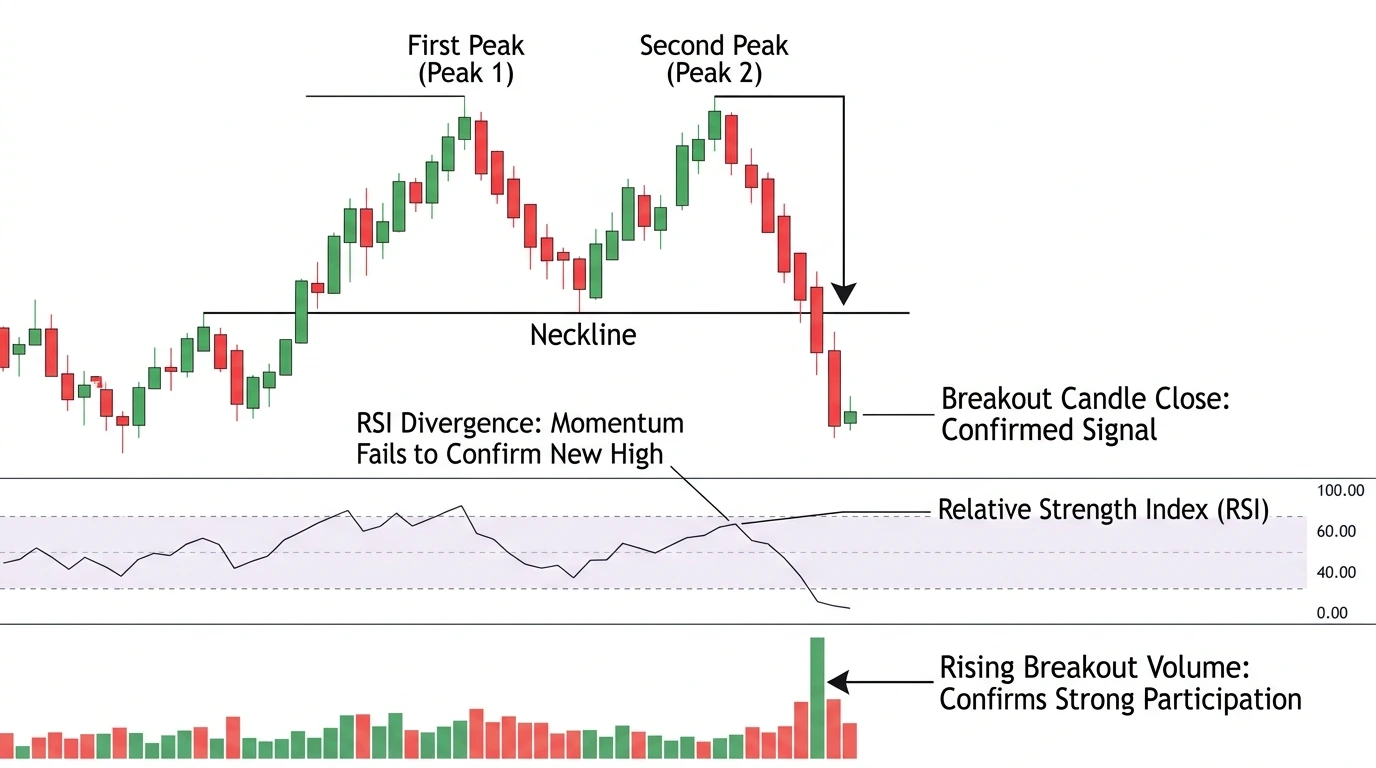 RSI-Divergenz am zweiten Hoch oder zweiten Tief stärkt das Setup, weil das Momentum den Kurs nicht bestätigt. Ein Volumenanstieg beim Durchbruch der Nackenlinie liefert zusätzliche Bestätigung, weil sich mehr Marktteilnehmer am Ausbruch beteiligen.
Unterstützung und Widerstand nach dem Ausbruch
Die Nackenlinie wechselt nach dem Ausbruch ihre Rolle. Eine gebrochene Nackenlinie kann nach einem Double Top zu einem neuen Widerstand oder nach einem Double Bottom zu einer neuen Unterstützung werden. Trader nutzen dieses Niveau häufig für neue Einstiege, die Anpassung des Stop-Loss oder die Prüfung auf Fehlausbrüche.
Profi-Tipp
Ein sauberer Retest der gedrehten Nackenlinie bietet oft einen besseren Einstieg mit günstigerem Chance-Risiko-Verhältnis, als einer großen Ausbruchskerze hinterherzulaufen.
Was sind die Vor- und Nachteile beim Trading von Double-Top- und Double-Bottom-Mustern?
Double-Top- und Double-Bottom-Muster sind nützlich, weil sie Tradern eine klare Umkehrstruktur, ein sichtbares Invalidierungsniveau und ein messbares Kursziel liefern. Sie bestätigen jedoch auch spät, können Fehlausbrüche erzeugen und sind in unruhigen Marktbedingungen tendenziell weniger zuverlässig.
Vorteile des Tradings von Double-Top- und Double-Bottom-Mustern
Klare Musterstruktur
Diese Muster sind leicht zu erkennen, weil sie sich um zwei sichtbare Tests desselben Niveaus und eine klar erkennbare Nackenlinie bilden.
Definierte Trade-Planung
Die Nackenlinie, das zweite Hoch oder Tief und die Measured-Move-Projektion geben Tradern einen klaren Rahmen für Einstieg, Stop-Loss und Zielsetzung.
Funktioniert in mehreren Märkten
Double Tops und Double Bottoms treten in Forex, Aktien, Indizes, Rohstoffen und Krypto auf, daher ist das Muster breit einsetzbar.
Leicht mit Bestätigungstools kombinierbar
RSI-Divergenz, steigendes Volumen und nahe Unterstützungs- oder Widerstandsniveaus können Tradern helfen, stärkere Setups von schwächeren zu filtern.
Nützlich für Umkehr-Trading
Diese Muster helfen Tradern, eine Trenderschöpfung zu erkennen und sich auf einen möglichen Richtungswechsel vorzubereiten.
Nachteile des Tradings von Double-Top- und Double-Bottom-Mustern
Die Bestätigung kommt erst, nachdem die Bewegung begonnen hat
Da das Muster erst beim Durchbruch der Nackenlinie bestätigt wird, kann ein Teil der Umkehr bereits vorbei sein, bevor der Trade eröffnet wird.
Fehlausbrüche sind häufig
Der Kurs kann die Nackenlinie durchbrechen, den Trade auslösen und dann wieder in das Muster zurückdrehen. Das kommt in niedrigeren Zeitrahmen und bei unruhigen Marktbedingungen häufiger vor.
Nicht jede M- oder W-Form ist gültig
Eine ähnliche Form innerhalb einer Seitwärtsrange reicht nicht aus. Das Muster benötigt weiterhin einen klaren vorherigen Trend und eine aussagekräftige Nackenlinie.
Measured-Move-Ziele sind Richtwerte, keine Garantien
Das projizierte Ziel ist ein Planungsinstrument, kein Versprechen. Manche Bewegungen stoppen davor, andere laufen darüber hinaus.
Starke Trends können das Setup überlagern
In einem starken Trend kann das zweite Hoch oder zweite Tief nur eine Pause sein, bevor der ursprüngliche Trend wieder aufgenommen wird.
Risikomanagement beim Trading dieser Muster
Wie viel sollten Trader pro Trade riskieren?
Viele Trader begrenzen das Risiko pro Trade auf 1 bis 2 % des Kontokapitals. Bei einem Konto von 1.000 $ liegt die harte Obergrenze bei 20 $ pro Trade. Die Positionsgröße sollte reduziert werden, wenn der Stop-Loss-Abstand groß ist.
So legen Sie ein Chance-Risiko-Verhältnis fest
Ein Double-Top- oder Double-Bottom-Trade sollte in der Regel mindestens ein 1:2- Chance-Risiko-Verhältnis bieten. Wenn der Trade 20 $ riskiert, sollte das minimale realistische Ziel 40 $ betragen. Das Measured-Move-Ziel von der Nackenlinie bis zum Hoch oder Tief hilft Tradern, dieses Verhältnis vor dem Einstieg zu prüfen.
Was tun, wenn der Trade scheitert?
Trader sollten den Stop-Loss respektieren und den Trade ohne Anpassung schließen. Das Verschieben des Stop-Loss ist die häufigste Art, wie Anfänger aus einem kleinen Verlust einen großen machen.
Wichtig: Bulkowskis' Forschung zu gescheiterten Double Tops ergab, dass, wenn ein bestätigtes Muster wieder über die Nackenlinie zurückkehrt, die anschließende Aufwärtsbewegung im Durchschnitt 38 % beträgt. Das bedeutet, dass ein gescheitertes Double Top selbst zu einem handelbaren Setup in die entgegengesetzte Richtung werden kann [Bulkowski, T.N. Encyclopedia of Chart Patterns, 3rd ed., Wiley — thepatternsite.com/BustDoubleTops.html ]
Häufige Fehler von Anfängern bei Double-Top- und Double-Bottom-Mustern
Einstieg vor der Bestätigung
Viele Anfänger steigen ein, sobald das zweite Hoch oder zweite Tief erscheint. Das erhöht die Wahrscheinlichkeit, ein Setup zu handeln, das nie bestätigt wird. Warten Sie auf einen Kerzenschluss jenseits der Nackenlinie, oder nutzen Sie vor dem Einstieg zusätzliche Bestätigung.
Eine Seitwärtsrange mit einem Umkehrmuster verwechseln
Ein Double Top benötigt einen klaren Aufwärtstrend. Ein Double Bottom benötigt einen klaren Abwärtstrend. Viele Anfänger sehen zwei Hochs oder zwei Tiefs innerhalb einer Seitwärtsrange und bezeichnen sie als Umkehrmuster. Bevor Sie das Setup markieren, prüfen Sie, ob sich der Kurs vor den beiden Wendepunkten klar in eine Richtung bewegt hat. Wenn sich der Markt seit Wochen seitwärts bewegt, ist das Muster unabhängig von seiner Form ungültig.
Den Stop-Loss im falschen Bereich platzieren
Ein Double-Top-Stop-Loss gehört über das zweite Hoch. Ein Double-Bottom-Stop-Loss gehört unter das zweite Tief. Die Positionsgröße sollte dann so angepasst werden, dass das Gesamtrisiko des Kontos innerhalb der im Risikomanagementplan festgelegten Prozentgrenze bleibt.
Trading-Tipps für Anfänger
Warten Sie auf die Bestätigung der Nackenlinie: Warten Sie vor dem Einstieg immer auf den Kerzenschluss an der Nackenlinie. Geduld ist der Vorteil beim Pattern-Trading.
Nutzen Sie höhere Zeitrahmen: Beginnen Sie mit dem Tages- oder Wochenchart und gehen Sie erst dann tiefer, wenn dieselbe Struktur weiterhin klar erkennbar ist.
Führen Sie ein Trading-Journal: Protokollieren Sie jedes Muster , das Sie erkennen, unabhängig davon, ob Sie es handeln oder nicht. Die Mustererkennung verbessert sich durch schriftliche Auswertung schneller.