
News & AnalysisCareer

An increase of 65K jobs is expected in October, compared with 29K in the preceding month. The United States (US) Bureau of Labor Statistics (BLS) will publish the October Nonfarm Payrolls (NFP) report on Friday at 13:30 GMT.

A 25 basis points (bps) increase in the policy rate by the Federal Reserve (Fed) in December is widely anticipated by market participants. Nevertheless, details within the employment report could shape their assessment of the policy outlook for early 2027, influencing the US Dollar’s (USD) valuation.
Following September’s disappointing gain of 29K, investors anticipate an October NFP increase of 65K. Forecasts put the Unemployment Rate at an unchanged 4.2%. Monthly wage inflation, measured by the change in Average Hourly Earnings (AHE), is expected to accelerate from 0.1% to 0.3%.
As expected, the Fed maintained its policy rate within the 3.75%-4% range at the October meeting. Speaking at the subsequent press conference, Fed Chair Kevin Warsh characterised labour market conditions as “positive,” and said policymakers’ discussions centred primarily on the price stability mandate. A substantial downside surprise in the employment figures would therefore be needed to make a notable change in market pricing for next month’s Fed rate decision likely.
TD Securities expects the US Dollar to enter a period of consolidation towards year-end following its strong rally since September. Reaffirming its view, the bank states that “after a sharp rally since September, our base case has been for the USD to see a modest relief selloff into year-end, similar to how the USD had performed following the 2018 US midterm election.” Forthcoming labour market figures could prove decisive, according to its strategists, who observe that “a lower-than-consensus payrolls number could provide an additional catalyst for the USD retracement to take shape.” Against that backdrop, they “expect October NFP to remain subdued at 40k after job gains moderated to 29k in September,” supporting the view that weaker US figures would help prolong the Dollar’s post-election retreat.
Published by the US Bureau of Labor Statistics (BLS), the Nonfarm Payrolls report records the number of jobs created across US non-agricultural businesses during the preceding month. Payroll changes from month to month can fluctuate considerably, and substantial revisions to the figures can also generate volatility in the foreign exchange market. A stronger reading is generally regarded as bullish for the US Dollar (USD), whereas a weaker figure is considered bearish. However, revisions to earlier months and the Unemployment Rate carry as much relevance as the headline number. The market response consequently hinges on investors’ assessment of the BLS report in its entirety.
Learn more.Upcoming release: Fri 6 Nov 2026 13:30
Publication frequency: Monthly
Consensus forecast: 65K
Previous reading: 29K
Data source: US Bureau of Labor Statistics
Published on the first Friday after the month it covers, America’s monthly jobs report is regarded as the most important economic indicator for forex traders. Policymakers track the change in employment closely because it is strongly correlated with the economy’s overall performance. As full employment is one of the Federal Reserve’s mandates, labour market developments inform its policy decisions and, in turn, affect currencies. Although several leading indicators help shape forecasts, Nonfarm Payrolls frequently surprise markets, generating significant volatility. Figures above consensus generally support the USD.
Democratic victories in both the Senate and the House in the midterm elections put the US Congress under the party’s control for the last two years of Donald Trump's presidency. The US Dollar faced intense selling pressure midweek following the result. Greater optimism that the Middle East conflict would de-escalate after the elections also prompted a steep fall in crude oil prices, tempering concerns about persistent inflation.
For ING analysts, “a still-resilient US economy and at least one more rate hike from the Federal Reserve” limit the room for a further Dollar correction in the near term. Their assessment of the medium-term risks is less supportive, however. They caution that “the Dollar could see a little more weakness into 2027, however, if an emboldened Democratic Party takes greater issue with Republican policy, including deregulation and the AI build-out.”
With the CME FedWatch Tool currently putting the probability of a January Fed rate hike at around 20%, an NFP reading at or below 30K could lead markets to discount such a move. That disappointing outcome could intensify USD selling ahead of the weekend, allowing EUR/USD to extend its weekly advance.
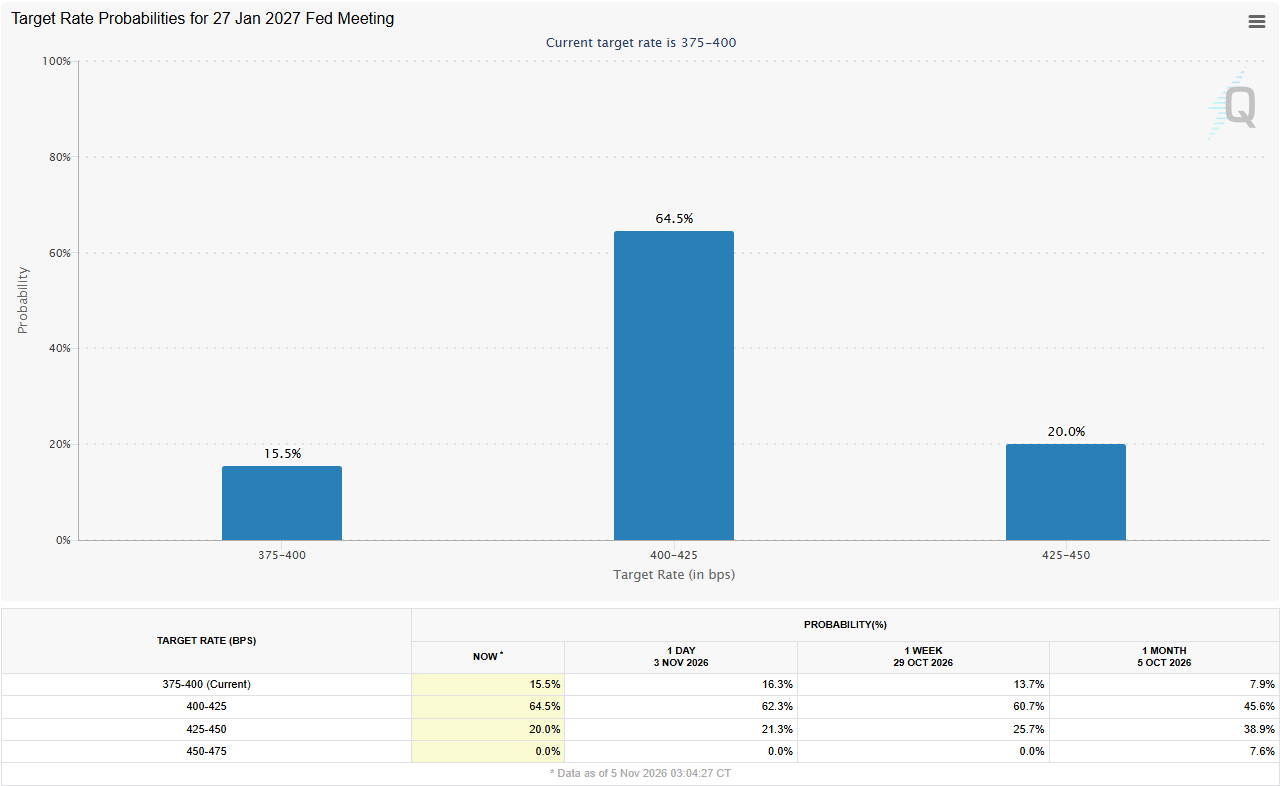
By contrast, a reading above 80K would represent a sizeable upside surprise and could give the USD an immediate lift, prompting a downward correction in EUR/USD. Any lasting benefit to the USD from the employment figures could nevertheless be limited if investors avoid sizeable positions before next week’s key US inflation releases.
A brief EUR/USD technical assessment comes from Eren Sengezer, European Session Lead Analyst at FXStreet:
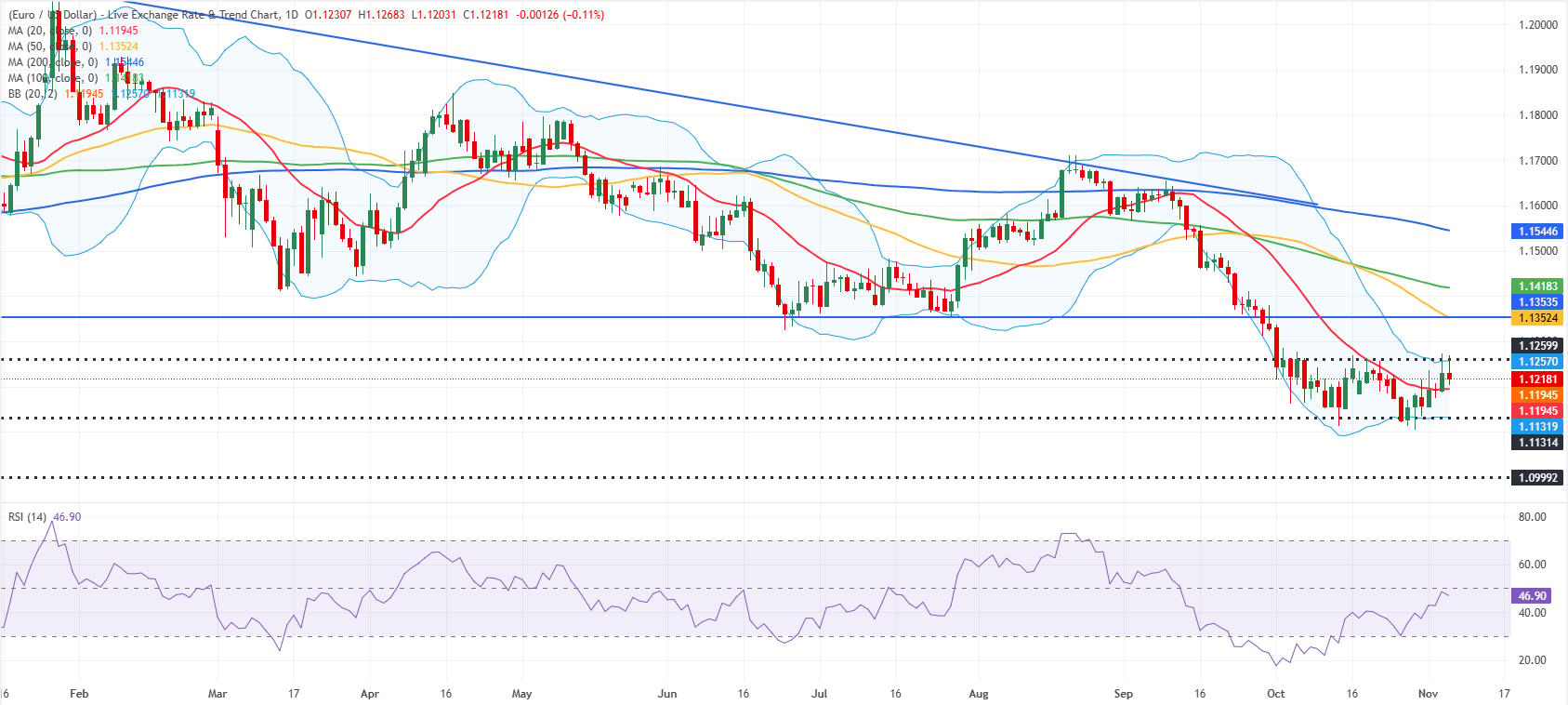
“The near-term technical outlook suggests that EUR/USD is struggling to complete a bullish reversal. The pair holds above the 20-day Simple Moving Average (SMA) but the Relative Strength Index (RSI) indicator on the daily chart stays slightly below 50.”
“On the upside, 1.1350 (static level, 50-day Simple Moving Average (SMA), former support) aligns as the first resistance level ahead of 1.1420 (100-day SMA). A daily close above the latter could attract technical buyers and open the door for an extended bullish action toward 1.1540 (200-day SMA).”
“Looking south, the first support level could be spotted at 1.1130 (lower arm of the Bollinger Bands) before 1.1000 (static level, round level).”
Within the monthly jobs report published by the US Bureau of Labor Statistics, Nonfarm Payrolls (NFP) measure the previous month’s change in the number of people employed in the US, excluding the agricultural sector.
By indicating how effectively the Federal Reserve is fulfilling its mandate to promote full employment and 2% inflation, Nonfarm Payrolls can shape its policy decisions. When the NFP figure is relatively high, more people are employed and earning more money, making increased spending likely. A relatively low reading, by contrast, could suggest that people are having difficulty finding work. To counter high inflation caused by low unemployment, the Fed typically increases interest rates. It usually cuts rates to revive a stagnant labour market.
The US Dollar typically strengthens when Nonfarm Payrolls exceed expectations and weakens when they fall short, reflecting a generally positive correlation between the two. This relationship operates through the effects of NFP on inflation, interest rates and monetary policy expectations. A stronger NFP reading usually points to tighter Federal Reserve policy, lending support to the USD.
Gold prices and Nonfarm Payrolls generally move in opposite directions: an above-forecast payrolls reading tends to put downward pressure on Gold, while a below-forecast figure tends to have the reverse effect. As with most major commodities, Gold is priced in US Dollars. Stronger NFP figures generally support the USD, so an increase in the currency’s value means fewer Dollars are needed to purchase an ounce of Gold. Higher NFP readings also typically help push interest rates up. This makes Gold less appealing as an investment relative to holding cash, which at least earns interest.
Other elements of the broader jobs report can overshadow Nonfarm Payrolls, which represent just one part of the release. Markets have sometimes treated lower-than-expected Average Weekly Earnings as deflationary even when NFP exceeded forecasts, looking past the potentially inflationary implications of the headline figure. The Participation Rate and Average Weekly Hours can also shape the market’s response, although this occurs only in exceptional episodes such as the “Great Resignation” or the Global Financial Crisis.










The information provided on this website is of a general nature only and does not constitute personal financial advice. Before acting on any information on this website, you should consider the suitability of the information in relation to your objectives, financial situation and needs. Investing in CFDs and FX Margin Contracts carries significant risks and is not suitable for all investors. You may lose more than your initial deposit. You do not own, or have, any interest in the underlying asset. We recommend that you seek independent advice and ensure you fully understand the risks involved before trading. It is important that you read and consider the disclosure document before you acquire any product listed on the website. The information and advertisements offered on this website are not intended for use by any person in any country or jurisdiction where such use would be contrary to local laws and regulations. The Products and Services offered on this website are not intended for residents of the United States, Malaysia and Thailand.
TMGM is authorized and regulated in various jurisdictions.
Trademax Australia Limited, trading as TMGM, is regulated by the Australian Securities and Investments Commission (ASIC), AFSL no. 436416 and is located at Level 28, One International Tower, 100 Barangaroo Avenue, 2000 Sydney, NSW Australia.
Email: support@tmgm.com.au
Trademax Global Limited, trading as TMGM, is authorized and regulated by the Vanuatu Financial Services Commission (VFSC), registration number 40356 and registered at 1276, Kumul Highway, Port Vila, Vanuatu, Republic of Vanuatu.
Email: support@tmgm.com
Trademax Global Markets (SE) Limited, trading as TMGM, is authorized and regulated by the Financial Services Authority (FSA) of Seychelles, with license number SD224. The company is registered at Office No 13, Providence Estate ABIS Centre, Mahe, Seychelles.
Email: support@tmgm.com
Trademax Global Markets (International) Pty Ltd, trading as TMGM, is authorized and regulated by the Financial Services Commission, Mauritius (FSC) with license no. GB22201012, and registered at 33, Edith Cavell Street C/o IQ EQ Fund Services (Mauritius) Ltd Port Louis, 11324 Mauritius.
Email: support@tmgm.com
Copyright © TMGM. All rights reserved

