What Is Crypto CFD Trading?
Crypto CFD trading enables investors to trade cryptocurrencies based on price speculation, rather than physically buying or selling the underlying asset. CFDs, or Contracts for Difference, allow traders to speculate on rising and falling markets.
In crypto CFD trading, investors can take either a long position (if they believe the price will rise) or a short position (if they expect the price to drop). The trader's profit or loss is determined by the difference in the cryptocurrency's price from when the contract is opened to when it is closed.
Leverage is commonly used in CFD Trading, which means traders can open larger positions than their capital would normally allow. For instance, with a leverage ratio of 10:1, a trader could control $10,000 worth of cryptocurrency with just $1,000. While this amplifies potential profits, it also significantly increases risk.
How Does Crypto CFD Trading Work?
Market Research for Crypto CFDs: Traders must assess the overall market sentiment and examine relevant technical indicators. Researching key factors like crypto regulations, adoption rates, or technological advancements can help you make informed decisions.
Select Your Cryptocurrency Pair: Popular pairs include BTC/USD, ETH/USD, and LTC/USD. Crypto CFDs are typically paired with major fiat currencies like USD or EUR. Brokers may also offer crypto-to-crypto pairs such as ETH/BTC.

Place a CFD Trade on Cryptocurrency: After analysis, traders can take a long or short position, depending on their market outlook. For example, if you expect Bitcoin to rise, you might take a long position on BTC/USD.
Apply Risk Management Tools: CFDs offer features like stop-loss orders, which automatically close a trade if the market moves against your position by a certain amount. This can help protect your capital.
Monitor and Close the CFD Position: Stay vigilant in monitoring your trade. If the market moves in your favor, you can close the position and lock in profits, or cut losses if the market turns against you.
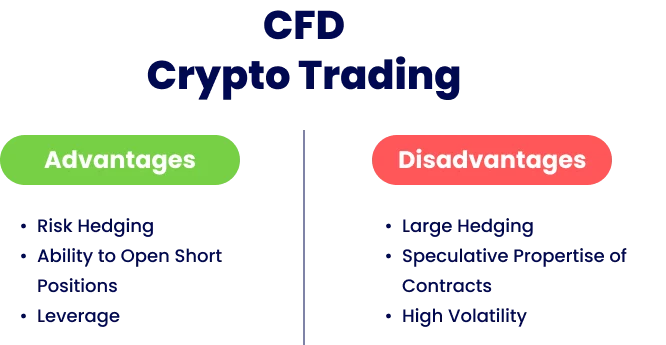
Advantages of Crypto CFD Trading:
No Ownership of Crypto Assets in CFD Trading: You don’t need to worry about setting up wallets or managing the technical aspects of cryptocurrency ownership.
Opportunities for Short and Long Positions: Profit from both bullish and bearish markets.
Leverage in Crypto CFD Trading: You can open larger positions with leverage, which entails higher risk.
Disadvantages of Crypto CFD Trading:
Risks of Significant Losses with CFDs: Due to leverage, losses can exceed initial capital.
Navigating Market Volatility with Crypto CFDs: Cryptocurrency prices are known for their extreme volatility, which can lead to unexpected results.

Key Benefits of Crypto CFD Trading
Using Leverage to Amplify Exposure: Leverage allows you to control a larger position with a smaller initial investment. However, it can also lead to amplified losses, so using leverage wisely is crucial.
Trading Crypto CFD Price Swings: Cryptocurrency markets are known for their high volatility, providing ample trading opportunities, particularly for short-term traders like scalpers or day traders.
Access to a Range of Crypto CFD Markets: CFDs allow traders to access various markets, including Bitcoin, Ethereum, Ripple, and more, without the complexities of owning and storing crypto.
Popular Crypto CFD Trading Strategies
Scalping Strategies in Crypto CFD Trading: This strategy involves making numerous small daily trades, aiming to profit from minor price fluctuations. Scalping can be profitable in the highly volatile crypto market but requires quick decision-making and constant market monitoring.
Day Trading Tactics for Crypto CFDs: Positions are opened and closed within a single trading day. Day Traders often rely on technical analysis and use chart patterns to make decisions. This approach limits exposure to overnight market shifts, which can be highly volatile in the crypto world.
Swing Trading Crypto CFDs: Swing Traders hold positions for several days or weeks, hoping to profit from medium-term price movements. This strategy requires patience and often involves a blend of technical and fundamental analysis.
Using CFDs for Crypto Hedging: Hedging involves taking a position opposite to an existing trade to reduce risk. For example, if you hold Bitcoin and are worried about a potential price drop, you might short a BTC/USD CFD to hedge your exposure.
Crypto CFD trading offers a flexible and efficient way to gain exposure to the cryptocurrency market without the complexities of asset ownership. With the ability to trade both rising and falling markets and the added advantage of leverage, it can be a powerful tool for experienced traders.
However, beginners should approach crypto CFD trading cautiously, ensuring they understand the risks involved, especially regarding leverage and market volatility. Always use proper risk management strategies and keep learning as you gain experience.
By trading through platforms like TMGM, you can access a wide range of cryptocurrency pairs with advanced trading tools to maximize your potential returns.