
Introduction to Crypto Staking
Crypto staking has become a popular method for both cryptocurrency traders and holders to generate passive income while supporting blockchain networks. By locking their assets into the network, participants assist in transaction validation, enhance blockchain security, and receive rewards in return. This guide will cover the fundamentals of crypto staking, its operational mechanics, benefits, and associated risks. Although TMGM specializes in CFD trading, gaining an understanding of staking can provide valuable insights into the wider cryptocurrency market and support more informed trading decisions.
What is Crypto Staking?
Definition of Crypto Staking
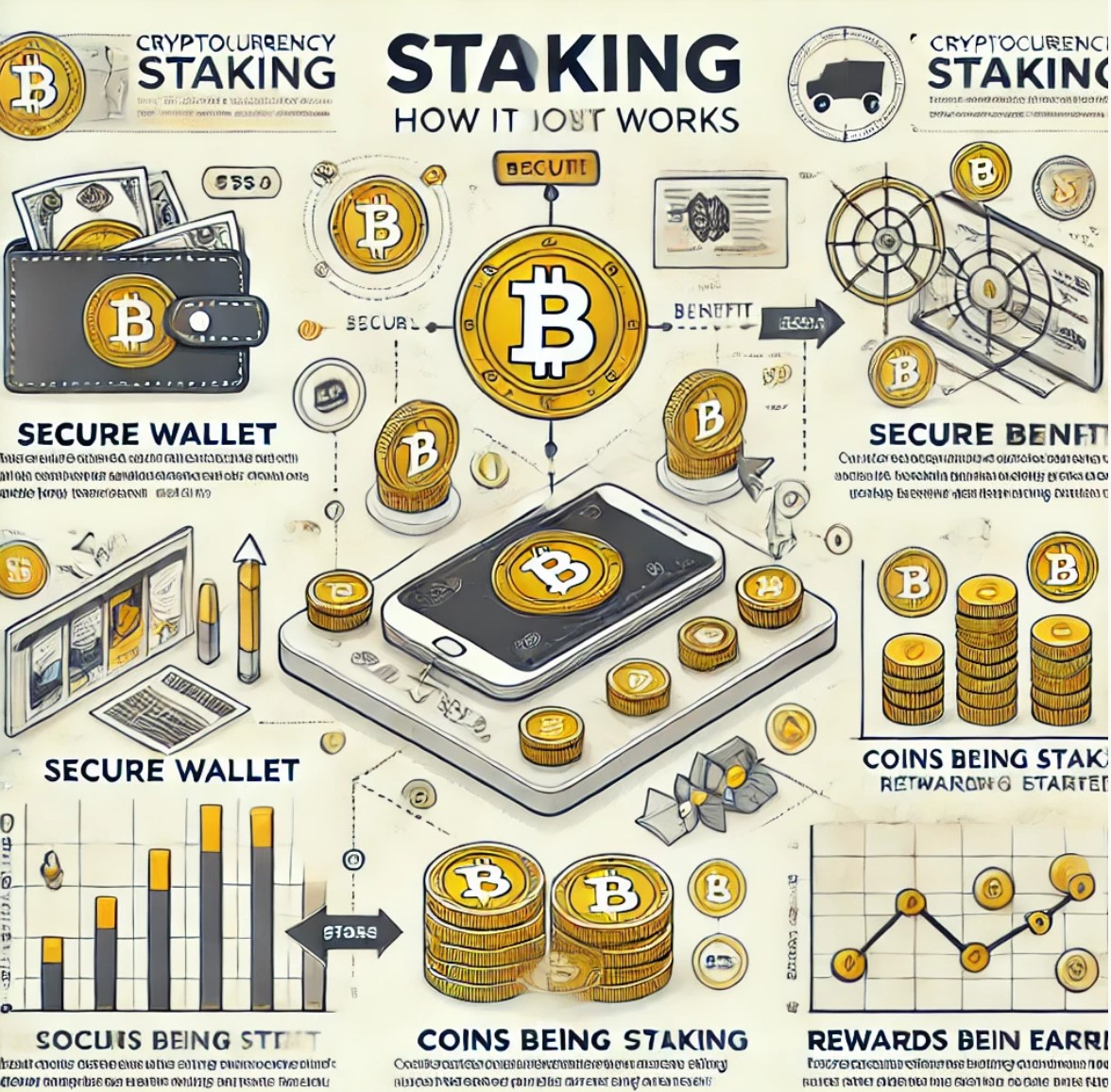
Crypto staking is the process whereby cryptocurrency holders lock their assets to support a blockchain network and validate transactions. It is a transaction validation method employed by cryptocurrencies utilizing the proof-of-stake consensus protocol.
How Crypto Staking Works
The Crypto Staking Process Explained
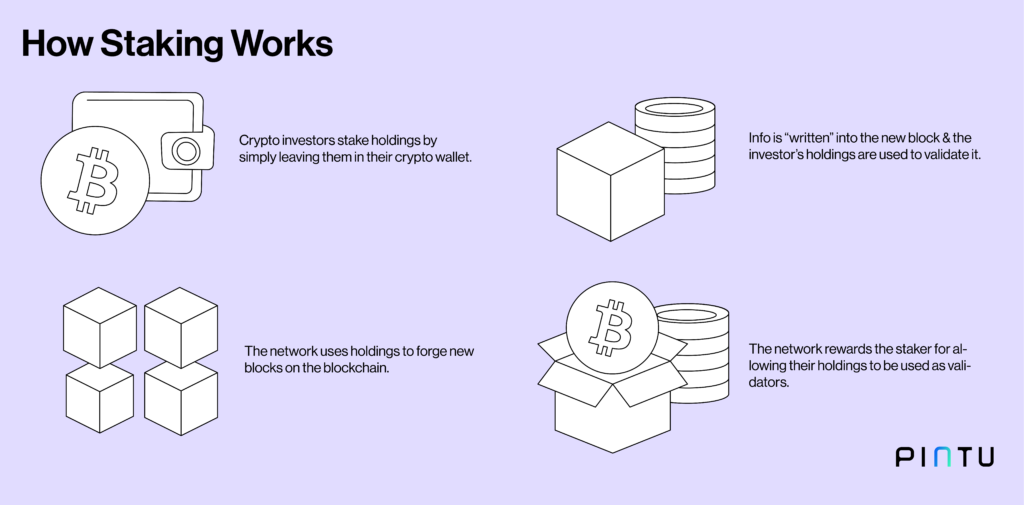
Users lock a portion of their cryptocurrency holdings in a staking wallet.
This staked amount serves as collateral to participate in transaction validation.
Validator Node Selection in Staking Networks
The network selects validators (nodes) based on the amount of cryptocurrency staked.
Typically, the larger the stake, the higher the probability of being chosen to validate transactions.
Transaction Validation in Crypto Staking
Selected validators confirm new transactions.
Upon successful validation, a new block is appended to the blockchain.
Reward Distribution in Staking Systems
Validators earn rewards in the form of additional cryptocurrency tokens.
These rewards are generally proportional to the amount staked.
TMGM Perspective: While TMGM does not provide direct staking services, understanding this mechanism can assist traders in anticipating price movements in proof-of-stake cryptocurrencies.
Proof-of-Stake vs. Proof-of-Work
Proof-of-Stake (PoS) in Crypto Staking
Utilizes staking to validate transactions
More energy-efficient consensus mechanism
Typically offers faster transaction confirmation times
Proof-of-Work (PoW) vs Crypto Staking
Relies on computational power to solve complex cryptographic puzzles
More energy-intensive process
Used by cryptocurrencies such as Bitcoin
TMGM Offering: TMGM offers CFD trading on both PoS and PoW cryptocurrencies, enabling traders to capitalize on price fluctuations regardless of the underlying consensus algorithm.
Benefits of Crypto Staking
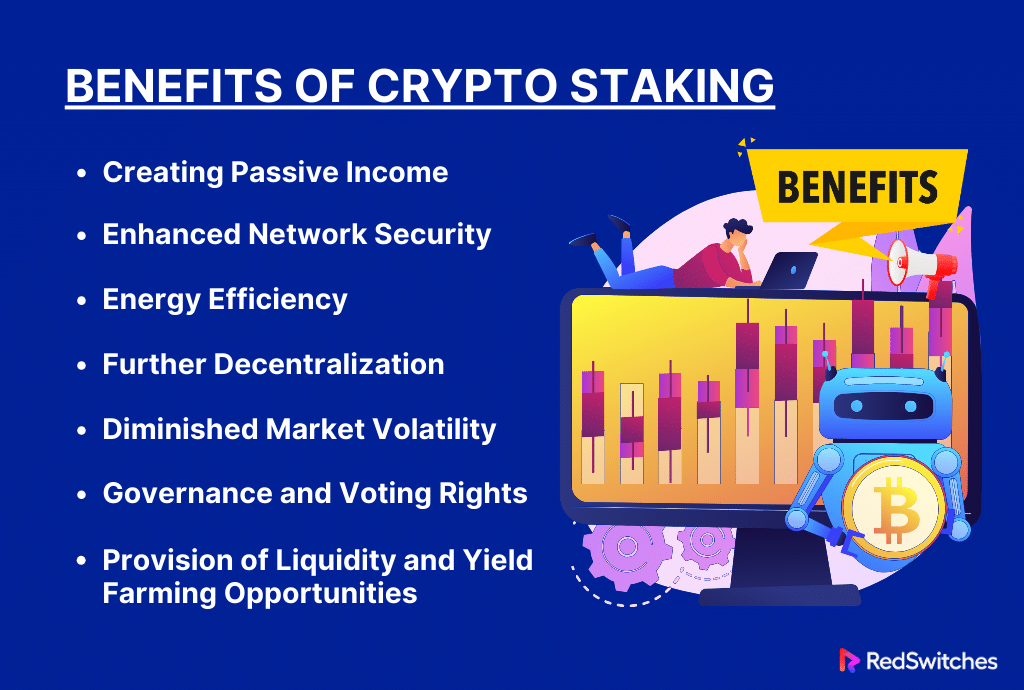
Generating Passive Income through Crypto Staking
Staking allows investors to earn passive income by locking digital assets within a blockchain network. Unlike active strategies such as day trading, staking provides rewards without the need to time the market or execute frequent trades.
How Crypto Staking Enhances Network Security
Staking is essential for securing proof-of-stake blockchains. By incentivizing validators to act honestly, the network preserves its integrity. This long-term incentive contrasts with spot trading, which targets short-term price movements and immediate asset ownership.
Energy Efficiency: Crypto Staking vs Mining
Proof-of-stake networks consume significantly less energy compared to proof-of-work mining operations.
Potential for Appreciation in Staked Assets
While assets are staked, they may still appreciate in value. Traders often assess growth potential using technical analysis tools such as Fibonacci retracement, particularly when evaluating staking-related tokens for long-term investment.
TMGM Alternative:
Although TMGM does not provide direct staking, traders can benefit from price movements of staking-related cryptocurrencies through CFD trading.
Risks and Considerations in Crypto Staking
Volatility Risk in Staking
The market value of staked assets and earned rewards can experience significant fluctuations.
Liquidity Risk in Staking Platforms
Staked assets are often locked for a fixed period, limiting liquidity.
Technical Risks in Staking Systems
There is a risk of losing staked assets due to system failures or bugs
Risk of forfeiting stake if the validator node is offline when required
Regulatory Risks in Crypto Staking
Changing regulations may affect staking platform operations or the taxation of staking rewards. Staying informed about regulatory developments is crucial to avoid unexpected impacts on earnings or compliance.
TMGM Risk Management:
When trading crypto CFDs on TMGM, utilize stop-loss orders and appropriate position sizing to mitigate risks associated with cryptocurrency volatility.
Popular Cryptocurrencies for Staking
Ethereum 2.0 and the Evolution of Crypto Staking
Transition from proof-of-work to proof-of-stake consensus.
Staking Cardano (ADA) for Passive Rewards
Built on a proof-of-stake system from inception.
Staking Polkadot (DOT) via Proof-of-Stake
Employs a nominated proof-of-stake (NPoS) mechanism.
Staking Tezos (XTZ) on Blockchain Networks
Introduced the concept of "liquid proof-of-stake".
TMGM Trading Opportunities: TMGM offers CFD trading on a range of cryptocurrencies, including those utilizing proof-of-stake protocols.
Crypto Staking vs. Other Crypto Strategies
Staking vs. Mining in Crypto Explained
Staking: Holding and "locking" coins to validate transactions
Mining: Utilizing computational power to solve cryptographic puzzles
Staking vs. Yield Farming: Key Differences
Staking: Generally simpler with typically lower returns
Yield Farming: More complex, potentially higher returns but with increased risk
Staking vs. Traditional Crypto Trading
Staking: Passive income strategy requiring minimal active management
Trading: Active approach involving market analysis and frequent decision-making
TMGM Trading: While TMGM does not offer direct staking or yield farming, it provides a robust platform for actively trading cryptocurrency CFDs.
How to Get Started with Crypto Staking
Select a Proof-of-Stake Cryptocurrency to Stake
Conduct research on various PoS cryptocurrencies and their staking requirements.
Acquire the Selected Cryptocurrency for Staking
Purchase the cryptocurrency via a reputable exchange.
Choose a Staking Method That Fits Your Needs
Options include:
Exchange-based staking
Wallet staking
Participating in a staking pool
Stake Your Cryptocurrency and Begin Earning Rewards
Follow the specific procedures for your chosen method and cryptocurrency.TMGM Alternative
: If you prefer to profit from cryptocurrency price fluctuations without engaging in staking complexities, consider trading crypto CFDs on TMGM's platform.
Future of Crypto Staking
Increasing Adoption of Crypto Staking
A growing number of cryptocurrencies are transitioning to PoS consensus mechanisms.
Rising Institutional Interest in Staking Cryptocurrencies
More institutional investors are engaging in staking activities.
Regulatory Developments Affecting Crypto Staking
Evolving regulatory frameworks may influence the staking ecosystem.TMGM Commitment
TMGM remains committed to monitoring developments in the cryptocurrency market to deliver timely trading opportunities and insights.