

Crypto Today: Bitcoin, Ethereum and XRP pare losses on increasing bets of Fed tighter monetary policy
- Bitcoin extends its decline near $64,000 support as a hawkish Fed stance weighs on risk assets.
- Ethereum slides but holds above $1,700, with short-term support anchored by gradually uptrending momentum indicators.
- XRP sellers tighten their grip for the third consecutive day amid cooling retail demand.
Cryptocurrency prices are broadly moderating downwards on Thursday, as market participants assess the impact of the Federal Reserve’s (Fed) hawkish monetary policy stance. Bitcoin (BTC) edges lower, with support at $64,000 holding. Ethereum (ETH) remains constrained between demand at $1,700 and resistance at $1,800, while Ripple (XRP) slides further below the pivotal $1.20.

Rate hike bets rise amid Fed hawkish stance
The Federal Open Market Committee (FOMC) held interest rates steady in the 3.50%-3.75% range on Wednesday, a move fully priced in by investors. What drew close attention were comments from Fed Chairman Kevin Warsh in his first post-meeting press conference, which doubled down on the 2% inflation target as a “long-held objective” that is “primarily driven by monetary policy.”
The press conference made it clear that the central bank under Warsh is committed to price stability, which entails tighter monetary policy, especially as inflation rocketed to a three-year high in May due to higher Oil and energy prices and geopolitical tensions in the Middle East.
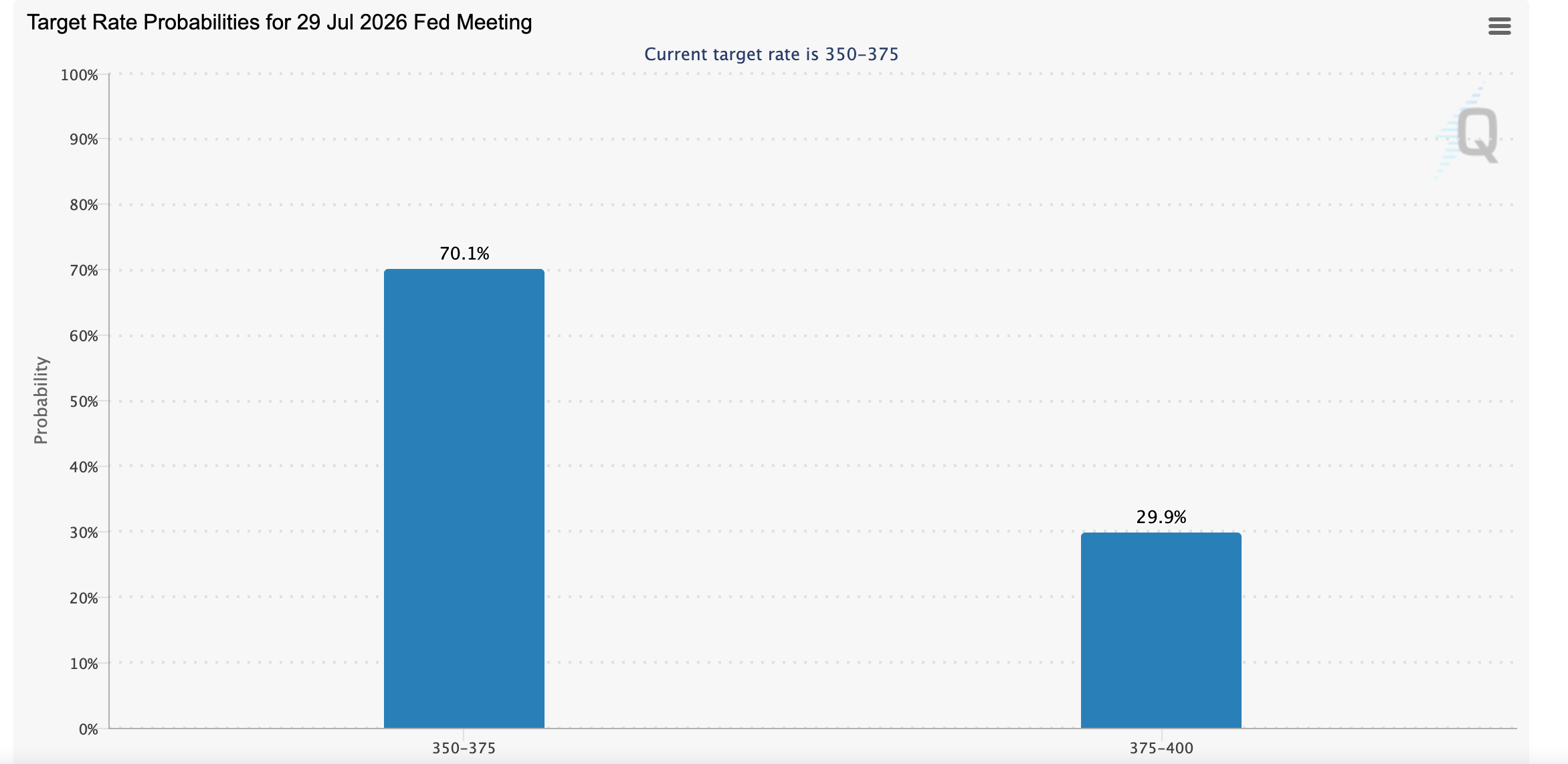
Traders are currently pricing in a roughly 30% chance of a rate hike at the upcoming Fed meeting, while consensus expectations remain skewed toward a 70% likelihood that rates will be left unchanged. Very few market participants had considered the possibility of a rate hike at the start of 2026.
Meanwhile, the White House announced late Wednesday that US President Donald Trump and Iran’s Masoud Pezeshkian have signed a Memorandum of Understanding (MoU) aimed at ending the US-Israel conflict with Iran, according to BBC sources. Iranian authorities clarified that the nation will not revert to prewar norms and indicated plans to impose transit fees on ships passing through the region, following a 60-day toll-free window outlined in the MoU.
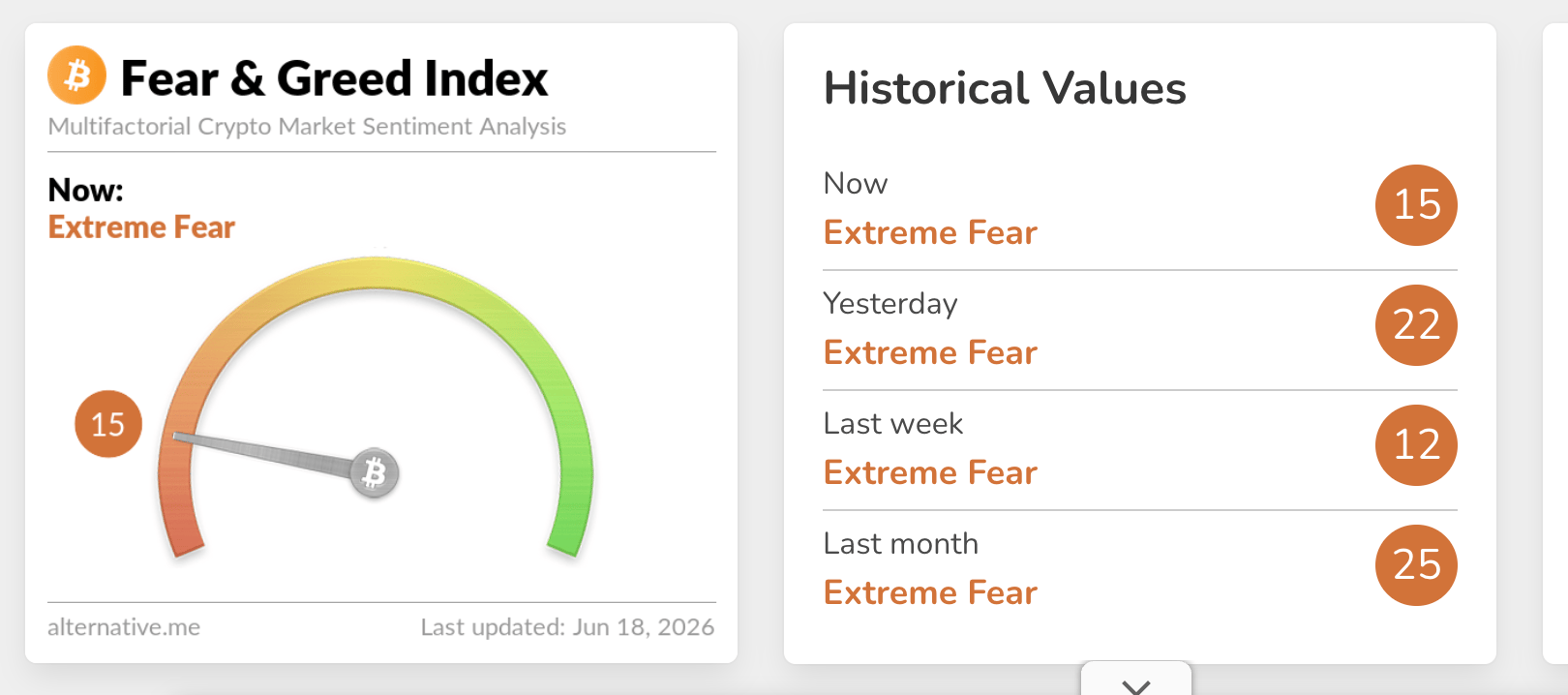
Sentiment in the broader crypto market softened, as reflected in the Fear & Greed Index, which holds at 15 in the Extreme Fear territory on Thursday, down from 22 the day before. This shows that investors are cautious toward risk assets, with exposure likely to remain subdued in the short term.
Price analysis: Bitcoin holds key support amid ongoing pressure
Bitcoin trades above $64,000, holding a capped bias as it remains below the 50-day, 100-day and 200-day Exponential Moving Averages (EMAs) despite improving momentum signals. The Moving Average Convergence Divergence (MACD) histogram stays positive on the daily chart while the Money Flow Index (MFI) hovers just below the neutral 50 mark, suggesting upside attempts are possible but still constrained by overhead trend levels.
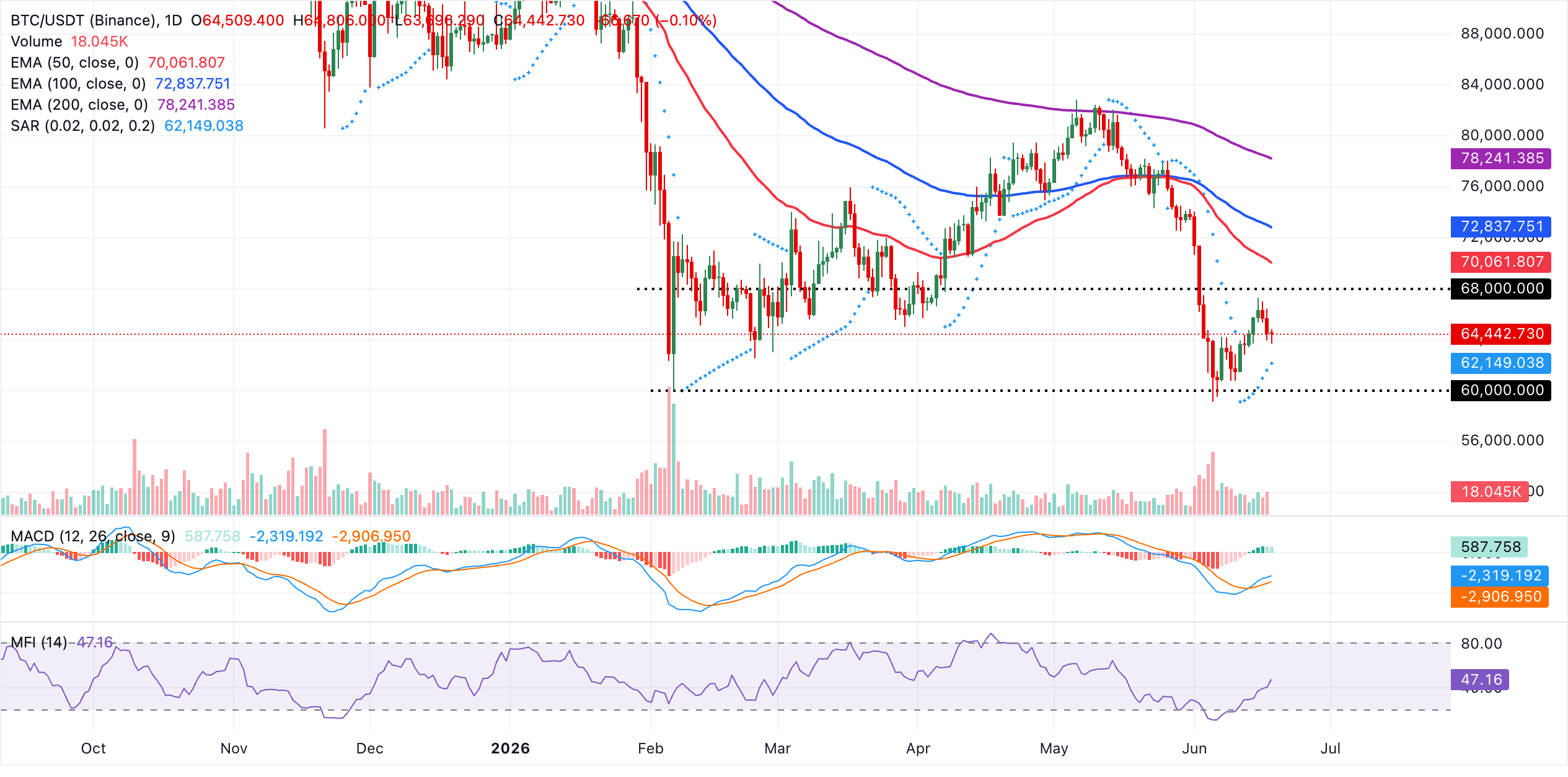
Initial resistance is aligned with the 50-day EMA near $70,062, followed by the 100-day EMA around $72,838 and the more dominant 200-day EMA close to $78,241, which together define a broad supply band that would need to be reclaimed to ease the broader bearish pressure. On the downside, the first notable support emerges at the Parabolic SAR level around $62,149, where a break would expose a deeper corrective phase toward lower uncharted levels on this dataset.
Altcoins technical outlook: Ethereum and XRP consolidate losses as headwinds intensify
Ethereum trades at $1,747, maintaining a bearish near-term bias as price holds below the 50-day, 100-day and 200-day EMAs clustered between roughly $1,946 and $2,375. The alignment of these EMAs above spot reinforces a capped structure despite a positive MACD histogram on the daily chart and a MFI hovering just under the neutral 50 line, which together hint at stabilizing but still fragile momentum.
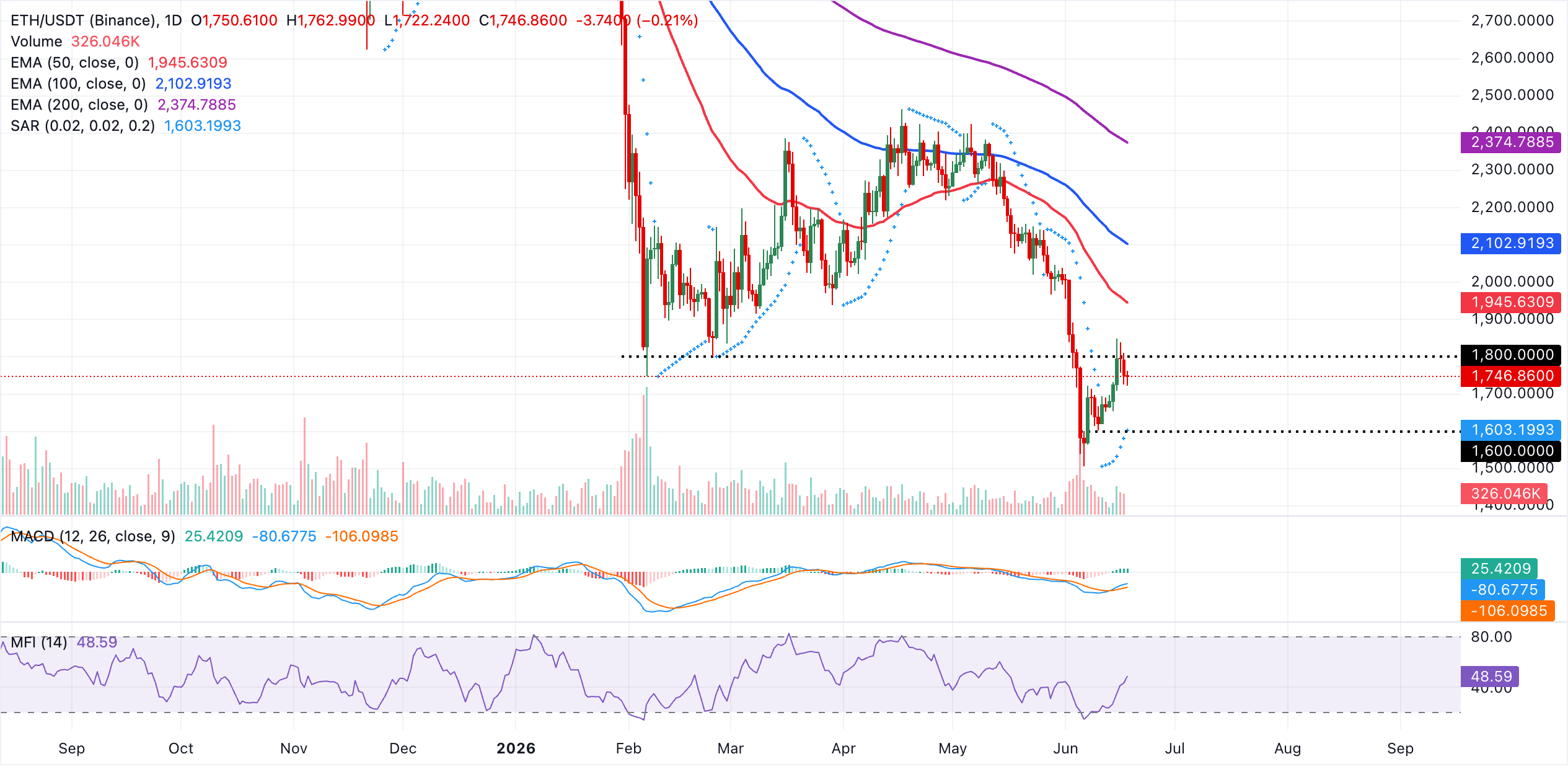
Looking up, initial resistance is seen at the 50-day EMA near $1,945, followed by the 100-day EMA around $2,103 and the 200-day EMA close to $2,375, levels that would need to be reclaimed to ease the broader downside pressure. On the downside, the Parabolic SAR at approximately $1,603 acts as the next notable support, and a break beneath this zone would open the door to a continuation of the prevailing bearish phase.
XRP is holding just above $1.17 after slipping below the key $1.20 support amid waning retail demand. Futures Open Interest (OI) dropped to $2.66 billion on Thursday, down from $2.79 billion the previous day, reflecting diminished risk appetite in derivatives markets. The persistent decline in OI signals bearish sentiment among traders, who remain hesitant to initiate fresh long positions.
The remittance token maintains a bearish near-term bias as price holds below the 50-day, 100-day and 200-day EMAs, which fan out above the market and suggest a capped medium-term structure. Still, the MACD histogram remains above its zero line, hinting that downside momentum is losing traction even as the broader trend stays under pressure.
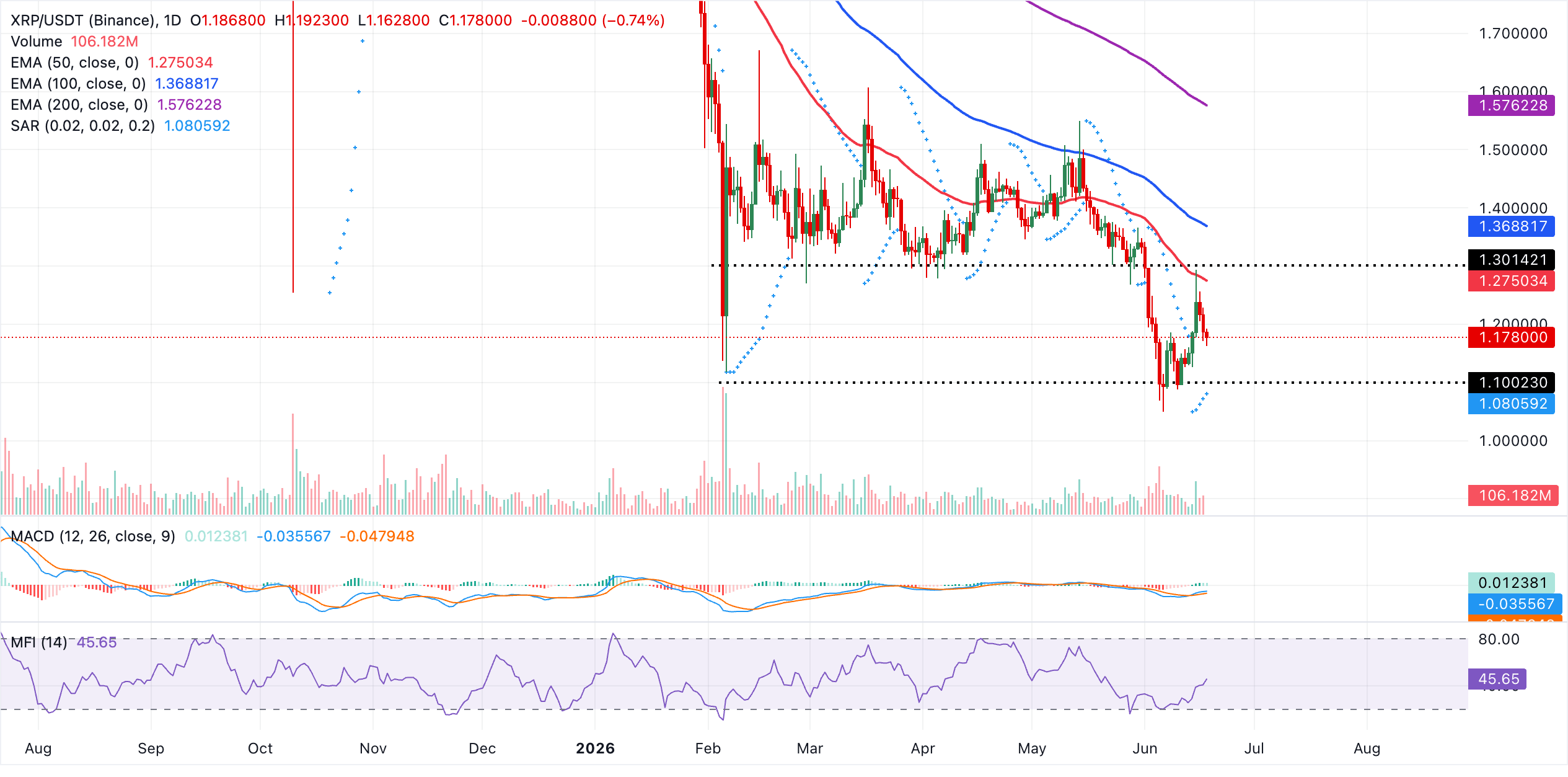
On the topside, initial resistance emerges at the 50-day EMA near $1.28, followed by the 100-day EMA around $1.37 and the 200-day EMA closer to $1.58, levels that would need to be reclaimed to ease the prevailing bearish tone. On the flip side, the first notable support is aligned with the latest Parabolic SAR reading around $1.08. A clear break below this area would likely expose lower levels as money flow, currently mid-range on the MFI, would have scope to deteriorate further.
(The technical analysis of this story was written with the help of an AI tool.)
Bitcoin, altcoins, stablecoins FAQs
Bitcoin is the largest cryptocurrency by market capitalization, a virtual currency designed to serve as money. This form of payment cannot be controlled by any one person, group, or entity, which eliminates the need for third-party participation during financial transactions.
Altcoins are any cryptocurrency apart from Bitcoin, but some also regard Ethereum as a non-altcoin because it is from these two cryptocurrencies that forking happens. If this is true, then Litecoin is the first altcoin, forked from the Bitcoin protocol and, therefore, an “improved” version of it.
Stablecoins are cryptocurrencies designed to have a stable price, with their value backed by a reserve of the asset it represents. To achieve this, the value of any one stablecoin is pegged to a commodity or financial instrument, such as the US Dollar (USD), with its supply regulated by an algorithm or demand. The main goal of stablecoins is to provide an on/off-ramp for investors willing to trade and invest in cryptocurrencies. Stablecoins also allow investors to store value since cryptocurrencies, in general, are subject to volatility.
Bitcoin dominance is the ratio of Bitcoin's market capitalization to the total market capitalization of all cryptocurrencies combined. It provides a clear picture of Bitcoin’s interest among investors. A high BTC dominance typically happens before and during a bull run, in which investors resort to investing in relatively stable and high market capitalization cryptocurrency like Bitcoin. A drop in BTC dominance usually means that investors are moving their capital and/or profits to altcoins in a quest for higher returns, which usually triggers an explosion of altcoin rallies.














