

Japanese Yen outlook looks weak despite expectations of BoJ rate hike
The Japanese Yen (JPY) continues to face strong headwinds, trading back above the critical 160.00 threshold against the US Dollar despite improving domestic fundamentals. While Japan's current account surplus has surged to historic highs and the Bank of Japan (BoJ) prepares for an upcoming policy meeting with an interest rate hike almost fully priced in, these positive drivers are being completely overshadowed by broader macroeconomic pressures.
Elevated global energy prices and geopolitical friction continue to dominate market sentiment, leaving major financial institutions aligned on a soft near-term path for the Japanese currency.

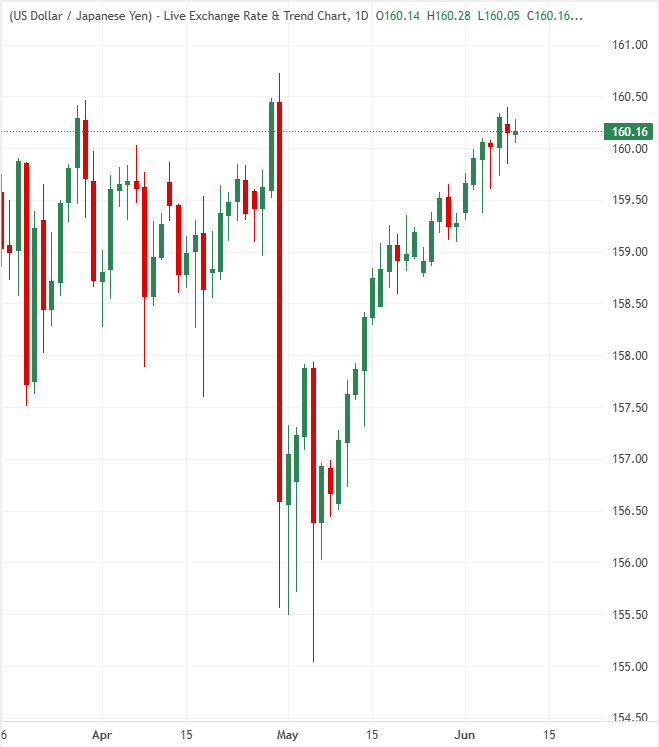
Improving trade fundamentals clash with external geopolitical shocks
Analysts at Commerzbank note that Japan's structural economic backdrop is showing clear signs of independent strength, highlighted by a high current account surplus. However, they argue that these domestic improvements are currently taking a backseat in the currency markets. Instead, global commodity fluctuations and international conflicts remain the primary forces suppressing the Yen's value.
In the short term, however, the exchange rate will continue to be determined primarily by the Iran conflict and the price of Oil.
Anticipated policy normalisation fails to shift bearish Yen sentiment
Looking closely at monetary policy dynamics, strategy experts at MUFG point out that upcoming tightening steps from the Bank of Japan are already heavily anticipated by investors. Because the market has already factored in aggressive policy updates (including potential interest rate hikes and future shifts in government bond purchasing programs), such moves are unlikely to spark an independent recovery for the struggling currency until international commodity pressures cool.
Overall, the latest developments have not changed our view that the Yen is likely to remain weak in the near-term until the worst of the energy price shock begins to fade.
Banks point toward persistent near-term weakness for the Japanese Yen
Both institutions maintain a bearish near-term outlook for the Japanese Yen, predicting it will remain weak in the months ahead. Commerzbank explicitly states that external forces like Oil prices and geopolitics will continue to dominate the exchange rate over short-term domestic improvements. Echoing this soft sentiment, MUFG projects that the currency will struggle to find meaningful upward traction, noting that even expected interest rate hikes from the BoJ will fail to trigger a structural reversal until global energy market shocks begin to subside.
(This article was created with the help of an Artificial Intelligence tool and reviewed by an editor.)














