Bridgewater’s Ray Dalio: Gold Is the Safest “Money”; Overweight in War and Crises—Will Gold Keep Rising?
Ray Dalio, co-founder of Bridgewater Associates, argues that gold should be treated as a base form of money rather than a speculative asset. He recommends a strategic allocation of 5%–15%, with a higher weighting during periods of war or when fiat currencies are depreciating.
Historically, currencies fall into two categories:
those pegged to scarce, globally accepted hard assets such as gold or silver; and
fiat currencies with no physical backing and no supply cap. Whenever a currency system tied to hard assets becomes burdened with excessive debts or promises, it ultimately collapses.

Policymakers then face a fork in the road: either honor the promises, which leads to debt defaults and a deflationary Great Depression; or break the promises by printing money excessively, which results in high inflation and rising gold prices.
Before the Federal Reserve was founded in 1913, the U.S. tended to take the deflationary path; afterward it has mostly chosen to print. Dalio notes that both paths eventually reduce the debt-to-income ratio, allowing the economy to restart at a higher overall price level.
Since the end of the Bretton Woods system in 1971, the world has been in a pure-fiat era. The lessons from collapses of such systems are highly relevant today: central banks repeatedly create large amounts of money and credit, leading to higher inflation and higher gold prices.
As a substitute for paper-debt money, gold has excelled, maintaining the best long-term purchasing power—one reason it is the second-largest reserve asset held by central banks.
Gold does not rely on anyone’s promise to redeem it; it can be held securely and is hard to steal via cyberattacks. During financial crises that bring higher tax burdens or during economic emergencies, gold typically appreciates sharply.
Market take:
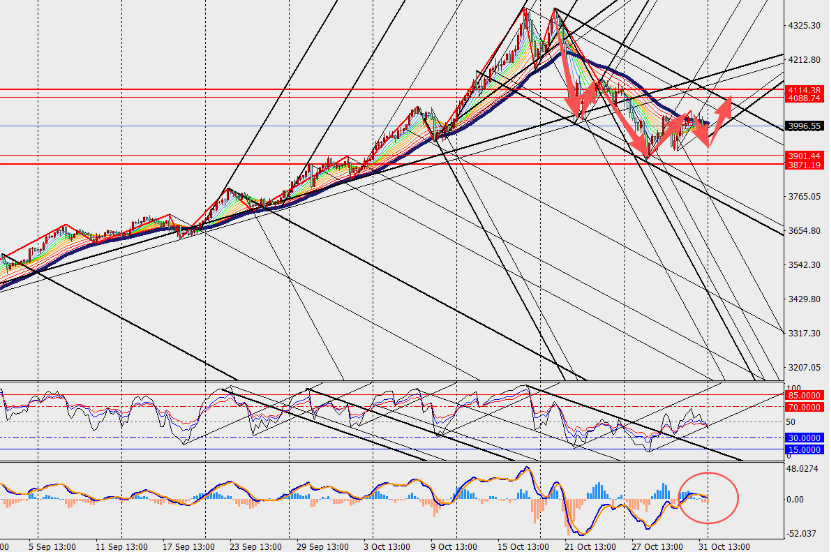
On the 4-hour chart, gold is ranging, but the MACD lines and histogram are expanding above the zero line. Dalio places gold inside a holistic asset-allocation framework—treating it as comparable to cash—and evaluates it by expected return, risk, correlation, liquidity, and sizing. While many investors still view gold as a speculative trade, strategic allocation should come first.