[TMGM Financial Breakfast] Gold Stress Test Shows Safe-Haven Demand Still Intact, but Panic Has Yet to Peak
The United States and Israel launched a sudden strike on Iran over the weekend, prompting a series of retaliatory actions from Tehran. As global markets reopened, sentiment was tense, and gold surged on Monday, briefly touching a high of $5,419 per ounce.
The initial spike sent a clear message: gold’s safe-haven function remains effective. However, what followed was even more telling. Prices retreated sharply from their highs, and this price action matters more than the headlines. This is not about whether geopolitical risks have escalated, but about how markets price that escalation and how quickly they reassess the situation.

At the market open, gold behaved exactly as a safe-haven asset should during geopolitical conflict — immediate repricing, no hesitation, no liquidity breakdown, no delay. The subsequent pullback is the true signal. Despite alarming headlines and intense rhetoric, gold failed to hold its peak gains. This does not mean risks have vanished; rather, it suggests markets are not yet positioning for prolonged regional instability.
Markets initially priced in a worst-case scenario and then began to recalibrate. This does not resemble pricing for regime-change-level disruption, but rather a compression of risk premiums. Importantly, gold remains above its weekly lows, preventing the current move from being classified as a structural breakdown.
If investors become convinced that the Iran conflict will be resolved swiftly and decisively, the pullback could deepen significantly. Instead, what we are seeing is controlled compression — markets trimming emergency hedges rather than abandoning protection altogether.
Gold is not pricing the strike itself; it is pricing how long instability may persist. Duration matters more than drama. If the conflict appears likely to be resolved quickly, geopolitical premiums will gradually fade. But if retaliation expands or the conflict drags on, the path back toward historical highs could quickly come back into view.
Market Interpretation:
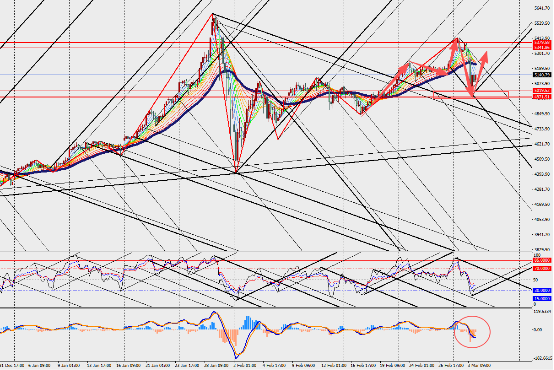
On the four-hour chart, gold has pulled back and rebounded, with MACD lines and the histogram converging below the zero axis. The surge confirmed that gold’s safe-haven appeal remains intact. The pullback confirms that investors have not yet priced in a permanent escalation.
This balance is significant. It indicates that gold holders remain largely institutional and rational, rather than driven by panic or speculative frenzy. The premium is flexible — not fragile.