Intel Beats Expectations as AI and Data Center Demand Drives Strong Growth
Intel Beats Expectations as AI and Data Center Demand Drives Strong Growth
TMGM Article Summary: Intel reported first-quarter results that exceeded Wall Street expectations, with a stronger-than-expected second-quarter revenue outlook. The results highlight robust demand for its processors used in AI-driven data centers.
After the U.S. market closed on Thursday, Intel announced first-quarter revenue of $13.6 billion, up 7.2% year-over-year and well above the $12.36 billion expected by analysts. The company also guided second-quarter revenue to a range of $13.8 billion to $14.8 billion, surpassing market expectations of $13.07 billion.

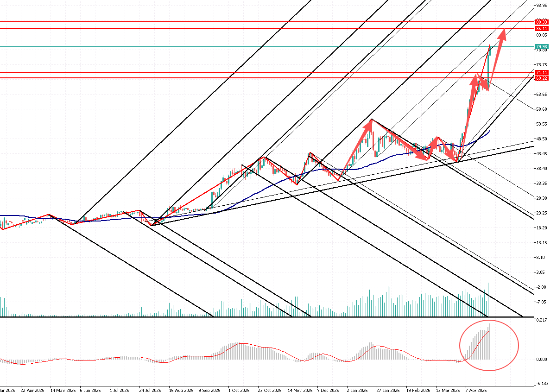
Following the announcement, Intel’s stock surged about 20% in after-hours trading, adding approximately $66 billion in market value and extending its recent rebound.
After years of management missteps that left the company lagging in the early stages of the AI boom, CEO Pat Gelsinger has introduced a restructuring plan aimed at strengthening the balance sheet through asset sales and workforce reductions. At the same time, Intel has secured major investments and partnerships with the U.S. government, SoftBank, and Nvidia, providing new funding for its manufacturing business and boosting confidence in its long-term growth outlook.
Although Intel missed the initial wave of AI growth, new opportunities are emerging as cloud customers shift from model training to deployment.
Gelsinger noted that the next wave of AI will bring intelligence closer to end users — moving from foundational models to inference and then to agent-based systems. This transition is expected to significantly increase demand for Intel’s CPUs, as well as its foundry and advanced packaging capabilities.
Intel CFO Dave Zinsner emphasized that CPUs are undergoing a “revival” and that the company is beginning to benefit meaningfully from the AI investment cycle. While GPUs remain dominant in large-scale matrix computations for generative AI, CPUs are better suited for inference workloads and autonomous AI agents.
Part of Intel’s optimistic outlook also reflects its decision to raise chip prices in response to rising manufacturing costs.
Despite the strong outlook, analysts caution that Intel’s ability to meet demand will depend on whether it can scale its manufacturing capacity reliably and avoid supply chain bottlenecks.
On the manufacturing side, Intel has made notable progress. The company has secured Tesla as its first customer for its next-generation 14A process node, which will be used in the “Terafab” advanced AI chip manufacturing project in Austin, Texas.
Market Interpretation
Intel’s long-term strategy represents a high-risk transformation — shifting from a traditional chipmaker to a competitive foundry player, with ambitions to challenge TSMC by 2030.
If Intel can successfully capture the growing demand driven by robotics and AI agents, its current valuation could be seen as an attractive long-term investment opportunity.