




[Breaking] China–US Leaders’ Summit Ends; Trump: It Was a “12 out of 10” Meeting. Multiple Agreements Reached, but Markets React Cautiously with Heightened Volatility; Gold Ticks Up, Dollar Edges Lower
Just now, the China–US leaders concluded their meeting, reaching a series of agreements, including China resuming purchases of US soybeans, maintaining the flow of rare earth exports, and pledging tougher action against the circulation of fentanyl precursor chemicals. In return, the United States will lower the overall tariff rate on Chinese goods from about 57% to around 47%.
Trump immediately held a press conference. He gave fairly detailed remarks on the outcomes, calling it a “12 out of 10” meeting—“amazing,” with “a series of outstanding decisions.” He also said he would visit China in April, and that Xi Jinping would visit the United States at some later date.

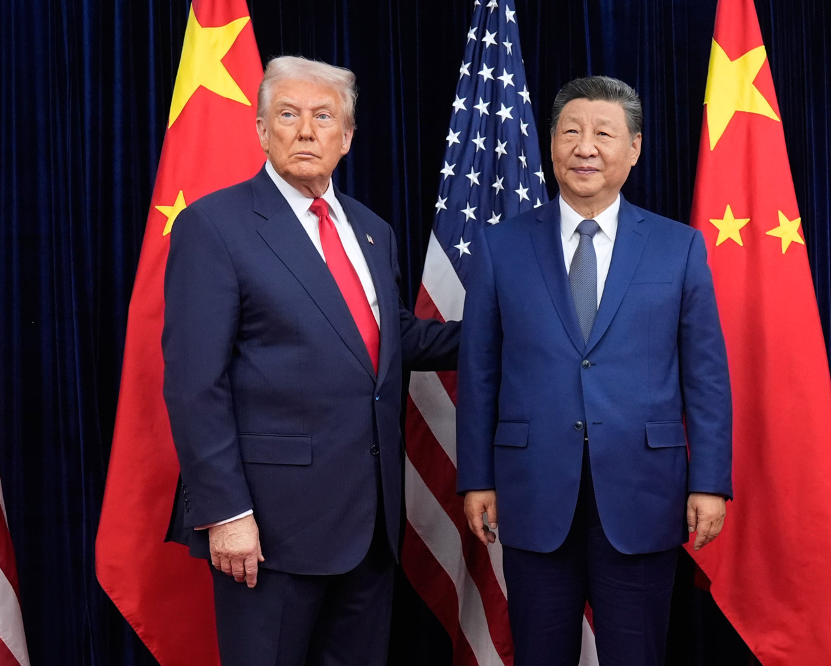
(Image source: Internet)
Core Takeaways from the Meeting
Tariffs and Purchase Agreements
At the press conference, Trump said the United States will reduce the overall tariff level on Chinese imports from roughly 57% to around 47%. China, for its part, pledged to resume purchasing soybeans from the US and to restart related agricultural purchases.
Rare Earth Exports and Critical Minerals
During the talks, Trump noted that China promised to “keep rare earths flowing,” adding that “the rare earths issue is resolved.” The agreement has a one-year term and can be renewed.
Fentanyl Precursor Chemicals & Security Issues
In the meeting, China promised the US it would work “very hard” to prevent precursor chemicals used to make fentanyl from being diverted. In return, the US will lower tariffs on related products from 20% to 10%.
Strategic Issues Remain Vague
Although media reports mentioned discussions on the war in Ukraine and the Korean Peninsula, key topics—such as Taiwan, semiconductor export restrictions, and technology supply-chain decoupling—did not see clear breakthroughs. Trump explicitly stated that “Taiwan was basically not discussed.”
Market Reaction
Asian equities experienced volatility following the announcement of the talks. According to reports, regional indices in Asia rose at first before giving back gains, while related US equity futures turned from green to flat. Analysts pointed out that “a lot of the good news was already priced in,” so market reactions were limited. Gold prices edged higher and the US dollar index dipped slightly, suggesting a modest improvement in risk appetite but without meaningful follow-through.
This China–US leaders’ summit conveyed several positive signals—including lower tariffs, continued rare earth exports, and the resumption of agricultural purchases—which mainstream outlets regard as signs of easing. However, judging from market action, significant uncertainty remains, leading to a stance better described as “cautiously optimistic.” Future trends will depend on how the agreements are implemented, whether they extend into technology and strategic domains, and the market’s confidence in the pace of follow-through. Investors should watch the implementation details and remain alert to potential policy and geopolitical variables.













