

A new Fed chair, an old instinct: why markets may be misreading Warsh
Kevin Warsh was sworn in as the 17th head of the Fed on Friday, the first chair to take the oath at the White House since Alan Greenspan in 1987, a venue choice that says plenty about how close this central bank now sits to the executive branch. The optics got stranger from there. The president used the ceremony to insist he wants Warsh to act independently and to ignore him entirely, an extraordinary thing to say from a man who spent two years publicly hounding the previous chair to cut faster, reportedly joked about suing his successor if rates stayed high, and picked Warsh in the first place because he wanted a chair more willing to ease.
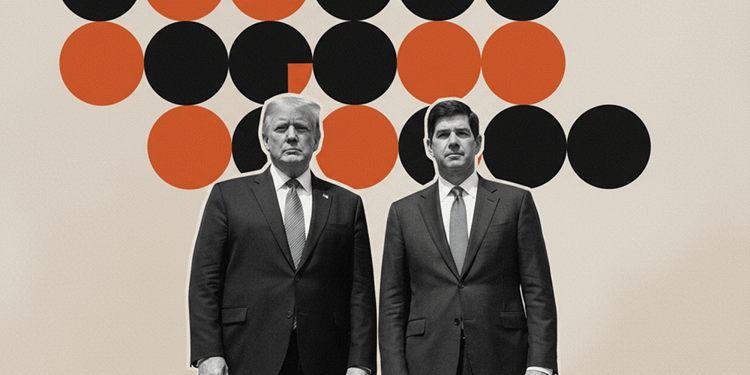
A new chair with old instincts
Take the independence pledge at face value, and it is a remarkable about-face. Take it as theater, and nothing has changed. Either way, a market betting on a calmer relationship between the White House and the Fed is betting against two years of evidence.
None of that softens the man himself. Warsh inherits a fractured committee; the last meeting produced the most dissents since 1992, and he has repeatedly said he wants to shrink the central bank's bloated balance sheet. For a market leaning on easy money, a chair that talks about pulling trillions of dollars of bonds back out of the system is not an obvious cue to buy the highs.
Reform is a double-edged word
Warsh used his first remarks to promise a reform-oriented Fed, one that escapes what he called static frameworks and models. Strip away the ceremony language, and that points squarely at how the Fed communicates, most likely an effort to wind down forward guidance, the practice of pre-announcing the rate path that traders have leaned on for more than a decade. Reform sounds tidy. In practice, a Fed that deliberately tells markets less pulls away a safety net that record-high valuations have quietly depended on. For a market conditioned to be led by the hand, less hand-holding is not the bullish development that the word "reform" implies.
Fed FAQs
Monetary policy in the US is shaped by the Federal Reserve (Fed). The Fed has two mandates: to achieve price stability and foster full employment. Its primary tool to achieve these goals is by adjusting interest rates. When prices are rising too quickly and inflation is above the Fed’s 2% target, it raises interest rates, increasing borrowing costs throughout the economy. This results in a stronger US Dollar (USD) as it makes the US a more attractive place for international investors to park their money. When inflation falls below 2% or the Unemployment Rate is too high, the Fed may lower interest rates to encourage borrowing, which weighs on the Greenback.
The Federal Reserve (Fed) holds eight policy meetings a year, where the Federal Open Market Committee (FOMC) assesses economic conditions and makes monetary policy decisions. The FOMC is attended by twelve Fed officials – the seven members of the Board of Governors, the president of the Federal Reserve Bank of New York, and four of the remaining eleven regional Reserve Bank presidents, who serve one-year terms on a rotating basis.
In extreme situations, the Federal Reserve may resort to a policy named Quantitative Easing (QE). QE is the process by which the Fed substantially increases the flow of credit in a stuck financial system. It is a non-standard policy measure used during crises or when inflation is extremely low. It was the Fed’s weapon of choice during the Great Financial Crisis in 2008. It involves the Fed printing more Dollars and using them to buy high grade bonds from financial institutions. QE usually weakens the US Dollar.
Quantitative tightening (QT) is the reverse process of QE, whereby the Federal Reserve stops buying bonds from financial institutions and does not reinvest the principal from the bonds it holds maturing, to purchase new bonds. It is usually positive for the value of the US Dollar.














