

British Pound Sterling tries retail therapy, hits the usual ceiling
- Sterling rallied on a blowout BRC retail sales beat before fading at a major long-term moving average.
- Wednesday's US CPI is the week's dominant event and the Dollar holds the leverage.
- Friday's UK GDP is expected to show output shrinking in April.
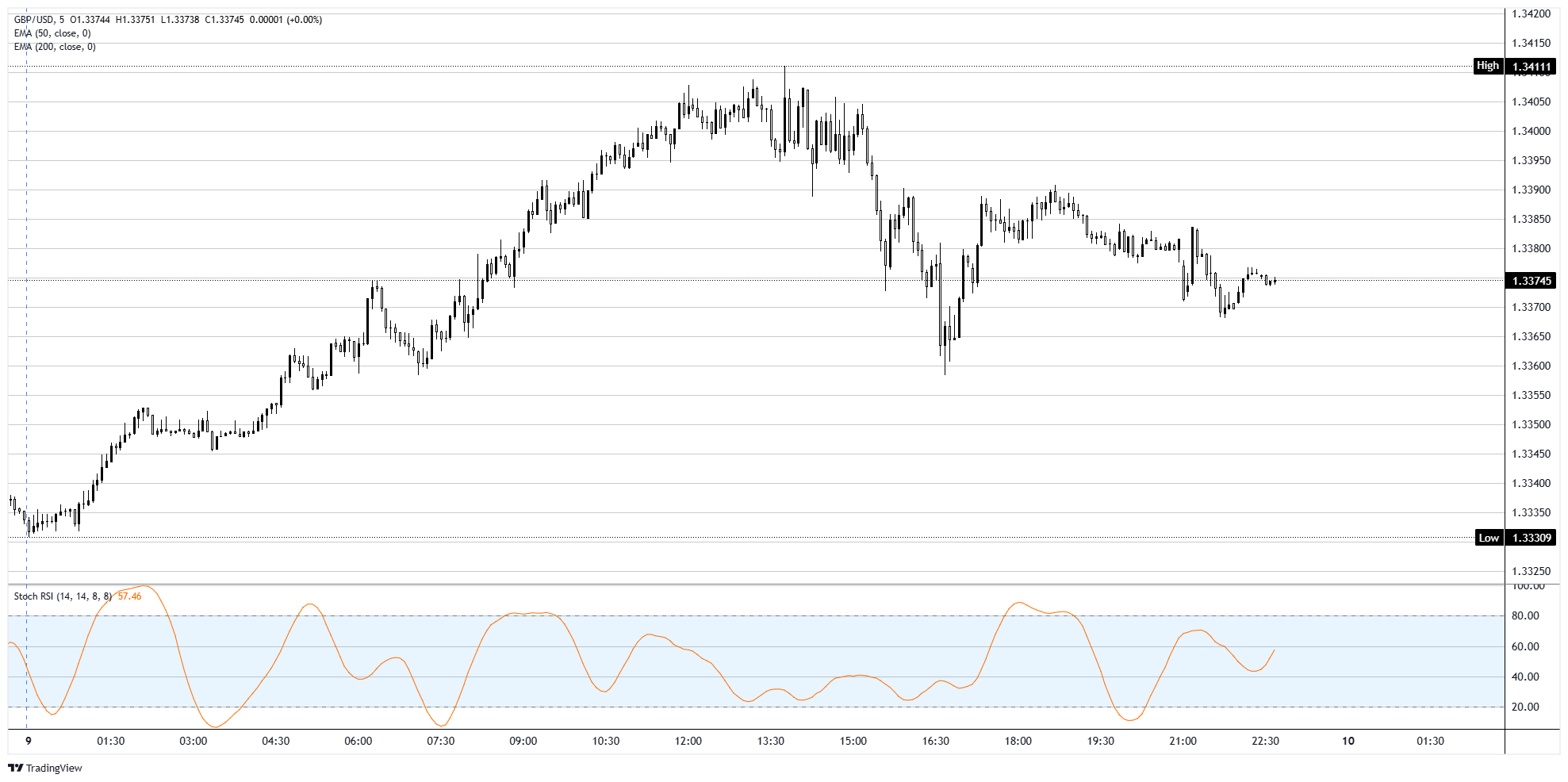
Sterling finally got a piece of good domestic news and managed to enjoy it for about half a session. GBP/USD rallied from just below 1.3350 to a touch above 1.3400 on Tuesday, tagged the 200-day Exponential Moving Average (EMA), and spent the rest of the day leaking back beneath the figure. The bounce was real, the rejection was cleaner, and the week's actual main event has not even happened yet.

Retail therapy with an asterisk
The British Retail Consortium (BRC) reported like-for-like retail sales up 3.4% YoY in May, miles above the 0.6% consensus and a full reversal of April's 3.4% decline. It is a genuinely strong print, and also a thin one. A shop survey swinging seven points in a month says as much about base effects and calendar quirks as it does about a consumer renaissance, and the Bank of England (BoE) will not reprice policy off it. Neither did the market: the pop had fully faded within hours.
A central bank with no good options
The BoE sits at 3.75% after its cutting cycle ran into the Middle East energy shock, and the bank has openly conceded inflation will now run hotter than it forecast. At the April 30 meeting the vote was 8 to 1, with the lone dissenter wanting a hike. Cutting into an energy shock is indefensible; hiking into an economy that consensus expects to have shrunk in April is worse. Markets expect nothing from the June 18 decision, which leaves Sterling with no domestic rate story at all, just a stagflation-shaped hole where one used to be. That hands the steering wheel to the Dollar side of the pair.
The 200-day is the tell
Tuesday's rejection happened almost to the pip at the 200-day EMA around 1.3400, with the 50-day EMA stacked overhead near 1.3450. The pair broke below both averages in early June and has now failed its first proper retest, which is exactly what a corrective bounce inside a downtrend is supposed to do. The daily Stochastic Relative Strength Index (Stoch RSI) sits mid-range, recovered from washed-out levels but signalling nothing. Until buyers reclaim 1.3400 on a daily close, rallies are inventory for sellers.
Wednesday sets the trap, Friday springs another
US Consumer Price Index (CPI) data lands Wednesday at 12:30 GMT, with consensus at 0.5% MoM and the YoY rate accelerating to 4.2% from 3.8%, the fastest in roughly three years, while core is seen at 2.9% YoY. The acceleration is mostly the Crude Oil war premium working through pumps and airfares, but after last week's Nonfarm Payrolls (NFP) beat the distinction barely matters: Federal Reserve (Fed) cuts have vanished from CME FedWatch pricing for 2026 and hike odds keep creeping higher. A hot print is a clean Dollar bid that presses the pair back toward 1.3350 and then 1.3300. A soft core buys a relief pop into the 50-day EMA. Then Friday delivers the domestic test at 06:00 GMT, with Gross Domestic Product (GDP) for April expected at -0.1% MoM alongside soft manufacturing output. Even a CPI reprieve hands Sterling a banana skin within 48 hours.
The framework
Upside: a daily close back above 1.3400 is the minimum requirement to take this bounce seriously, with the 50-day EMA near 1.3450 the bigger test.
Downside: initial support near 1.3350, then 1.3300, the early June floor.
Bias: fade strength while the pair holds below the 200-day EMA. The path of least resistance is lower into Friday's GDP unless Wednesday's CPI misses soft and core behaves.
GBP/USD 5-minute chart
Pound Sterling FAQs
The Pound Sterling (GBP) is the oldest currency in the world (886 AD) and the official currency of the United Kingdom. It is the fourth most traded unit for foreign exchange (FX) in the world, accounting for 12% of all transactions, averaging $630 billion a day, according to 2022 data. Its key trading pairs are GBP/USD, also known as ‘Cable’, which accounts for 11% of FX, GBP/JPY, or the ‘Dragon’ as it is known by traders (3%), and EUR/GBP (2%). The Pound Sterling is issued by the Bank of England (BoE).
The single most important factor influencing the value of the Pound Sterling is monetary policy decided by the Bank of England. The BoE bases its decisions on whether it has achieved its primary goal of “price stability” – a steady inflation rate of around 2%. Its primary tool for achieving this is the adjustment of interest rates. When inflation is too high, the BoE will try to rein it in by raising interest rates, making it more expensive for people and businesses to access credit. This is generally positive for GBP, as higher interest rates make the UK a more attractive place for global investors to park their money. When inflation falls too low it is a sign economic growth is slowing. In this scenario, the BoE will consider lowering interest rates to cheapen credit so businesses will borrow more to invest in growth-generating projects.
Data releases gauge the health of the economy and can impact the value of the Pound Sterling. Indicators such as GDP, Manufacturing and Services PMIs, and employment can all influence the direction of the GBP. A strong economy is good for Sterling. Not only does it attract more foreign investment but it may encourage the BoE to put up interest rates, which will directly strengthen GBP. Otherwise, if economic data is weak, the Pound Sterling is likely to fall.
Another significant data release for the Pound Sterling is the Trade Balance. This indicator measures the difference between what a country earns from its exports and what it spends on imports over a given period. If a country produces highly sought-after exports, its currency will benefit purely from the extra demand created from foreign buyers seeking to purchase these goods. Therefore, a positive net Trade Balance strengthens a currency and vice versa for a negative balance.














