

GBP/USD faces resistance near 1.3700 as USD ticks higher ahead of Fed rate decision
作者 Haresh Menghani
发布日期: 27 Jan 2026 | 修改日期: 27 Jan 2026


热门文章
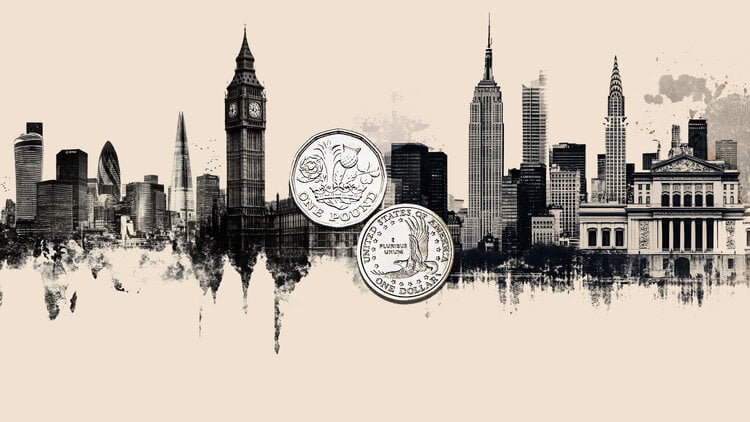
The GBP/USD pair struggles to find acceptance or build on its gains beyond the 1.3700 mark for the second consecutive day and edges lower during the early part of the European session on Tuesday. The downside, however, remains cushioned, with spot prices holding above mid-1.3600s.
- GBP/USD faces rejection near 1.3700 as the USD edges higher amid some repositioning trade.
- The divergent Fed-BoE policy expectations could support spot prices and limit deeper losses.
- Traders might also opt to wait on the sidelines ahead of the Fed rate decision on Wednesday.
The GBP/USD pair struggles to find acceptance or build on its gains beyond the 1.3700 mark for the second consecutive day and edges lower during the early part of the European session on Tuesday. The downside, however, remains cushioned, with spot prices holding above mid-1.3600s. Moreover, the lack of follow-through selling warrants some caution before positioning for any meaningful corrective slide from over a four-month peak, touched on Monday.
The US Dollar (USD) recovers slightly from its lowest level since September 2025 set the previous day, and turns out to be a key factor acting as a headwind for the GBP/USD pair. The USD uptick could be attributed to some repositioning trade as bearish traders opt to lighten their positioning heading into the key central bank event risk. The US Federal Reserve (Fed) is scheduled to announce its policy decision at the end of a two-day meeting on Wednesday and is widely expected to leave rates unchanged.
Meanwhile, the spotlight will be on the post-meeting press conference, where comments from Fed Chair Jerome Powell will be scrutinized closely for cues about the central bank's rate-cut path. The outlook, in turn, will play a key role in influencing the near-term USD price dynamics and provide some meaningful impetus to the GBP/USD pair. In the meantime, expectations that the Fed will lower borrowing costs two more times in 2026 might cap the attempted USD recovery and support the currency pair.
The British Pound (GBP), on the other hand, might continue to be underpinned by supportive fundamentals on the back of last Friday’s stronger Retail Sales and PMI data, which tempered near-term Bank of England (BoE) rate cut expectations. Moreover, the absence of relevant economic releases on Tuesday makes it prudent to wait for strong follow-through selling before confirming that the GBP/USD pair has topped out in the near-term and positioning for any meaningful corrective decline.
(This story was corrected on January 27 at 10:17 GMT to say that the absence of economic releases on Tuesday, not Monday, makes it prudent to wait for strong follow-through selling.)
Pound Sterling FAQs
The Pound Sterling (GBP) is the oldest currency in the world (886 AD) and the official currency of the United Kingdom. It is the fourth most traded unit for foreign exchange (FX) in the world, accounting for 12% of all transactions, averaging $630 billion a day, according to 2022 data. Its key trading pairs are GBP/USD, also known as ‘Cable’, which accounts for 11% of FX, GBP/JPY, or the ‘Dragon’ as it is known by traders (3%), and EUR/GBP (2%). The Pound Sterling is issued by the Bank of England (BoE).
The single most important factor influencing the value of the Pound Sterling is monetary policy decided by the Bank of England. The BoE bases its decisions on whether it has achieved its primary goal of “price stability” – a steady inflation rate of around 2%. Its primary tool for achieving this is the adjustment of interest rates. When inflation is too high, the BoE will try to rein it in by raising interest rates, making it more expensive for people and businesses to access credit. This is generally positive for GBP, as higher interest rates make the UK a more attractive place for global investors to park their money. When inflation falls too low it is a sign economic growth is slowing. In this scenario, the BoE will consider lowering interest rates to cheapen credit so businesses will borrow more to invest in growth-generating projects.
Data releases gauge the health of the economy and can impact the value of the Pound Sterling. Indicators such as GDP, Manufacturing and Services PMIs, and employment can all influence the direction of the GBP. A strong economy is good for Sterling. Not only does it attract more foreign investment but it may encourage the BoE to put up interest rates, which will directly strengthen GBP. Otherwise, if economic data is weak, the Pound Sterling is likely to fall.
Another significant data release for the Pound Sterling is the Trade Balance. This indicator measures the difference between what a country earns from its exports and what it spends on imports over a given period. If a country produces highly sought-after exports, its currency will benefit purely from the extra demand created from foreign buyers seeking to purchase these goods. Therefore, a positive net Trade Balance strengthens a currency and vice versa for a negative balance.

超过一百万用户依赖 FXStreet 获取实时市场数据、图表工具、专家洞见和外汇新闻。其全面的经济日历和教育网络研讨会帮助交易者保持信息领先、做出审慎决策。FXStreet 拥有约 60 人的团队,分布在巴塞罗那总部及全球各地区。
阅读更多








