

Ripple Price Forecast: XRP extends sideways action amid low on-chain activity, ETF outflows
- XRP trades range-bound between support at $1.30 and resistance at $1.40 amid suppressed market sentiment.
- On-chain activity for XRP remains subdued, with the number of active addresses declining to near 16,000.
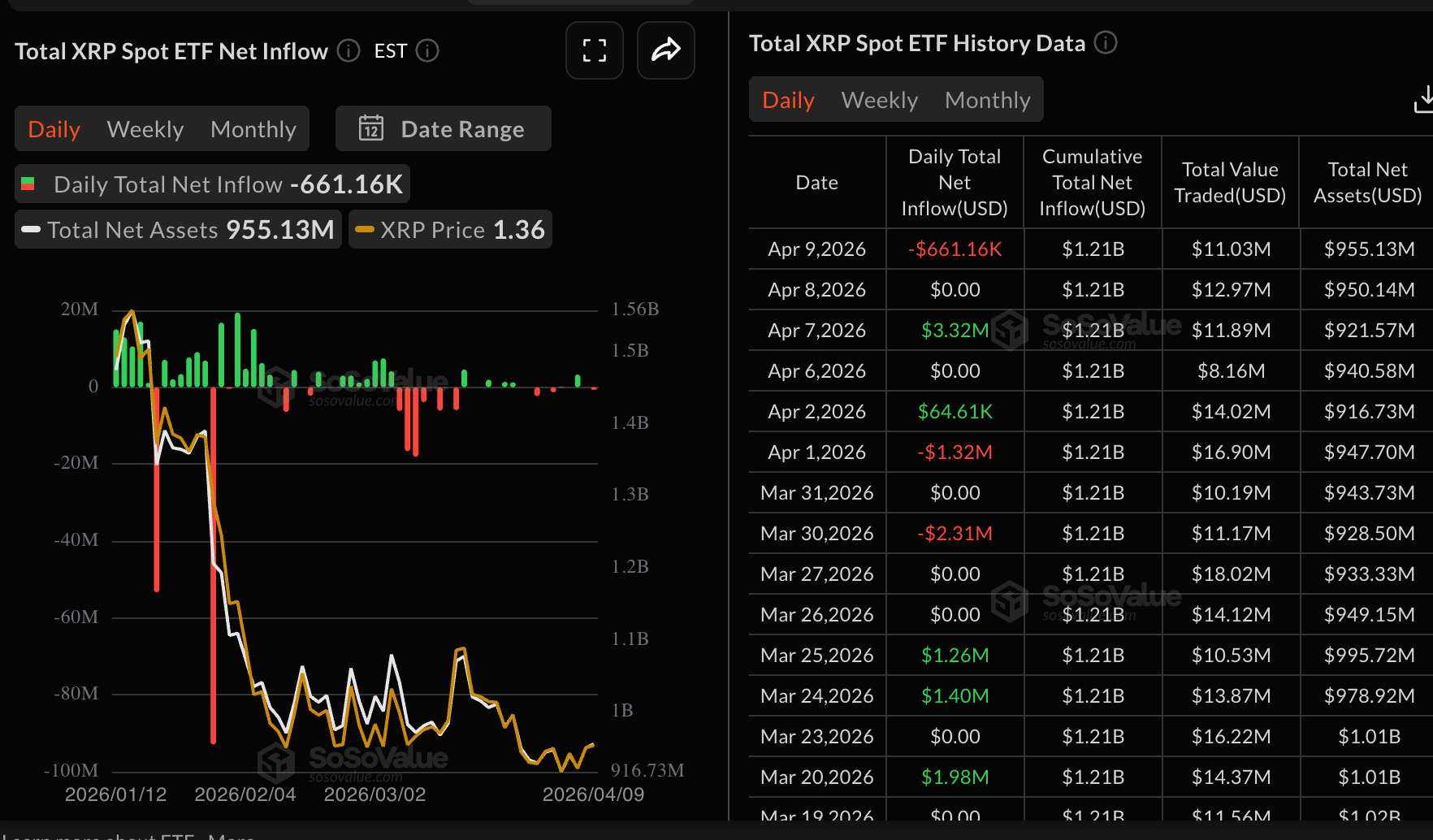
- US-listed XRP spot ETFs experienced outflows of approximately $661,000 on Thursday, suggesting a waning risk appetite among institutional investors.
Ripple (XRP) hovers around $1.34 at the time of writing on Friday, as market participants turn their attention to ceasefire talks between the United States (US) and Iran in Pakistan over the weekend.
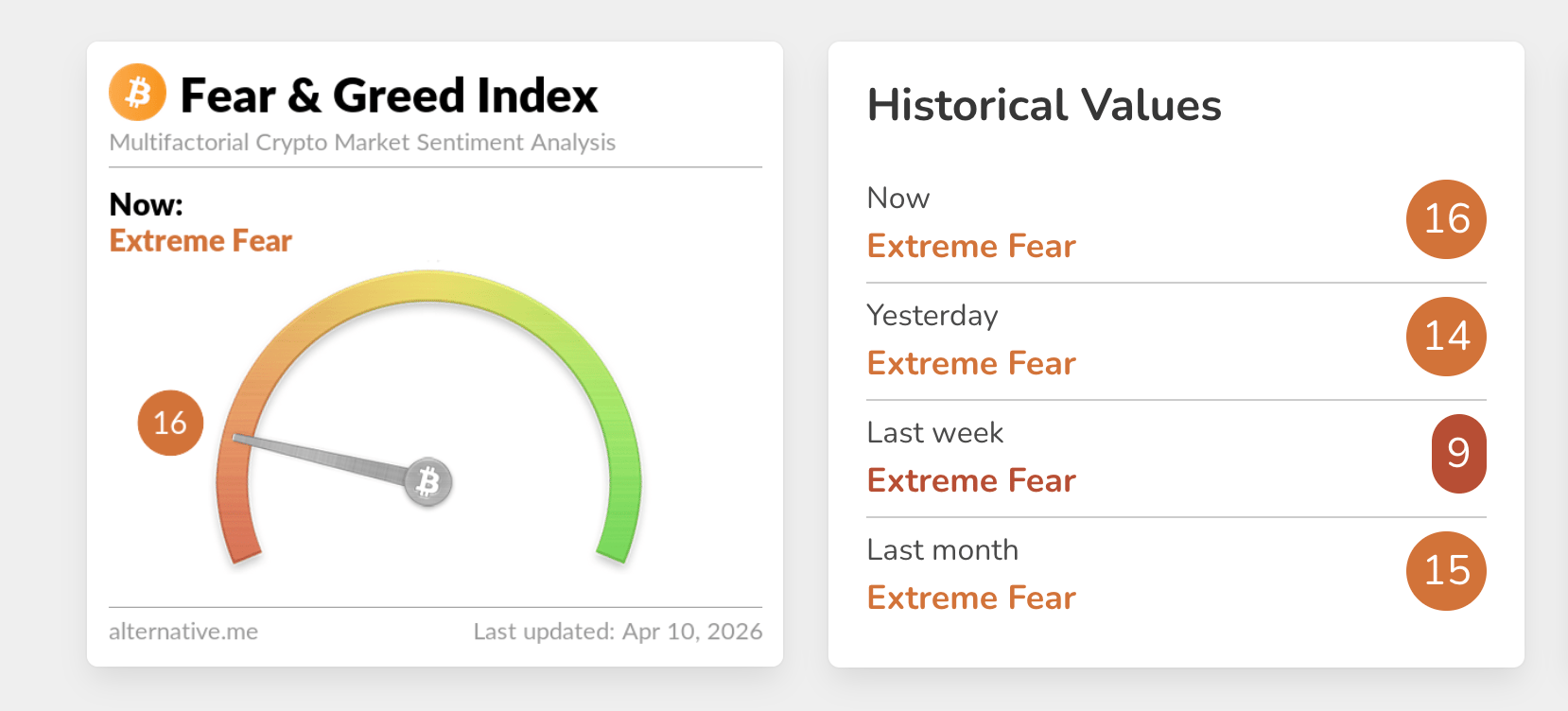
Despite the fragile ceasefire brokered earlier this week, market sentiment has remained significantly suppressed, as reflected in the crypto Fear & Greed Index, which stands at 16 on Thursday, in extreme fear territory. The deteriorating sentiment suggests that investors lack confidence in the crypto market’s ability to sustain recovery, which could explain the XRP price rejection at $1.40 on Tuesday.

XRP on-chain activity subdued as ETFs turn bearish
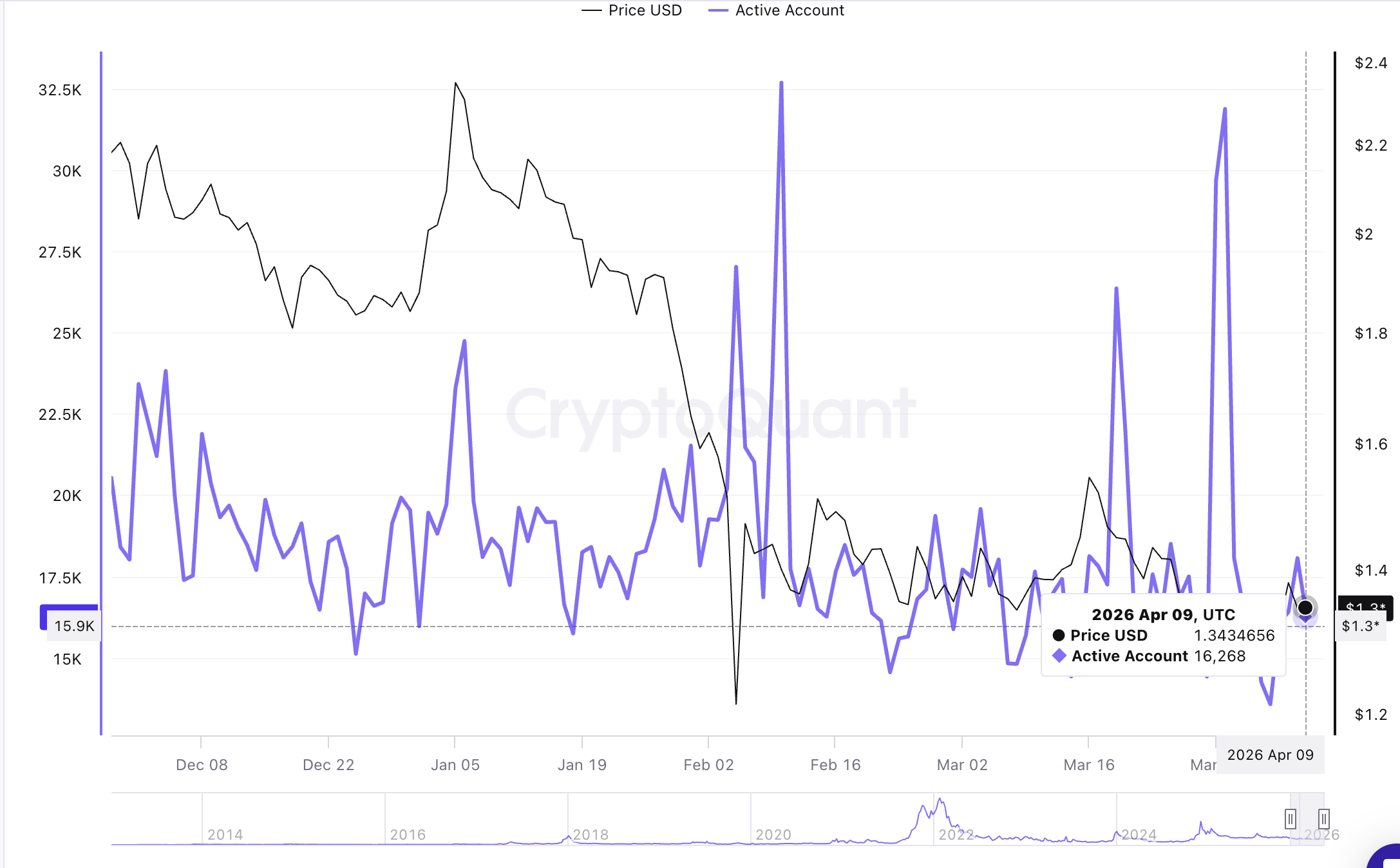
The number of addresses actively transacting on the XRP Ledger (XRPL) by sending or receiving assets has declined to near 16,000 as of Thursday, from roughly 18,000 the previous day.
CryptoQuant data shows that active addresses surged to nearly 32,000 on Sunday, underscoring growing user engagement that preceded the upswing to $1.40 on Tuesday. If on-chain activity does not improve, XRP could remain constrained within a range, with support at $1.30 and resistance at $1.40.
XRP spot Exchange-Traded Funds (ETFs) remain on the back foot, as risk appetite appears to deteriorate further. Despite Bitcoin and Ethereum ETFs posting inflows on Thursday, US-listed XRP ETFs experienced outflows of roughly $661,000. Cumulative inflows currently stand at $1.21 billion, with net assets under management averaging $955 million.
Technical outlook: XRP holds steady amid range consolidation
XRP trades at $1.34, maintaining a bearish near-term bias as price holds decisively beneath major moving averages. The 50-day Exponential Moving Average (EMA) at $1.42, the 100-period EMA at $1.57, and the 200-period EMA at $1.83 all sit overhead, suggesting the broader trend remains capped despite a mildly positive Moving Average Convergence Divergence (MACD) reading on the daily chart and a Relative Strength Index (RSI) hovering around a neutral 45. Together, these indicators suggest consolidation rather than a sustained recovery.
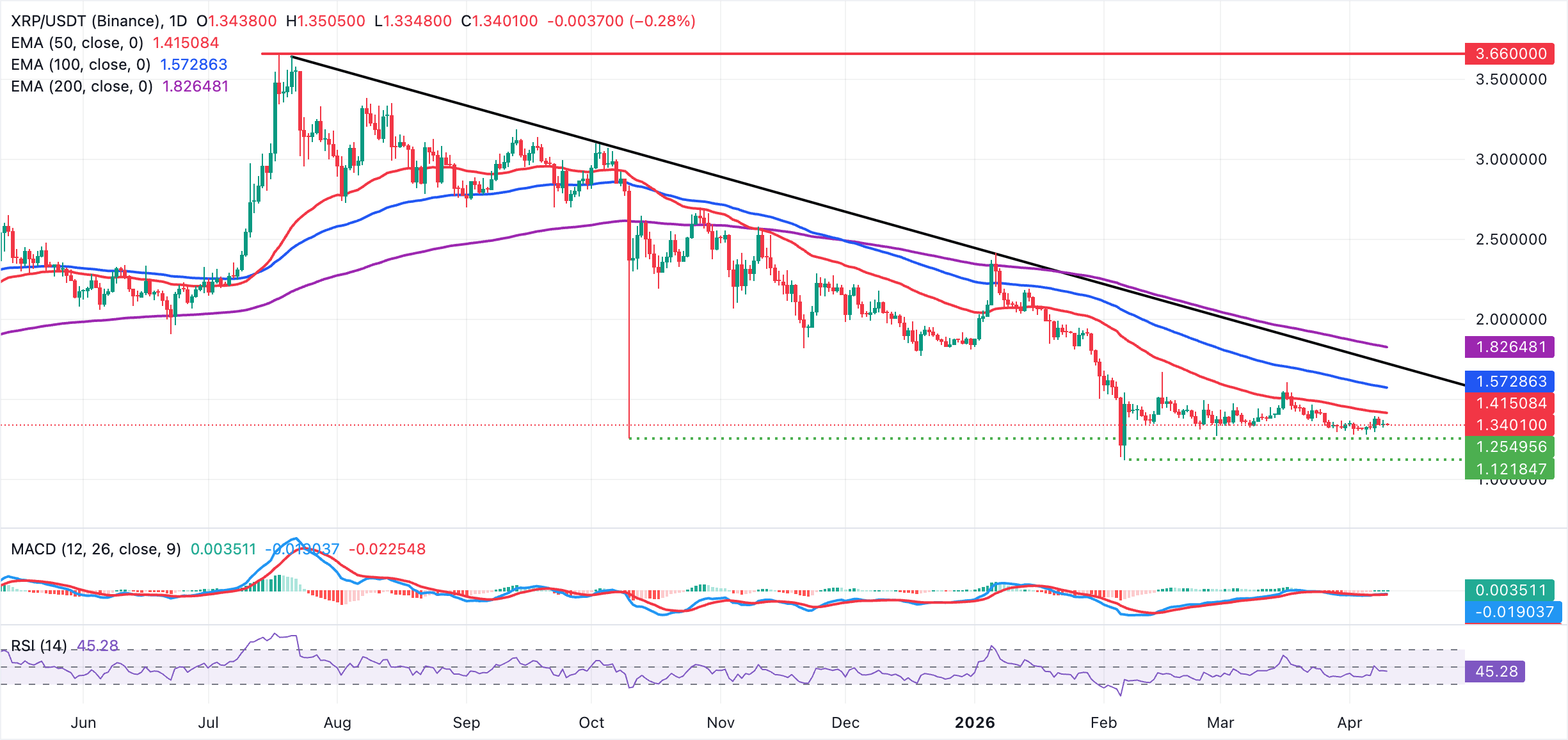
On the topside, XRP's initial resistance is at $1.40, where any rebound is likely to run into early supply. A break above this hurdle would expose the 50-day EMA near $1.42, followed by the 100-day EMA at $1.57. On the downside, the lack of clearly defined indicator-based support on the chart leaves XRP vulnerable to further downside, with traders likely to look to recent swing lows at $1.30 a for potential basing signs rather than relying on established technical floors.
Crypto ETF FAQs
An Exchange-Traded Fund (ETF) is an investment vehicle or an index that tracks the price of an underlying asset. ETFs can not only track a single asset, but a group of assets and sectors. For example, a Bitcoin ETF tracks Bitcoin’s price. ETF is a tool used by investors to gain exposure to a certain asset.
Yes. The first Bitcoin futures ETF in the US was approved by the US Securities & Exchange Commission in October 2021. A total of seven Bitcoin futures ETFs have been approved, with more than 20 still waiting for the regulator’s permission. The SEC says that the cryptocurrency industry is new and subject to manipulation, which is why it has been delaying crypto-related futures ETFs for the last few years.
Yes. The SEC approved in January 2024 the listing and trading of several Bitcoin spot Exchange-Traded Funds, opening the door to institutional capital and mainstream investors to trade the main crypto currency. The decision was hailed by the industry as a game changer.
The main advantage of crypto ETFs is the possibility of gaining exposure to a cryptocurrency without ownership, reducing the risk and cost of holding the asset. Other pros are a lower learning curve and higher security for investors since ETFs take charge of securing the underlying asset holdings. As for the main drawbacks, the main one is that as an investor you can’t have direct ownership of the asset, or, as they say in crypto, “not your keys, not your coins.” Other disadvantages are higher costs associated with holding crypto since ETFs charge fees for active management. Finally, even though investing in ETFs reduces the risk of holding an asset, price swings in the underlying cryptocurrency are likely to be reflected in the investment vehicle too.
(The technical analysis of this story was written with the help of an AI tool.)














