

Trade The World
SNB’s Schlegel: US pharma tariffs pose downside economic risks
作者 Sagar Dua
发布日期: 22 Oct 2025 | 修改日期: 22 Oct 2025


POPULAR ARTICLES
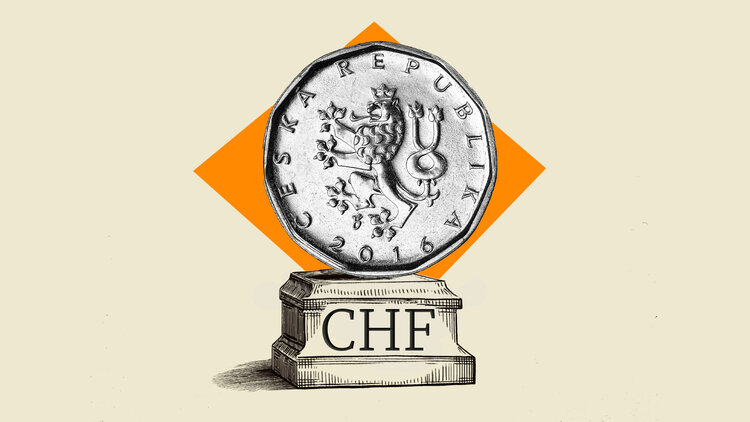
Swiss National Bank (SNB) Chairman Martin Schlegel said in his prepared remarks on Wednesday that pharmaceutical tariffs imposed by the United States (US) would escalate downside risks to the economy.
Swiss National Bank (SNB) Chairman Martin Schlegel said in his prepared remarks on Wednesday that pharmaceutical tariffs imposed by the United States (US) would escalate downside risks to the economy.
Additional comments
Inflation is expected to rise slightly in the coming quarters.
Planned US tariffs on certain pharma products could increase downside risk for economy.
Economic uncertainties remain high.
The SNB will continue to observe the situation, and adjust monetary policy where necessary.
Market reaction
During the entire day, the USD/CHF pair remains confined in a tight range around 0.7960.
SNB FAQs
The Swiss National Bank (SNB) is the country’s central bank. As an independent central bank, its mandate is to ensure price stability in the medium and long term. To ensure price stability, the SNB aims to maintain appropriate monetary conditions, which are determined by the interest rate level and exchange rates. For the SNB, price stability means a rise in the Swiss Consumer Price Index (CPI) of less than 2% per year.
The Swiss National Bank (SNB) Governing Board decides the appropriate level of its policy rate according to its price stability objective. When inflation is above target or forecasted to be above target in the foreseeable future, the bank will attempt to tame excessive price growth by raising its policy rate. Higher interest rates are generally positive for the Swiss Franc (CHF) as they lead to higher yields, making the country a more attractive place for investors. On the contrary, lower interest rates tend to weaken CHF.
Yes. The Swiss National Bank (SNB) has regularly intervened in the foreign exchange market in order to avoid the Swiss Franc (CHF) appreciating too much against other currencies. A strong CHF hurts the competitiveness of the country’s powerful export sector. Between 2011 and 2015, the SNB implemented a peg to the Euro to limit the CHF advance against it. The bank intervenes in the market using its hefty foreign exchange reserves, usually by buying foreign currencies such as the US Dollar or the Euro. During episodes of high inflation, particularly due to energy, the SNB refrains from intervening markets as a strong CHF makes energy imports cheaper, cushioning the price shock for Swiss households and businesses.
The SNB meets once a quarter – in March, June, September and December – to conduct its monetary policy assessment. Each of these assessments results in a monetary policy decision and the publication of a medium-term inflation forecast.

FXStreet
超过一百万用户依赖 FXStreet 获取实时市场数据、图表工具、专家洞见和外汇新闻。其全面的经济日历和教育网络研讨会帮助交易者保持信息领先、做出审慎决策。FXStreet 拥有约 60 人的团队,分布在巴塞罗那总部及全球各地区。
Read More








