Gold Plunges Nearly 2% as Bearish Forces Converge — Can Trump Deliver Another Market-Shifting Twist?
Spot gold traded lower throughout Monday's session, at one point falling nearly 2% as multiple bearish factors weighed on the precious metal.
On one hand, the latest U.S. ISM Manufacturing Purchasing Managers' Index (PMI) for May came in significantly stronger than expected, providing support for the U.S. dollar and creating direct pressure on dollar-denominated gold prices.
On the other hand, geopolitical tensions in the Middle East intensified over the weekend. Israel reportedly expanded military operations in Lebanon, while the United States claimed to have conducted strikes against Iranian military targets. Tehran responded with attacks targeting U.S. military installations.

The escalation in regional conflict significantly increased market concerns over geopolitical risks, sending international oil prices soaring more than 8% and reaching their highest levels in nearly a week.
The sharp rise in oil prices further intensified concerns about inflation, strengthening investor expectations that the Federal Reserve may need to maintain a tighter monetary policy stance. Together, these factors created additional headwinds for gold.
Data released by the Institute for Supply Management showed that the U.S. ISM Manufacturing Index rose from 52.7 in April to 54.0 in May.
The index has now remained in expansion territory for five consecutive months and reached its highest level since May 2022, highlighting continued improvement in U.S. manufacturing activity.
At the same time, U.S. construction spending for April also exceeded expectations, rising 0.4% month-over-month to a seasonally adjusted annualized rate of $2.172 trillion.
Private residential construction spending increased 0.8%, while public construction spending rose 0.4%.
These stronger-than-expected economic indicators added pressure across the metals complex, including gold.
Continued expansion in factory activity and construction spending suggests that the U.S. economy remains resilient despite ongoing uncertainty surrounding input costs, which continue to be influenced by oil prices, trade policies, and geopolitical developments in the Middle East.
All Eyes on Friday's Nonfarm Payrolls Report
The primary market focus this week will be Friday's U.S. Nonfarm Payrolls report, which is widely expected to be the most influential economic release of the week.
Investors will closely monitor not only headline job creation figures but also wage growth and unemployment data for additional insight into the underlying strength of the labor market.
If the employment report exceeds expectations, U.S. Treasury yields could move higher and provide additional support for the dollar, potentially creating further downside pressure for gold prices.
Conversely, weaker-than-expected labor market data could revive speculation about future monetary easing, providing fresh support for gold and other safe-haven assets.
Market Analysis:
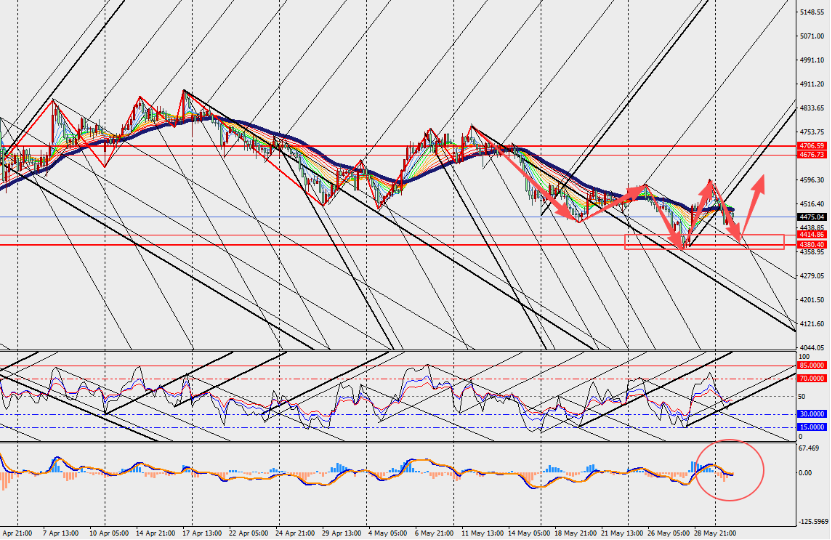
Gold remains in a corrective consolidation phase on the four-hour chart, with MACD lines and histogram bars converging near the zero axis.
Overall, the gold market appears trapped between two powerful and competing narratives.
On one side, persistent geopolitical uncertainty in the Middle East continues to support demand for safe-haven assets.
On the other, stubborn inflation pressures and expectations that interest rates will remain elevated continue to limit gold's upside potential.
As a result, gold traders are navigating a market where geopolitical risk favors higher prices, while stronger economic data and restrictive monetary policy expectations continue to pull prices lower. The balance between these opposing forces will likely determine gold's next major directional move.