What is Gold ETF in India
A Gold ETF (Exchange Traded Fund) in India is a market traded financial instrument designed to mirror the domestic price of gold. Each unit is backed by physical gold held by the fund, but investors only hold units electronically in demat form.
Asset Management Companies (AMCs) are mandated by the Securities and Exchange Board of India (SEBI) to hold physical gold of standard purity (99.5%) equivalent to the units allotted. This ensures that the ETF price moves in tandem with the domestic price of physical gold. It provides the dual benefit of stock trading flexibility and the simplicity of gold investments. Hence, unlike gold bars, jewelleries or coins, Gold ETFs eliminate concerns around purity, dealer/making charges, storage fee and risk.
How Does Gold ETF Work
When you purchase a Gold ETF unit through your demat account, the AMC (Asset Management Company) uses that capital to purchase high-purity gold bullion. This gold is deposited with a custodian—typically a bank—which issues a receipt to the AMC .
The value of your holdings increases or decreases based on gold prices, INR movement, and expense ratios, not with company performance. Since these units are listed on exchanges, you can enter or exit positions during market hours at real-time prices. Settlement occurs through the equity trading mechanism, making execution faster than physical gold transactions. This structure ensures high liquidity, unlike physical gold which often suffers from dealer spreads and human negotiation or haggling during resale.
Pro Tip: Always check the cash component of the ETF; high cash levels can lead to a higher tracking error, causing your returns to deviate from actual gold prices.
What is the Purpose of Gold ETF
The primary technical purpose of a Gold ETF is portfolio diversification and hedging. Gold historically has a low to negative correlation with equities, making it an effective tool to reduce overall portfolio volatility (Drawdown) during market corrections.
For Indian investors, it also serves as a hedge against INR depreciation. Since domestic gold prices are derived from international spot rates (XAU/USD) converted to INR, a weakening Rupee often inflates the domestic gold price, protecting purchasing power.
Besides that, Gold ETFs provide tactical exposure to gold without dealing with vaulting, insurance, or resale discounts. They are also useful for systematic allocation strategies, such as periodic rebalancing.
World Gold Council research shows that: “Gold provides diversification in a portfolio and is often correlated with the stock market during risk-on periods, while it decouples and becomes inversely correlated during periods of stress. This is unique amongst most hedges in the marketplace.”
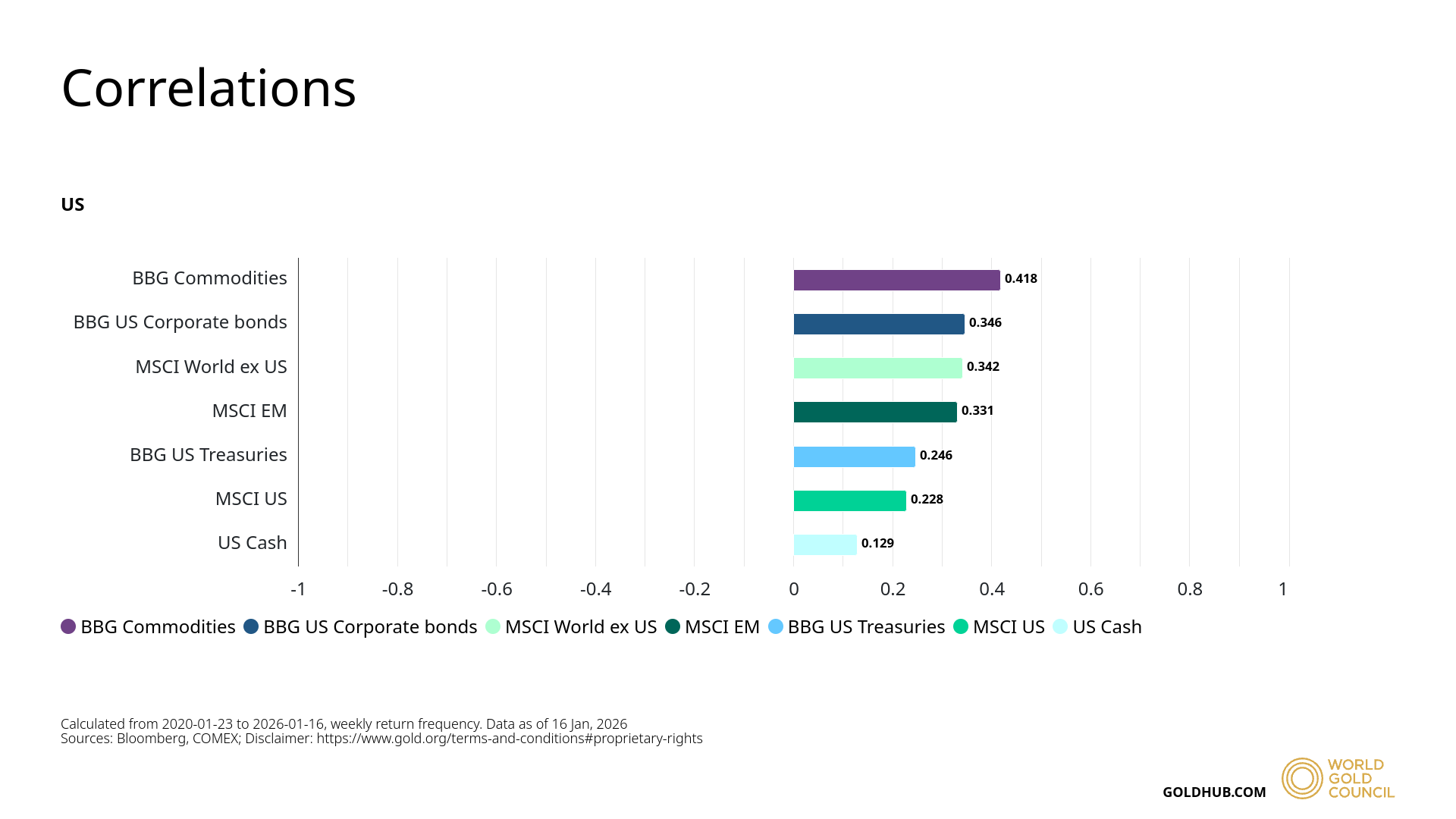
Source: World Gold Council. Data calculated using weekly return frequency as of January 16, 2026.
Gold historically has a low to negative correlation with other equities, making it an effective tool to reduce overall portfolio volatility during market corrections.
This defensive financial property is rooted in the fundamental reasons of why gold is so valuable to investors across economic cycles.
Systematic Investing in Gold ETFs vs Gold Funds
An important note, Gold ETFs are often described as suitable for systematic investing, but they do not support traditional automated SIPs like mutual funds. Since ETFs trade like stocks, systematic allocation requires manual periodic purchases or the use of broker-specific Stock SIP tools.
In contrast, Gold Fund of Funds (FoFs) invest in Gold ETFs but operate as mutual funds, allowing true automated SIP execution. Investors choosing between the two should weigh automation convenience against lower expense ratios and intraday liquidity offered by ETFs.
Important: “Systematic investing” in Gold ETFs refers to investor discipline, not a built-in product feature.
In practical terms, what is a Gold ETF fund refers to a SEBI-regulated mutual fund structure that holds physical gold and issues exchange-traded units to investors.
Who Should Invest in Gold ETF?
Gold ETFs (sometimes mistakenly called a Gold ETF Fund) are best suited for investors who view gold as a financial asset rather than a cultural commodity. If your goal is capital gains or hedging without holding physical gold bars or jewelry, ETFs are definitely superior due to pricing transparency.
It is also ideal for active traders looking to capture short-term price movements in the commodities market (Gold Market) without the leverage risks associated with Gold Futures (MCX). Investors with a lower capital amount can still accumulate gold systematically, starting with as little as one unit (1 gram), which is roughly ₹15,595.80, as of 24th January 2026, according to GoldPriceIndia.
Lastly, they are particularly convenient for investors or traders already operating through demat and trading accounts, where transaction efficiency and transparency matter.
If you fit the active trader or hedger profile, a gold CFD can be a strong alternative to a gold ETF because it is designed for short term execution and flexibility: you can take a view on gold going up or going down, use margin for capital efficiency, and see most costs at the trade level rather than embedded in an annual fund expense ratio. Just make sure the platform you use is properly authorised for residents in India.
Important Considerations: What is Gold ETF Taxation
The taxation landscape for Gold ETFs in India shifted significantly with the Union Budget 2024. The holding period for classifying gains as Long Term Capital Assets was reduced from 36 months to 24 months.
Short Term Capital Gains (STCG): If units are sold before 24 months, gains are added to your taxable income and taxed according to your applicable income tax slab rates.
Long Term Capital Gains (LTCG): If units are held for more than 24 months, gains are taxed at a flat rate of 12.5% (without indexation benefits).
Important: Do not confuse Gold ETFs with Sovereign Gold Bonds (SGBs); unlike SGBs, capital gains on Gold ETFs are not tax-exempt upon redemption, even if held for the long term.
One more practical note: For transfers after 23 July 2024, many recent summaries describe listed gold ETFs as becoming long term after 12 months, with LTCG taxed at 12.5% flat and no indexation, so it is worth validating the latest rule set against your specific purchase date and product type before publishing hard numbers. If tax simplicity is not the priority and your goal is short term trading, a gold CFD might be the best alternative because it gives you long and short access with fast execution, but the tax treatment is often handled more like trading or business style income and can be more reporting heavy than a straightforward ETF capital gains summary.
Advantages of Investing in Gold ETF
The primary advantage is pricing efficiency. Gold ETFs are often priced very close to the actual price of gold, eliminating the arbitrary "premium" or "making charges" (often 10-20%) that is common when buying physical gold bars and gold jewelries.
Secondly, they offer operational security. There is no risk of theft or cost of locker storage. The purity is guaranteed by the custodian, removing the need for assaying or recertification when you decide to sell.
Overall, from a portfolio perspective, which is the most important for any investor, they allow precise allocation control, easy rebalancing, and compatibility with modern investment platforms. Expense ratios are visible and typically lower than the implicit costs of physical ownership.
Using Gold ETFs as Collateral for Loans in India
In India, besides capital appreciation, Gold ETFs held in demat form are considered as a Tier-1 collateral asset, hence can be pledged as collateral to obtain a loan (called Loan Against Securities (LAS), with scheduled commercial banks and NBFCs, similar to equity shares and mutual fund units and obtain trading margin for F&O trading.
The pledging process is governed by SEBI’s depository pledge mechanism and executed electronically through NSDL or CDSL, eliminating physical custody, purity verification, and storage risks associated with traditional gold loans.
Loan eligibility is also determined by the lender based on a Loan-to-Value (LTV) ratio, which typically ranges lower than physical gold loans and varies by institution, ETF liquidity, and portfolio concentration. Since the pledged Gold ETF units remain mark-to-market, a decline in gold prices can reduce collateral value and may trigger margin calls, partial liquidation, or additional collateral requirements under the lender’s risk management framework.
What are the disadvantages of gold ETF?
The most distinct technical disadvantage, although often very worth paying, is the Expense Ratio (typically 0.5% - 1.0% annually) charged by the AMC for managing the fund. Over long compounding periods, this fee can slightly drag down net returns compared to holding physical bullion.
Additionally, investors must be aware of liquidity risks in some specific Gold ETFs with low trading volumes. If you buy an illiquid ETF, you face Impact Cost Risk—meaning you cannot sell your units at the "fair" market price (NAV), otherwise described as wider bid-ask spread, because there are no buyers at that level. While the underlying asset is liquid, a lack of buyers can force you to sell at a suboptimal price.
Last but not least, although it is a standard practice, they require a demat and trading account, introducing early difficulty for beginners, potential platform dependency and brokerage costs.