




Gold declines despite easing concerns over inflation, interest rate hikes
- Gold prices may gain support as US-Iran peace talks lower oil costs and dampen rate-hike fears.
- Donald Trump warned military strikes against Iran could resume if diplomatic negotiations collapse.
- Traders expect the Federal Reserve to hold interest rates steady this week, with possible hikes delayed to September.
Gold price (XAU/USD) loses ground after registering gains in the previous day, trading around $4,050 per troy ounce during the Asian hours on Tuesday. The price of the non-yielding yellow metal may regain ground following remarks from US President Donald Trump indicating that the US is engaged in "good talks" with Iran to resolve the Middle East conflict. The prospect of de-escalation sent oil prices lower, easing market concerns over rising inflation and further interest rate hikes.
However, Trump also cautioned that the US remains prepared to resume military strikes if negotiations collapse. The statement comes after the US suspended attacks late Friday following nearly two weeks of hostilities, with Tehran simultaneously halting retaliatory strikes against US bases in neighboring countries.
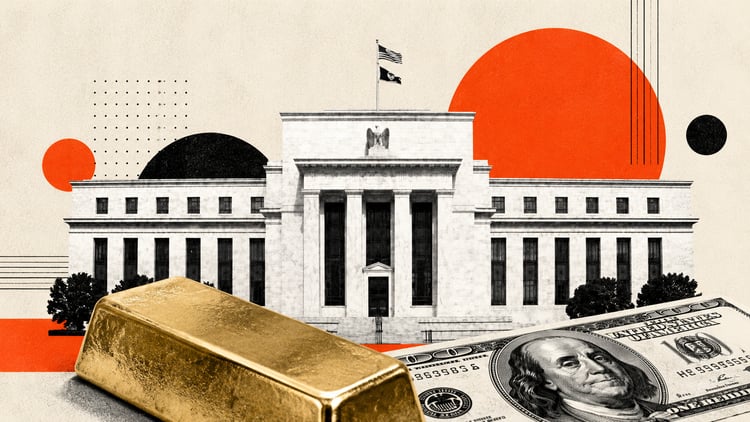
Meanwhile, traders are turning their attention to the Federal Reserve’s upcoming policy decision this week, where central bank officials are widely expected to keep interest rates on hold. While lingering inflationary pressures have led a minority of traders to speculate on an immediate rate increase, the prevailing consensus suggests that any potential hike would likely be deferred until September.
Gold FAQs
Gold has played a key role in human’s history as it has been widely used as a store of value and medium of exchange. Currently, apart from its shine and usage for jewelry, the precious metal is widely seen as a safe-haven asset, meaning that it is considered a good investment during turbulent times. Gold is also widely seen as a hedge against inflation and against depreciating currencies as it doesn’t rely on any specific issuer or government.
Central banks are the biggest Gold holders. In their aim to support their currencies in turbulent times, central banks tend to diversify their reserves and buy Gold to improve the perceived strength of the economy and the currency. High Gold reserves can be a source of trust for a country’s solvency. Central banks added 1,136 tonnes of Gold worth around $70 billion to their reserves in 2022, according to data from the World Gold Council. This is the highest yearly purchase since records began. Central banks from emerging economies such as China, India and Turkey are quickly increasing their Gold reserves.
Gold has an inverse correlation with the US Dollar and US Treasuries, which are both major reserve and safe-haven assets. When the Dollar depreciates, Gold tends to rise, enabling investors and central banks to diversify their assets in turbulent times. Gold is also inversely correlated with risk assets. A rally in the stock market tends to weaken Gold price, while sell-offs in riskier markets tend to favor the precious metal.
The price can move due to a wide range of factors. Geopolitical instability or fears of a deep recession can quickly make Gold price escalate due to its safe-haven status. As a yield-less asset, Gold tends to rise with lower interest rates, while higher cost of money usually weighs down on the yellow metal. Still, most moves depend on how the US Dollar (USD) behaves as the asset is priced in dollars (XAU/USD). A strong Dollar tends to keep the price of Gold controlled, whereas a weaker Dollar is likely to push Gold prices up.













