

US Treasury yields slide as Hormuz reopening eases inflation fears
- Ten-year yield drops nearly 10 bps as WTI nears $70.
- Breakevens retreat from April peaks, easing inflation-risk pressure.
- Fed hold remains favored, but July hike risk persists.
US Treasury yields fell across the curve following the reopening of the Strait of Hormuz, which eased inflationary pressures and drove Oil prices lower. At the same time, the US Dollar Index (DXY), which measures the buck's performance against a basket of six currencies, is rising by over 0.22% to 101.62.
Treasury yields fall as cheaper Oil cools inflation expectations

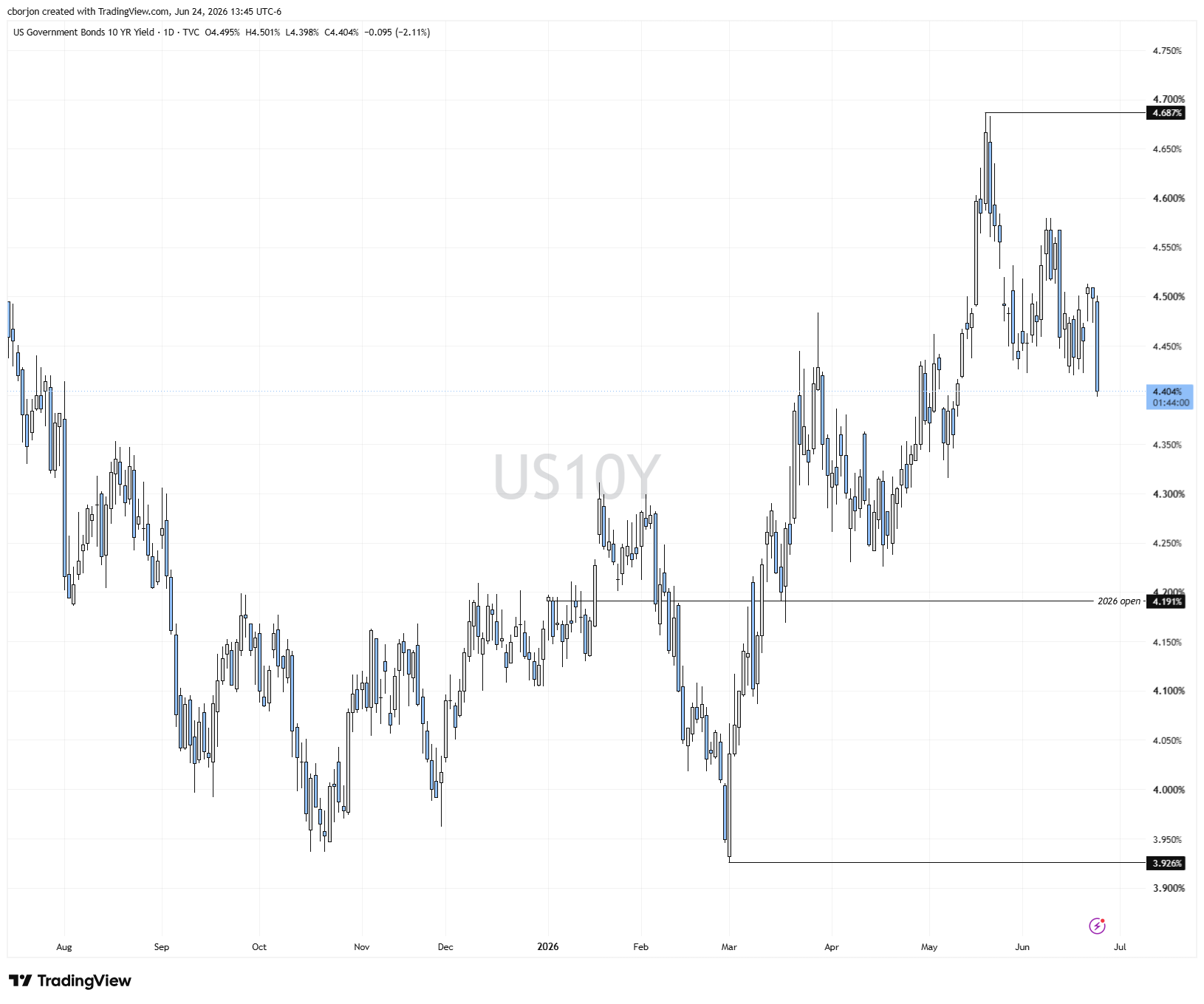
The US 10-year Treasury note yield is falling nearly 10 basis points, down 2% to 4.40% at the time of writing. Western Texas Intermediate (WTI), the US crude Oil benchmark, loses 4% to trade around $70.00 per barrel a day.
The 5- and 10-year breakeven rates, a market-based measure of inflation expectations, are at 2.24% and 2.21%, respectively, after peaking in mid-April at 2.72% and 2.5%, respectively.
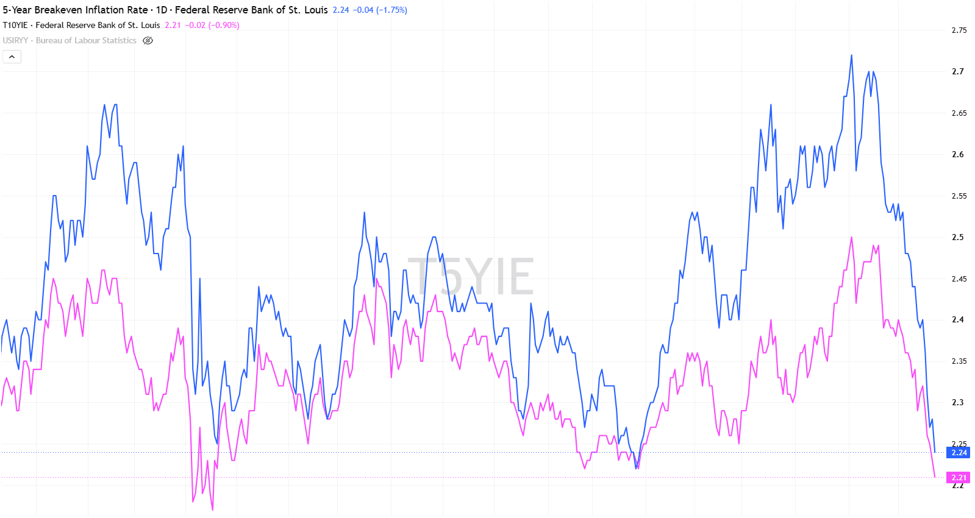
Easing Oil prices and fears of a potential supply disruption weighed on US yields, which skyrocketed last week, with the Federal Reserve’s hawkish tilt, which increased the chances of seeing higher interest rates towards the end of the year.
For the upcoming July 29 meeting, the Fed is expected to keep rates unchanged, with odds at 60%. However, there’s a modest 40% chance that policymakers will increase the Fed funds rate, based on incoming data.
The US economic calendar will be busy, with traders focusing on the Fed’s preferred inflation measure, the Core PCE Price Index, GDP figures for Q1 2026, Durable Goods Orders, and jobless claims.
US 10-year Treasury yield chart
Interest rates FAQs
Interest rates are charged by financial institutions on loans to borrowers and are paid as interest to savers and depositors. They are influenced by base lending rates, which are set by central banks in response to changes in the economy. Central banks normally have a mandate to ensure price stability, which in most cases means targeting a core inflation rate of around 2%. If inflation falls below target the central bank may cut base lending rates, with a view to stimulating lending and boosting the economy. If inflation rises substantially above 2% it normally results in the central bank raising base lending rates in an attempt to lower inflation.
Higher interest rates generally help strengthen a country’s currency as they make it a more attractive place for global investors to park their money.
Higher interest rates overall weigh on the price of Gold because they increase the opportunity cost of holding Gold instead of investing in an interest-bearing asset or placing cash in the bank. If interest rates are high that usually pushes up the price of the US Dollar (USD), and since Gold is priced in Dollars, this has the effect of lowering the price of Gold.
The Fed funds rate is the overnight rate at which US banks lend to each other. It is the oft-quoted headline rate set by the Federal Reserve at its FOMC meetings. It is set as a range, for example 4.75%-5.00%, though the upper limit (in that case 5.00%) is the quoted figure. Market expectations for future Fed funds rate are tracked by the CME FedWatch tool, which shapes how many financial markets behave in anticipation of future Federal Reserve monetary policy decisions.














