Trump’s Ultimatum Shakes the Middle East, Strong U.S. Jobs Data Supports the Dollar, Gold Comes Under Pressure Again
Trump warned that if Iran does not reopen the Strait soon, the U.S. will make Iran “live in hell.” He also designated April 7 as “Iran Power Plant Day and Bridge Day,” hinting at potential large-scale strikes on Iran’s energy and critical infrastructure.
The Strait of Hormuz, which accounts for roughly 20% of global oil supply, is a critical chokepoint. Any prolonged disruption or escalation would directly impact global energy supply chains. Iran has responded with a hardline stance, rejecting U.S. demands and launching drone attacks on Israeli petrochemical facilities, U.S. bases in Kuwait, and energy and power infrastructure across Gulf countries. These actions have intensified fears of energy disruption, pushing oil prices higher.

Rising energy costs are feeding directly into inflation pressures, prompting markets to reassess the Federal Reserve’s policy path — a key factor weighing on gold prices.
The conflict has now lasted over a month, with joint U.S.–Israel military operations against Iran entering their 37th day. Reports of downed aircraft and damaged infrastructure on both sides continue, while rescue efforts and diplomatic negotiations proceed simultaneously. Trump’s messaging has been inconsistent, at times suggesting progress in talks, while at other times threatening to “bomb Iran back to the Stone Age” or “take over its oil.” These mixed signals have further heightened market uncertainty.
Israel has also indicated readiness to strike Iranian energy infrastructure, pending U.S. approval. Overall, there are few signs of near-term de-escalation, and tensions in energy markets are likely to remain a dominant force in commodity pricing.
Beyond geopolitical factors, strong U.S. economic data has added further pressure on gold. Last Friday’s March nonfarm payroll report showed a robust increase of 178,000 jobs, well above expectations, while the unemployment rate edged down to 4.3%. Although some analysts pointed to weaknesses such as data revisions, slowing wage growth, and declining labor force participation, the overall picture reinforced the resilience of the labor market.
This has significantly reduced expectations for aggressive Fed rate cuts this year. As a non-yielding asset, gold tends to come under pressure when the U.S. dollar strengthens and real interest rates rise. A stronger dollar also makes gold more expensive for holders of other currencies, further dampening demand.
Markets are closely tracking every statement from Trump, but so far, there are no clear signs of a rapid resolution to the energy crisis. The reduced likelihood of rate cuts has become a key factor weighing on gold prices.
While Wall Street maintains a neutral to cautiously bullish stance on gold in the short term, the medium-term outlook will largely depend on the duration of the conflict, the transmission of oil prices into inflation, and signals from Federal Reserve policy.
Market Interpretation:
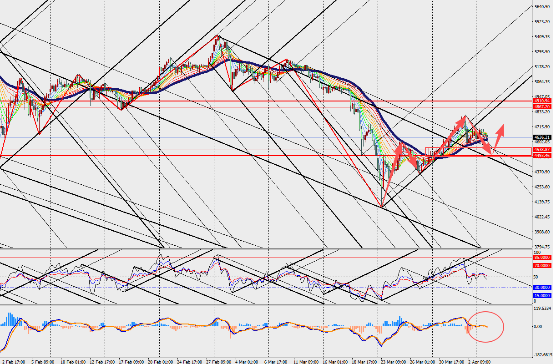
On the four-hour chart, gold is showing a gradual pullback, with MACD lines and volume bars hovering near the zero axis. Historically, geopolitical shocks tend to push gold higher in the early stages. However, if such events evolve into prolonged periods of inflation combined with growth concerns, gold’s performance may become more mixed.
In the current high-volatility environment, gold still holds long-term strategic value as part of a diversified portfolio, particularly as a hedge against currency depreciation and systemic risks.