

Crypto Today: Bitcoin, Ethereum, XRP strain to gain momentum amid broader risk-off market sentiment
- Bitcoin holds above $77,000 support but struggles to gain traction as ETFs register five consecutive days of outflows.
- Ethereum hovers above the $2,100 support level, in line with the weakening technical structure and declining risk appetite.
- XRP remains under pressure as selling continues to overwhelm steady demand through ETFs.
Cryptocurrencies broadly face headwinds on Friday, reflecting an overall reduction in investor risk appetite. Bitcoin (BTC) preserves $77,000 as a short-term support level but faces increasing pressure, limiting its recovery potential. Altcoins, including Ethereum (ETH) and Ripple (XRP), reflect the wider risk-off mood while remaining vulnerable to overhead pressure.

Bitcoin and Ethereum see outflows as XRP ETFs post inflows
Bitcoin spot Exchange-Traded Funds (ETFs) logged their fifth consecutive day of outflows totaling $101 million on Thursday, further straining the fragile recovery from early-week support around $76,000. Cumulative inflows stand at $57.19 billion, down slightly from $57.29 billion the previous day, while net assets moderated to $101.06 billion, down from $101.12 billion over the same period.
If outflows persist, Bitcoin could remain vulnerable to intense headwinds, with losses likely to extend toward the $70,000 demand area.
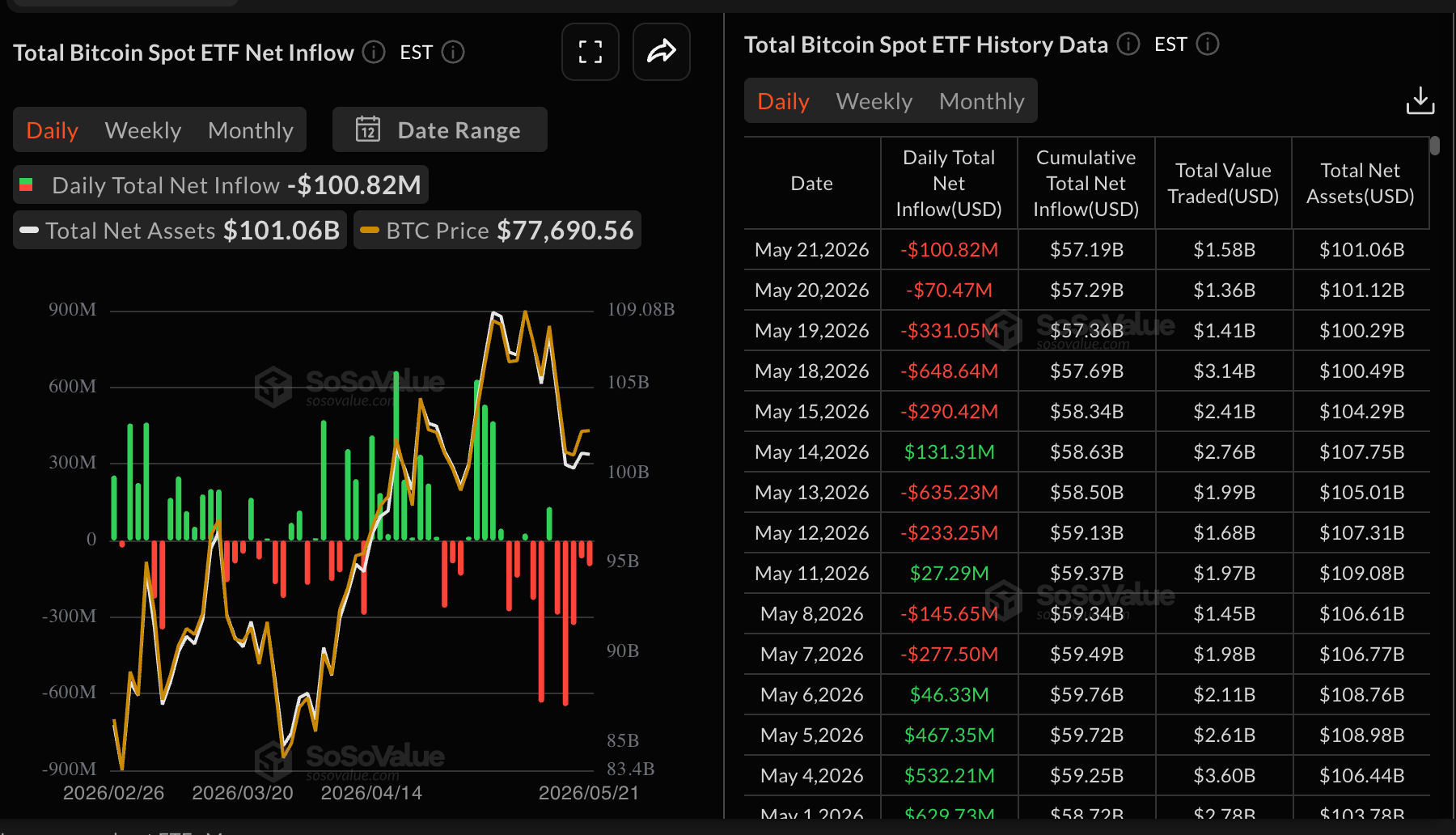
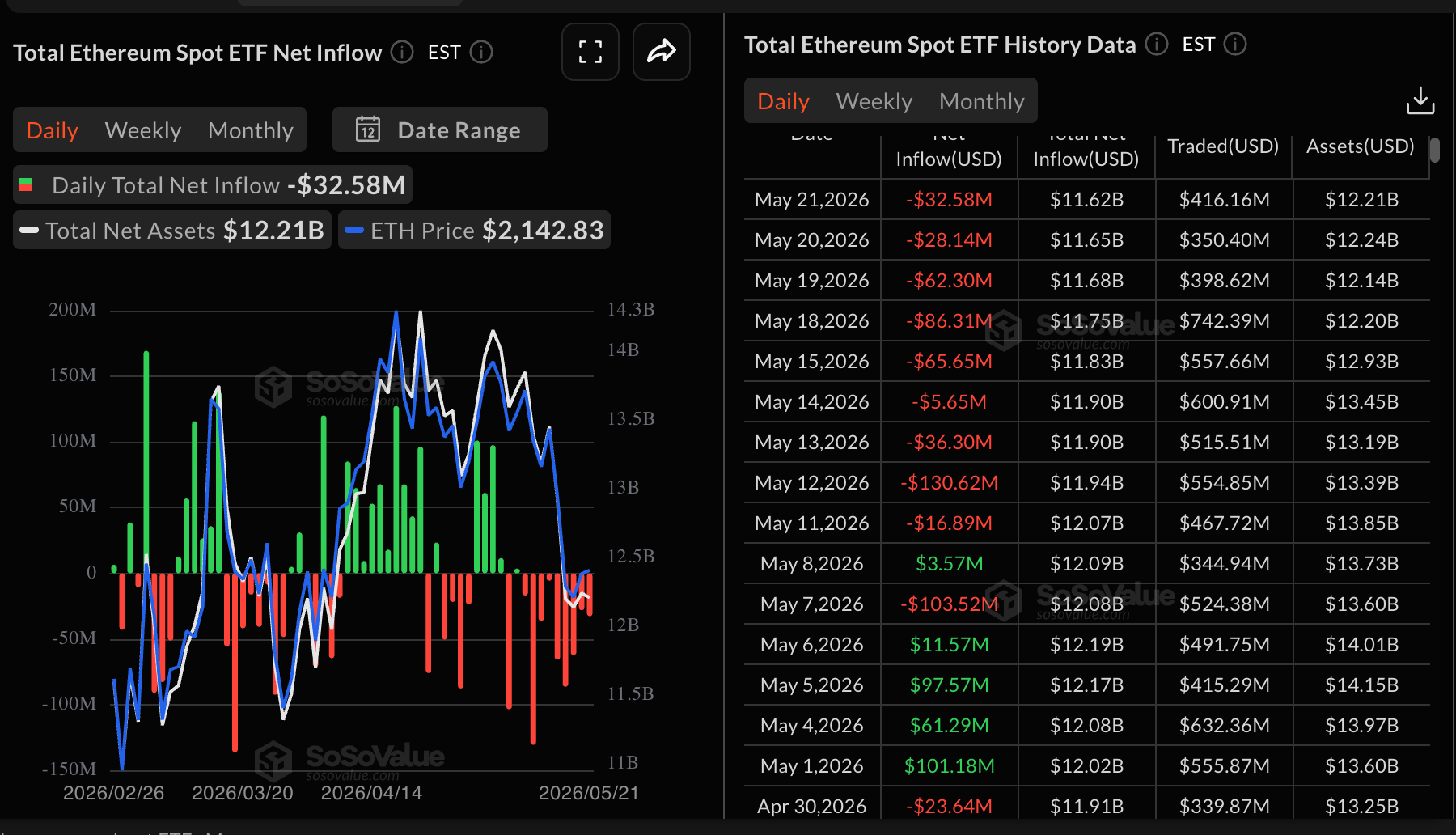
Ethereum spot ETFs continued to mirror the headwinds in the crypto market, as outflows hit a ninth consecutive day on Thursday, with institutions withdrawing roughly $33 million. Despite the outflows, cumulative inflows remain positive at $11.62 billion while net assets under management average $12.21 billion.
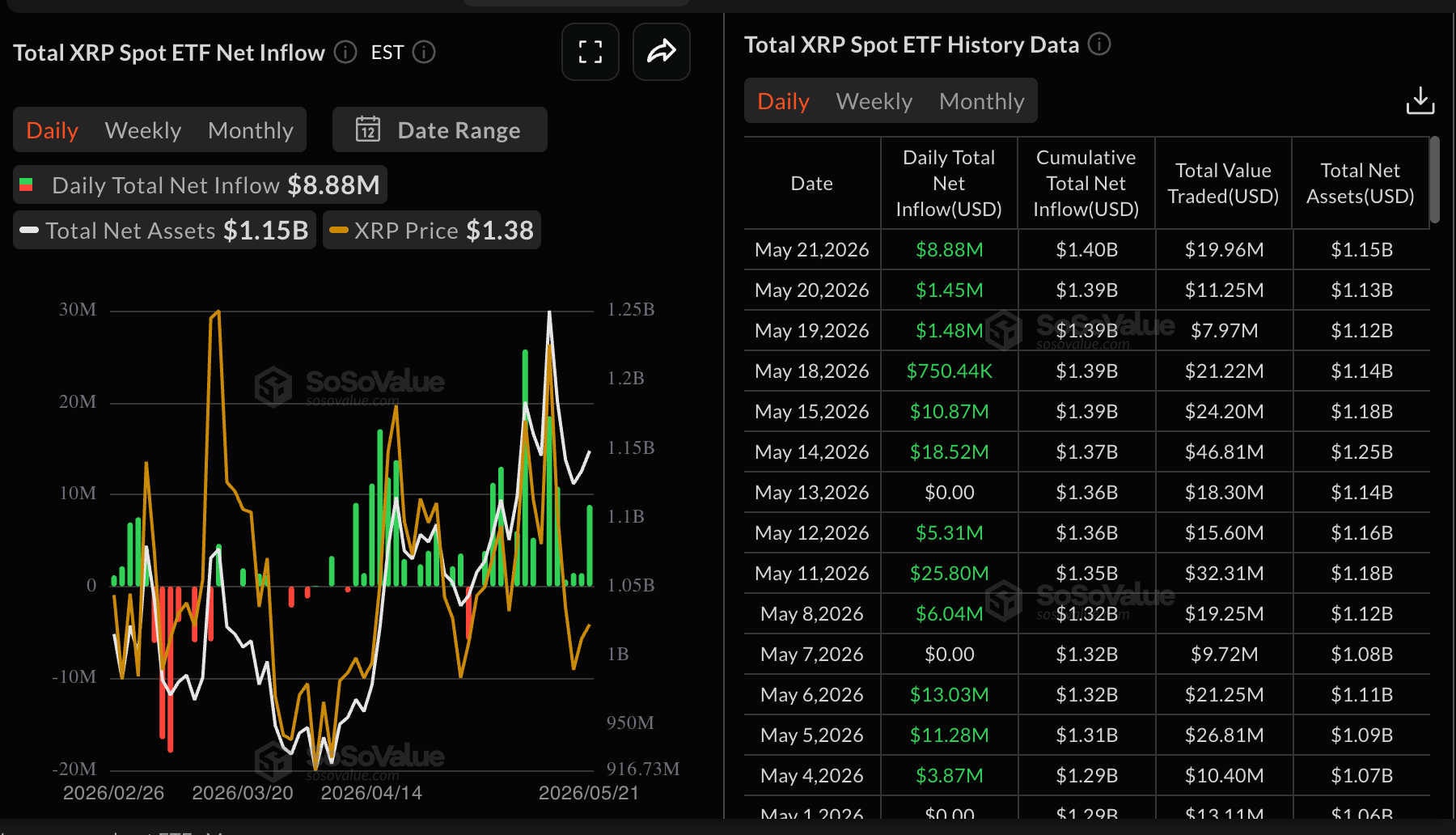
XRP spot ETFs, on the other hand, saw notable demand, with inflows rising to $8.88 million on Thursday, up from $1.45 million the previous day. SoSoValue data shows that US-listed XRP ETFs have not logged outflows in May, bringing cumulative inflows to $1.39 billion, while net assets under management average average $1.15 billion.
Price analysis: Bitcoin defends short-term support
Bitcoin trades around $77,440 while holding above the 50-day and 100-day Exponential Moving Averages (EMAs) near $76,829 and $76,906, which still lend underlying support, but it remains well below the 200-day EMA at $81,634 that caps the broader upside and keeps the near-term tone neutral to slightly bearish.
Momentum has softened, with the Relative Strength Index (RSI ) hovering just below the 50 midline on the daily chart and the Moving Average Convergence Divergence (MACD) histogram deeply in negative territory, hinting that buying pressure is waning despite price holding above medium-term trend gauges.
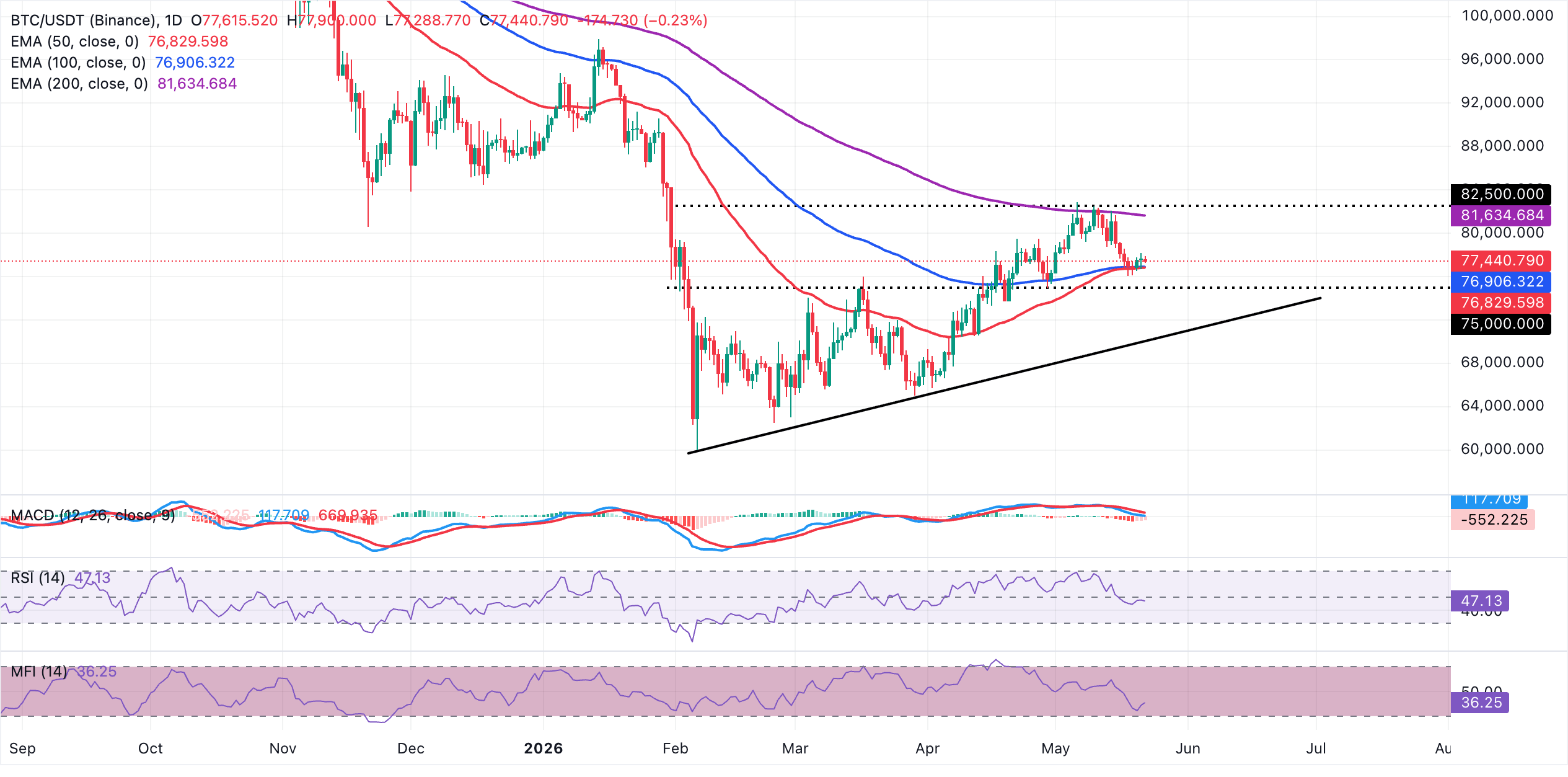
On the downside, immediate support is aligned around the 100-day EMA at $76,906, closely backed by the 50-day EMA at $76,829. A sustained break beneath this cluster would expose the next notable technical cushion around the rising trendline break area near $70,089. On the topside, the 200-day EMA at $81,632 is the key resistance to clear. As long as BTC trades beneath this longer-term average, rallies are likely to face overhead pressure rather than mark the start of a sustained bullish leg.
Altcoins technical outlook: Ethereum and XRP risk extending decline
Ethereum trades at $2,125 holding a bearish near-term bias as price sits well beneath the 50-day, 100-day and 200-day EMAs. The cluster of EMAs between roughly $2,240 and $2,550 now acts as a broad overhead supply zone, suggesting that rebounds are likely to be sold until the pair can reclaim at least the shorter averages.
Momentum indicators reinforce the heavy tone, with the Relative Strength Index (RSI) sliding in the mid-30s on the daily chart, while the MACD histogram remains negative, both hinting that downside pressure is still dominant despite intermittent bounces.
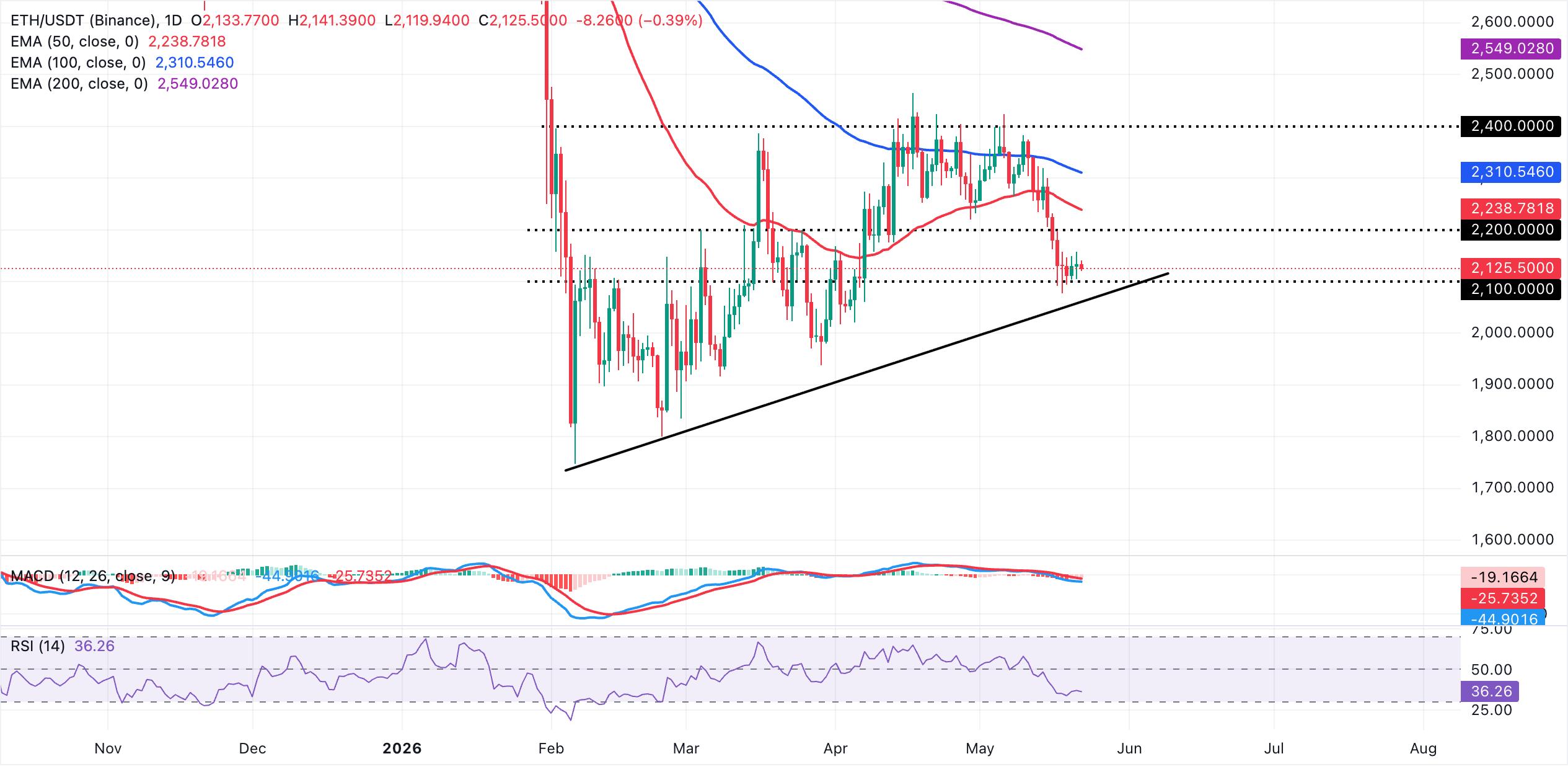
On the topside, initial resistance lies at the 50-day EMA near $2,239, followed by the 100-day EMA at about $2,311, with the 200-day EMA much higher around $2,549 acting as a broader bearish threshold for the medium-term trend. On the downside, the upward trendline region around $2,062 offers the next notable support zone. A daily close below this area would expose additional weakness and leave ETH vulnerable to a deeper retracement before any more durable base can form.
XRP, on the other hand, trades at $1.36, extending a corrective phase below its key moving averages and the ascending trendline. The pair also sits below the 50-day EMA near $1.41, the 100-day EMA at $1.48 and the 200-day EMA at $1.70, suggesting that the latest downswing is still unfolding.
Momentum indicators reinforce the cautious tone, with the RSI hovering near 42 on the daily chart and the MACD histogram holding in negative territory.
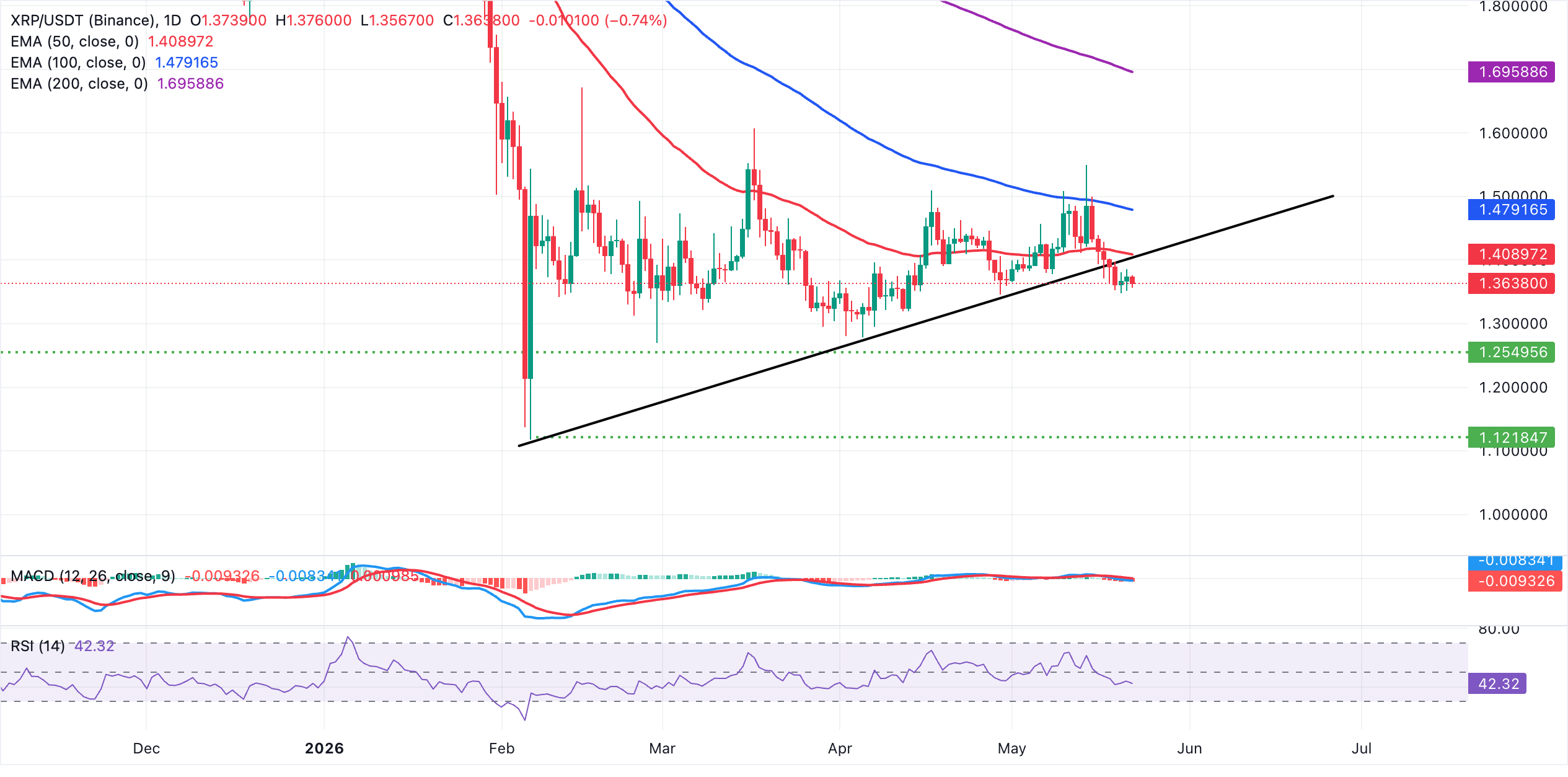
On the topside, initial resistance lies at the confluence of the broken rising trend line near $1.40 and the 50-day EMA, where a daily close above it would ease immediate downside pressure and open the way toward the 100-day EMA around $1.48. A sustained recovery beyond that level would then expose the 200-day EMA near $1.70 as a more significant medium-term barrier. If the downtrend persists, short-term demand at $1.30 could absorb the pressure but deeper losses may expose the $1.30 support area.
(The technical analysis of this story was written with the help of an AI tool.)
Crypto ETF FAQs
An Exchange-Traded Fund (ETF) is an investment vehicle or an index that tracks the price of an underlying asset. ETFs can not only track a single asset, but a group of assets and sectors. For example, a Bitcoin ETF tracks Bitcoin’s price. ETF is a tool used by investors to gain exposure to a certain asset.
Yes. The first Bitcoin futures ETF in the US was approved by the US Securities & Exchange Commission in October 2021. A total of seven Bitcoin futures ETFs have been approved, with more than 20 still waiting for the regulator’s permission. The SEC says that the cryptocurrency industry is new and subject to manipulation, which is why it has been delaying crypto-related futures ETFs for the last few years.
Yes. The SEC approved in January 2024 the listing and trading of several Bitcoin spot Exchange-Traded Funds, opening the door to institutional capital and mainstream investors to trade the main crypto currency. The decision was hailed by the industry as a game changer.
The main advantage of crypto ETFs is the possibility of gaining exposure to a cryptocurrency without ownership, reducing the risk and cost of holding the asset. Other pros are a lower learning curve and higher security for investors since ETFs take charge of securing the underlying asset holdings. As for the main drawbacks, the main one is that as an investor you can’t have direct ownership of the asset, or, as they say in crypto, “not your keys, not your coins.” Other disadvantages are higher costs associated with holding crypto since ETFs charge fees for active management. Finally, even though investing in ETFs reduces the risk of holding an asset, price swings in the underlying cryptocurrency are likely to be reflected in the investment vehicle too.














