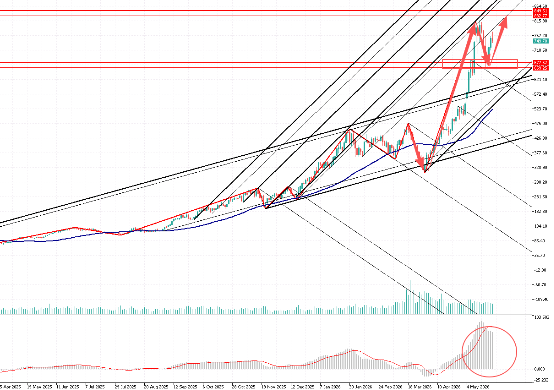
Micron Launches Advanced DRAM Mass Production in Virginia as Memory Chips Break Through the Cycle on AI Demand
Micron Technology officially launched mass production of 1α DRAM at its facility in Manassas, Virginia, marking the most advanced memory technology ever manufactured in the United States. Driven by surging demand for advanced memory solutions, the semiconductor giant — now valued at approximately US$800 billion — has delivered an astonishing 706% return over the past year.
The Manassas facility will manufacture DDR4 and LP4 memory products for automotive, defense and aerospace, industrial, networking, and medical device applications. Micron stated that its 1α technology represents the world’s most advanced DDR4 technology and will increase DDR4 wafer supply from the facility by four times. The company expects the Manassas plant to complete qualified mass-production certification for 1α DRAM by the end of 2026. The project forms part of Micron’s broader US$200 billion US investment plan, which also includes related projects in Idaho and New York.

Micron has invested more than US$2 billion into expanding and modernizing the Manassas facility, which currently supports more than 3,100 direct manufacturing and community-related jobs while also receiving various federal, state, and local government incentives. The company also broke ground earlier this January on its New York memory manufacturing mega-campus. Micron continues to expect initial wafer output from its first Idaho facility by mid-2027, while site preparation work for a second Idaho facility is already fully underway. According to the company’s press release, these projects combined are expected to create approximately 90,000 jobs.
Micron’s market capitalization is now approaching US$850 billion. Citigroup sharply raised its price target from US$425 to US$840, citing expectations that DRAM prices could surge 200% year-on-year in 2026, while HBM prices may continue rising further into 2027.
The core bullish thesis behind the memory-chip rally has become increasingly clear: AI has fundamentally rewritten the operating logic of the memory industry. Micron’s CEO warned in a recent interview that the global memory chip shortage could continue well beyond 2026, as AI demand growth still far exceeds the pace of industry capacity expansion. Even though the industry is aggressively building new fabs, the current supply-demand imbalance is viewed as a long-term structural issue rather than a traditional cyclical fluctuation. Meaningful large-scale new capacity is unlikely to arrive before 2028.
Market Analysis:
An increasing number of manufacturers are shifting their focus toward AI-specific memory products. Micron has already begun reducing its exposure to consumer memory products while reallocating resources toward the higher-margin enterprise market.
UBS forecasts that by 2027, Samsung could match SK Hynix in HBM bit shipments, with each company potentially controlling roughly 40% market share. This suggests the industry is gradually transitioning away from scale-driven cyclical competition toward technology-driven value competition.