[TMGM Financial Breakfast] Gold Has Not Lost Its Safe-Haven Role — It Is Acting as a Liquidity Tool
According to Standard Chartered, when market uncertainty surges, investors prioritize cash over returns. As a large and highly liquid asset, gold often becomes the most direct source of liquidity. Therefore, the selling of gold is essentially a financing activity rather than a signal of a bearish trend.
While selling gold to raise liquidity is not a new phenomenon, the speed of this latest correction has been significantly faster than historical averages, highlighting underlying fragility in market structure. On one hand, geopolitical conflict has triggered a sudden spike in liquidity demand, forcing capital to exit certain assets rapidly. On the other hand, the gold market had already accumulated substantial long positions prior to the correction. Data shows that short positions were at a five-year low, indicating a highly crowded bullish consensus.

Such crowded positioning creates vulnerability: once prices begin to decline, it can trigger concentrated liquidations, amplifying the sell-off and producing a cascade-like effect. Compared with macro narratives, the more decisive factor for gold at present is the potential selling pressure from ETF holdings. Standard Chartered estimates that at around $4,500 per ounce, approximately 83 tons of gold ETF holdings are already in a loss-making position; if prices fall to $4,000, that figure could expand to 268 tons. Since early 2025, total ETF positions established above $4,000 have reached 430 tons.
Currently, more than 100 tons of holdings are at risk of stop-loss triggers. If prices continue to decline, forced selling could accelerate rapidly. This suggests that short-term price action is being driven less by macro fundamentals and more by position unwinding.
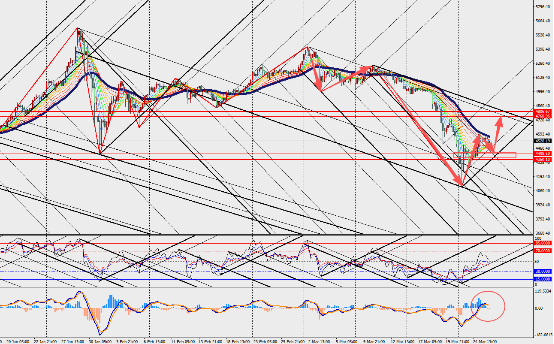
The market is still in the process of searching for a bottom. As long as liquidity pressures and position adjustments have not fully played out, prices may remain volatile or even face further downside pressure. However, despite short-term weakness, new upward momentum is beginning to build — most notably through short covering.
Data indicates that during the previous rally, short positions in the gold market declined significantly and were below the five-year average prior to the conflict. This means that once prices stabilize or rebound, existing short positions may be forced to cover, creating additional buying pressure and supporting a price recovery.
Market Interpretation:
Overall, the core issue in the gold market is not a reversal of the long-term trend, but rather a temporary mismatch in market dynamics. In the short term, liquidity demand and ETF-related selling pressure may continue to drive volatility. In the medium term, short covering could become a key driver of a rebound. From a longer-term perspective, inflation risks and geopolitical uncertainty remain the fundamental pillars supporting gold prices.