[TMGM Financial Breakfast] Progress in Geneva U.S.–Iran Talks Bearish for Gold? Yet Investors Remain Convinced Prices Will Rise
The third round of indirect U.S.–Iran negotiations by Lake Geneva has become the focal point of global financial markets. Oman’s foreign minister, acting as mediator, released an encouraging statement after the talks, announcing significant progress and plans for technical-level discussions in Vienna next week. The remarks briefly eased market tension but also tempered safe-haven demand for gold.
Iran’s negotiation strategy appears carefully calibrated. A senior Iranian official revealed that Tehran hopes Washington will separate nuclear issues from non-nuclear matters, suggesting that doing so could pave the way for a framework agreement. This stance subtly responds to the Trump administration’s previously hardline position, which insisted that Iran’s ballistic missile program and regional militia support be included in negotiations. By isolating the nuclear issue, Iran aims to lower the threshold for an initial agreement.

If negotiations achieve a substantive breakthrough, the geopolitical risk premium could shrink sharply, placing downward pressure on gold. Conversely, if talks collapse, the previously set ten- to fifteen-day deadline from the Trump administration would soon expire, and the shadow of large-scale U.S. military deployment in the Middle East could quickly ignite renewed safe-haven demand.
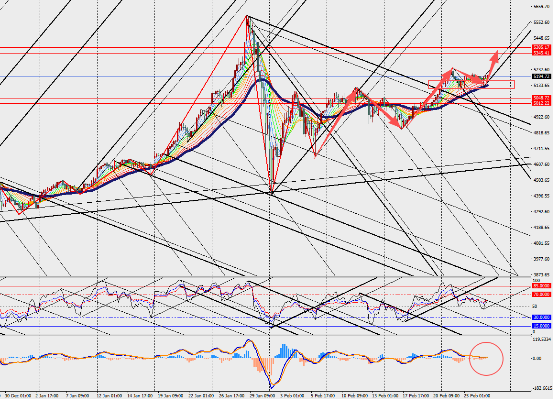
Gold is attempting to break above the $5,200 resistance level but has failed to sustain gains this week. This repeated inability to push higher reflects the absence of a decisive directional catalyst, with both bulls and bears waiting for clarity from the Geneva negotiations.
The “ten to fifteen day” ultimatum issued on February 19 hangs over markets like a sword of Damocles. The U.S. president has stated clearly that Iran must reach an agreement within the deadline or face severe consequences. Meanwhile, large-scale U.S. military deployments in the Middle East have already been completed. This strategy of combining diplomacy with military pressure has added substantial tension to the talks.
The risk of a weaker dollar remains. The narrative of American exceptionalism may fall short of market expectations. In an environment of steady global growth, relatively low interest rates, and fiscal buffers, risk assets could benefit while the dollar comes under pressure. If this macro view holds, it would provide additional support for dollar-denominated gold. Should a geopolitical agreement be reached, gold may experience a pullback; however, from a medium-term perspective, prices could still challenge the $5,700 level. This seemingly contradictory outlook highlights gold’s dual nature: it serves both as a geopolitical safe-haven asset and as a store of value against monetary easing and fiscal expansion.
Market Interpretation:
On the four-hour chart, gold is moving sideways with signs of consolidation, while MACD lines and the histogram gradually converge. Even if geopolitical easing triggers a short-term pullback, downside risks may remain limited. Expectations of Federal Reserve rate cuts, declining U.S. Treasury yields, and a medium-term weaker dollar outlook are likely to provide solid underlying support for gold.