[TMGM Financial Breakfast] Oil Pullback Provides Major Support! Gold Rebounds and Stabilizes — Is the Short-Term Correction Over?
Gold rebounded on Thursday, with the most direct catalyst coming from a dramatic reversal in the oil market. Earlier in the day, oil prices surged more than 4% after reports that Iran’s Supreme Leader Mojtaba Khamenei had ordered that enriched uranium must not be transferred abroad. This hardline stance dealt a blow to market hopes for a quick resolution to the conflict and triggered a fresh wave of safe-haven sentiment.
However, uncertainty surrounding the outlook for US-Iran negotiations eventually began weighing on oil prices instead. For gold, the decline in oil prices created a dual effect. On one hand, falling oil prices eased some inflation concerns, reducing market bets on aggressive Federal Reserve rate hikes. On the other hand, lower oil prices also weakened short-term demand for gold as an inflation hedge.

The decline in oil prices, combined with the US dollar retreating from a six-week high, should theoretically support gold in the short term — and gold prices did indeed strengthen accordingly. However, markets initially remained cautious, given that previous negotiation breakdowns have left investors wary.
If falling oil prices served as the trigger for gold’s stabilization, then the simultaneous pullback in both the US Dollar Index and Treasury yields provided concrete support beneath gold prices. A weaker dollar means gold priced in US dollars becomes cheaper for investors holding other currencies, directly supporting demand for the precious metal.
At the same time, US Treasury yields finally found some relief after a sharp wave of selling pressure. The 30-year Treasury yield fell roughly 2 basis points to 5.096%, retreating from Tuesday’s peak of 5.197% — the highest level since July 2007 before the global financial crisis. The decline in yields directly reduces the opportunity cost of holding non-yielding assets such as gold, improving gold’s attractiveness for investors.
The future direction of Federal Reserve monetary policy remains a critical variable that cannot be ignored. According to the CME FedWatch tool, markets now estimate a 58% probability that the Federal Reserve will raise interest rates at least once before the end of 2026, up significantly from 48% the previous day. The underlying driver remains the persistent inflationary pressure caused by the ongoing conflict.
Market Analysis:
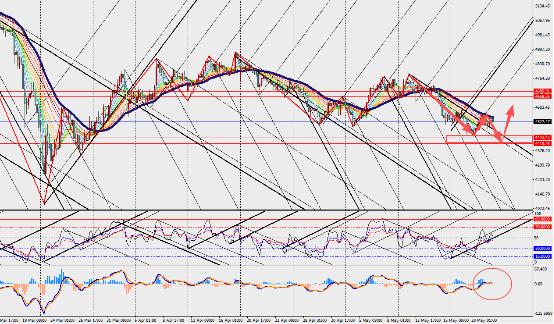
Gold rebounded and then pulled back on the 4-hour chart timeframe, while both the MACD lines and histogram continue fluctuating near the zero axis. For gold investors, the coming days and weeks will be critically important. Whether US-Iran negotiations ultimately move toward a meaningful breakthrough or collapse once again will directly determine the next direction for oil prices, which will then feed into the gold market through three major channels: inflation expectations, the monetary policy path, and safe-haven sentiment.