Gold Weekly Forecast: Sell-off intensifies, putting the $4,000 handle at risk
- Gold extended its losing streak into a fourth consecutive week.
- Focus shifts to the US economic calendar, which will feature June employment data.
- The near-term technical outlook remains bearish and doesn't highlight oversold conditions.
Gold (XAU/USD) edged higher to start the week before turning south and plunging to its lowest level since November, below $4,000. Although the precious metal managed to find a foothold, it struggled to stage a decisive rebound and ended the week deep in negative territory. June employment data from the United States (US) will be the next critical data release for XAU/USD, while the technical outlook suggests that the bearish bias remains intact.

Gold remains under bearish pressure on hawkish Fed bets, risk-aversion
News of Iran and the US making “encouraging progress” in the latest round of negotiations and agreeing on a roadmap for a final deal to be reached within 60 days, even though Iranian negotiators reportedly ended the talks early in response to US President Donald Trump’s threats to hit them “very hard again,” helped Gold start the week on a bullish note.
After rising about 0.9% on Monday, XAU/USD turned south and registered large losses as the US Dollar (USD) benefited from upbeat economic data. S&P Global Manufacturing Purchasing Managers’ Index (PMI) improved to 55.7 in June’s flash estimate, and the Services PMI rose to 51.3. Both of these prints came in better than analysts’ estimates and showed that the business activity in the private sector continued to expand at an accelerated pace. In the meantime, the USD also benefited from heavy selling pressure surrounding technology shares and forced the pair to stretch lower.
Meanwhile, the US and Iran offered conflicting accounts about the nuclear discussions, reviving uncertainty in the Middle East. While President Trump insisted that Iran agreed to the highest level of inspections, Iran claimed that they hadn't discussed any details on the nuclear issues in the latest round of talks.
As markets continued to price in a strengthening chance of a Federal Reserve (Fed) rate hike as early as September, the USD preserved its strength midweek and triggered another leg lower in XAU/USD. Following Tuesday’s slide, Gold lost more than 2.5% on Wednesday and touched its lowest level since November below $4,000.
On Thursday, the US Bureau of Economic Analysis (BEA) reported that the Personal Consumption Expenditures (PCE) Price Index rose 4.1% on a yearly basis in May. This reading followed the 3.8% increase recorded in April and came in line with the market expectation. The core PCE Price Index, which excludes volatile food and energy prices, rose 3.4% YoY, as anticipated, while the PCE Price Index and the core PCE Price Index rose 0.4% and 0.3% on a monthly basis, respectively. The USD retreated slightly following the PCE inflation report and Wall Street’s main indexes recovered slightly. In turn, Gold recovered back above $4,000 and closed the day in positive territory.
Nonetheless, the cautious market stance capped Gold’s upside in the first half of the day on Friday as investors reacted to sharp declines seen in major Asian equity indexes. Surging chip costs and inflation fears prompted investors to reassess the sustainability of the AI-driven tech rally. South Korea's KOSPI lost about 8% on the day Japan's Nikkei 225 Index fell about 4%. Heading toward the weekend, the USD extended its downward correction and allowed XAU/USD to edge higher toward $4,100.
Gold investors await US employment data
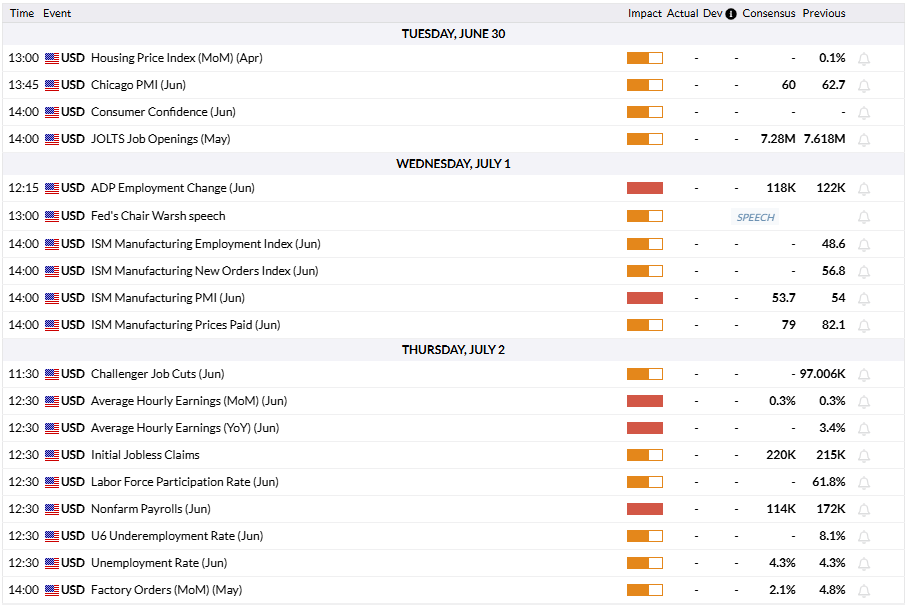
The US Bureau of Labor Statistics will publish the employment report on Thursday. Nonfarm Payrolls (NFP) have risen more than expected for three consecutive months and reaffirmed healthy conditions in the labor market. In this period, the Unemployment Rate remained stable at 4.3%.
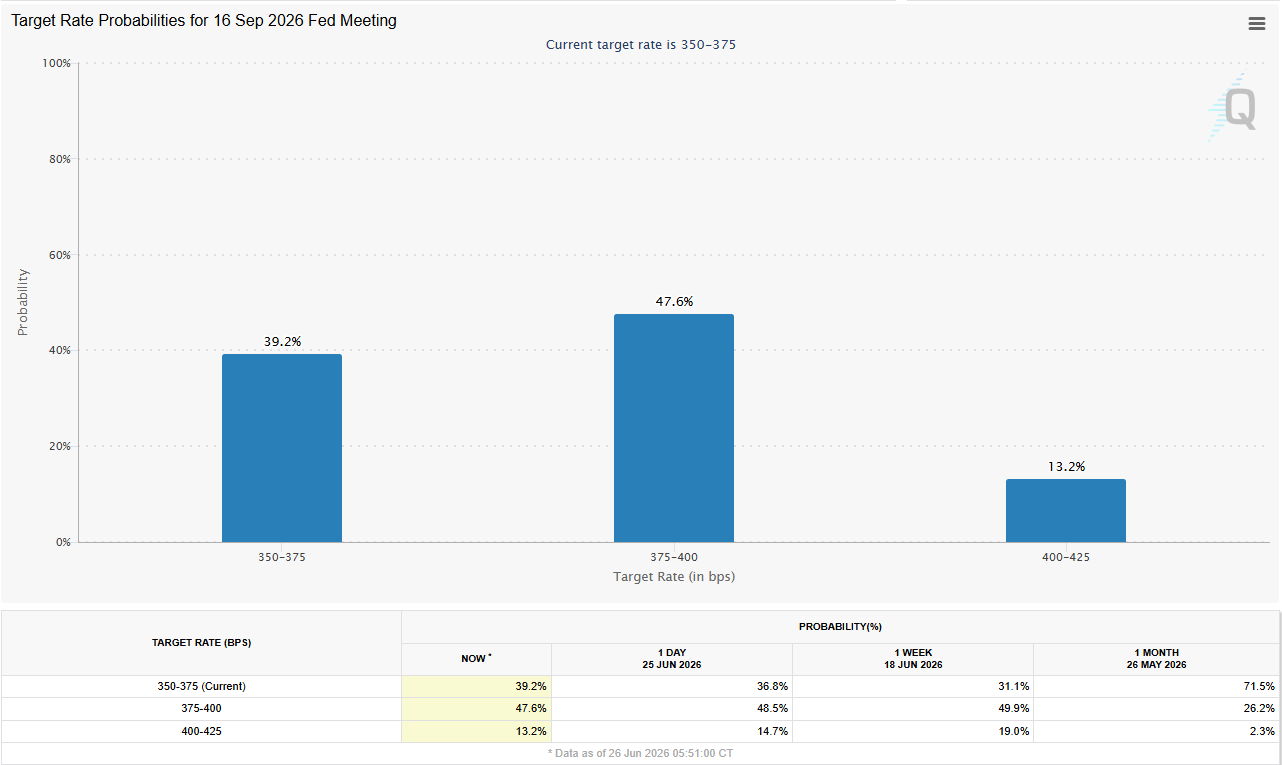
According to the CME FedWatch Tool, markets are currently pricing in about a 60% probability that the Fed will raise the policy rate by at least 25 basis points (bps) by September. A disappointing NFP print of 60K or lower could cause investors to shift their expectations toward a delayed rate cut in October or December. In this scenario, Gold could gather recovery momentum with the immediate reaction. However, a bullish tilt in the underlying trend could be hard to come by in the short term unless there are convincing signs of disinflation starting again.
Conversely, another strong NFP reading near 100K could feed into September rate hike expectations and allow the USD to continue to gather strength. In this case, Gold is likely to remain within the downtrend.
OCBC’s FX strategists Sim Moh Siong and Christopher Wong noted that they have recently raised their USD forecasts and explained:
“A stronger USD is not yet disruptive. The key risk is continued US growth outperformance versus the rest of the world, alongside policy divergence, which could keep funding costs elevated and support the USD."
"This should keep hawkish Fed risks in play, especially as price stability sits at the core of its reaction function. With reduced forward guidance, each inflation, labour and growth release will carry greater weight, likely increasing FX volatility,” they added.
On this note, comments from Fed officials will also be scrutinized by market participants in the near term. In case policymakers emphasize the need for tighter monetary policy in the near term, or argue in favor of frontloading a rate hike in response to inflation moving further away from their target, the USD could continue to outperform its major rivals and weigh on XAU/USD. On the other hand, Gold could show signs of life if Fed officials push back against rate hike expectations until toward the end of the year.
Gold technical analysis: Short-term outlook remains bearish
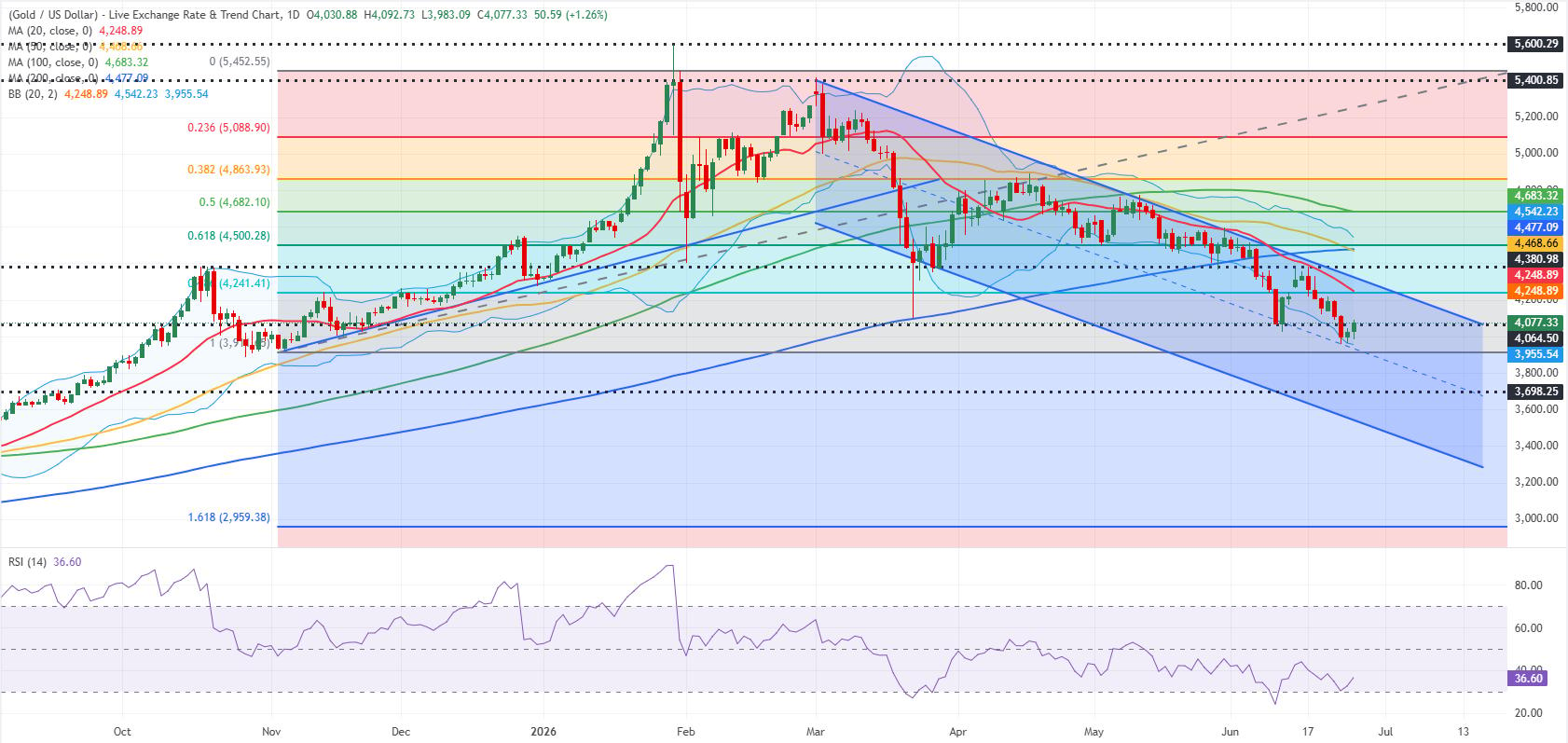
Gold remains within a nearly three-month old downtrend and the Relative Strength Index (RSI) indicator on the daily chart stays below 40 after testing the 30 mark earlier in the week. This technical setup, along with the fact that the price holds above the lower Bollinger Band, suggests that the outlook remains bearish and doesn’t yet flag oversold conditions.
On the downside, a key support area seems to have formed at $3,915-$3,900 (static level, mid-point of the downtrending channel, round level). If Gold drops below this region and starts using it as resistance, $3,800 (static level, round level) could be seen as the next potential support level before $3,700 (static level, round level).
Looking north, the immediate resistance could be spotted at $4,240-$4,250 (Fibonacci 78.6% retracement level, 20-day SMA) ahead of $4,380 (static level) and $4,475-$4,500 (200-day SMA, Fibonacci 61.8% retracement, round level).