

UK CPI data set to show a temporary inflation respite in April, providing leeway to BoE
- The annual UK headline inflation is seen easing in April despite an uptick in monthly inflation.
- The UK CPI data might provide some leeway for the BoE to keep interest rates unchanged in June.
- Bearish pressure on the Pound Sterling persists, and a higher-than-expected inflation reading could intensify it.
The United Kingdom (UK) Office for National Statistics (ONS) will publish the high-impact Consumer Price Index (CPI) data for March at 06:00 GMT.
With inflation pressure high on the agenda of the central banks, April’s CPI will be analysed by the market from a monetary policy perspective, providing further insight about the Bank of England’s (BoE) next steps. In that sense, any relevant deviation from the market consensus is likely to boost near-term volatility for the British Pound (GBP).

What to expect from the next UK inflation report?
The UK Consumer Price Index is expected to show that inflation softened to 3% year-over-year (YoY) in April, from the 3.3% level seen in March, although the monthly CPI growth is seen ticking up to 0.9% from 0.7% in the previous month.
The Ofgem energy price cap, which was lowered ahead of the Iran war, seems to have cushioned the impact of the energy shock, while the unwinding of the Easter effect in prices has contributed to taming inflationary pressures.
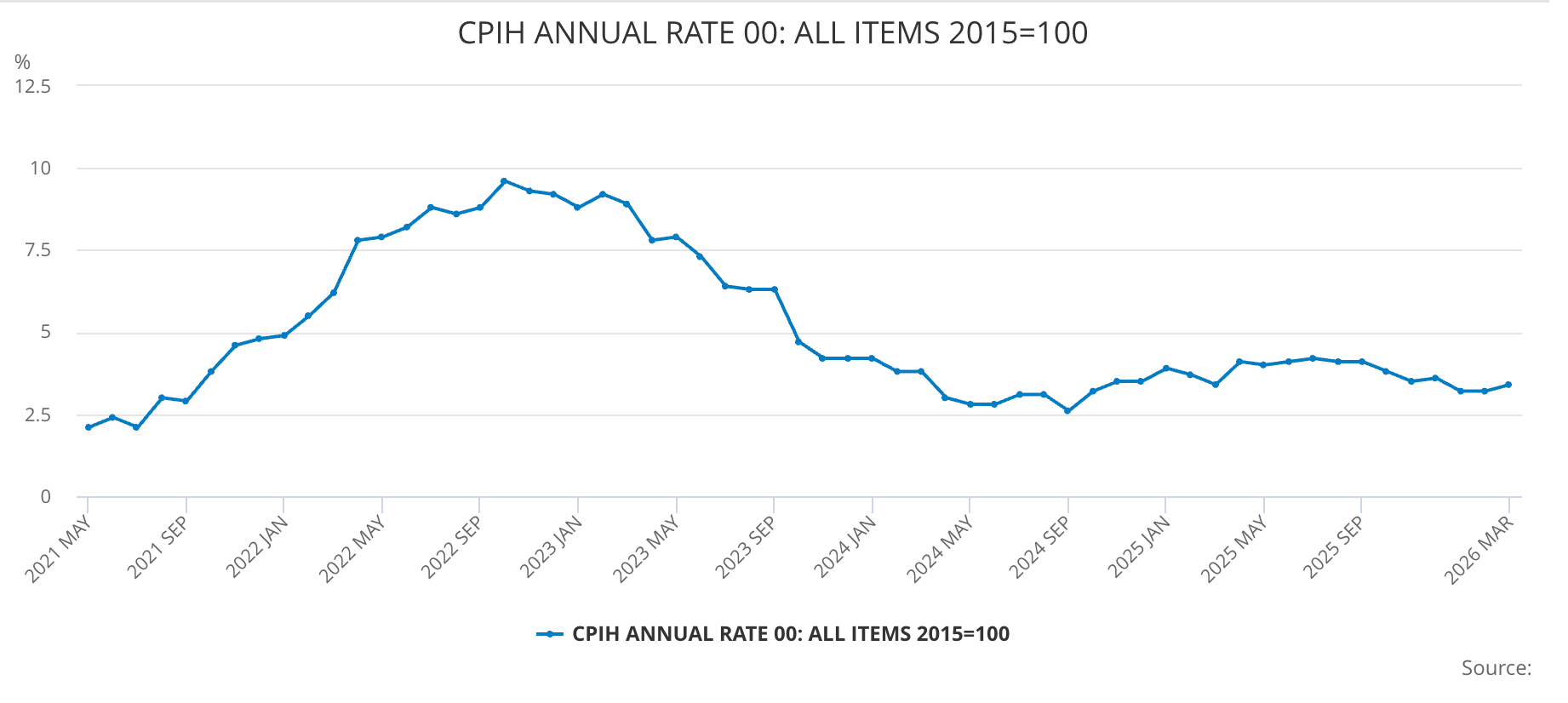
The Core CPI, which excludes energy, food, alcohol, and tobacco prices, is expected to show that price growth from all other goods slowed down to 2.6% YoY in April, the coolest rate since July 2021, contributing to the softer CPI numbers.
Together with consumer Inflation, the Office for National Statistics will also release April’s Producer Price Index (PPI) figures, which are expected to follow suit. The PPI Input is forecast to slow down to 1% from 4.4% in March, while the PPI Output is seen ticking up to a 1% yearly rate, from 0.9% in March.
The cooling inflation, if confirmed, is likely to ease pressures on the BoE to hike interest rates immediately, which will be good news considering the increasing unemployment figures released on Tuesday. The trend, however, is unlikely to be long-lasting. Ofgem will revise the energy price cap in July, triggering a significant increase in energy bills, which is likely to be reflected in the headline CPI. The Bank of England expects consumer inflation to peak at 4% later this year.
“Though temporarily comforting, the brunt of the energy price shock will then be felt in Q3 with a potential for second-round effects in the latter half of the year,” said analysts at TD Securities.
How will the UK Consumer Price Index report affect GBP/USD?
Inflation is a key issue for the BoE’s monetary policy and, in that sense, tends to have a significant impact on the British Pound. The GBP, however, is suffering from weaknesses of its own in May, amid the growing political uncertainty after the Labour Party’s debacle in the local elections, and is likely to act as a headwind for bulls.
Bearing that in mind, a soft inflation reading might provide some support to the Pound, as it would give the BoE more time to await domestic developments and to better assess the impact of the Middle East conflict before taking any decision on interest rates. BoE Deputy Governor for Financial Stability, Sarah Breeden, warned on Monday that “political uncertainty is hitting the business environment” and advised the bank against being “trigger happy” on rates.
An upside surprise on inflation, on the contrary, would put the BoE in a challenging situation, and might increase bearish pressure on the Pound in this case.
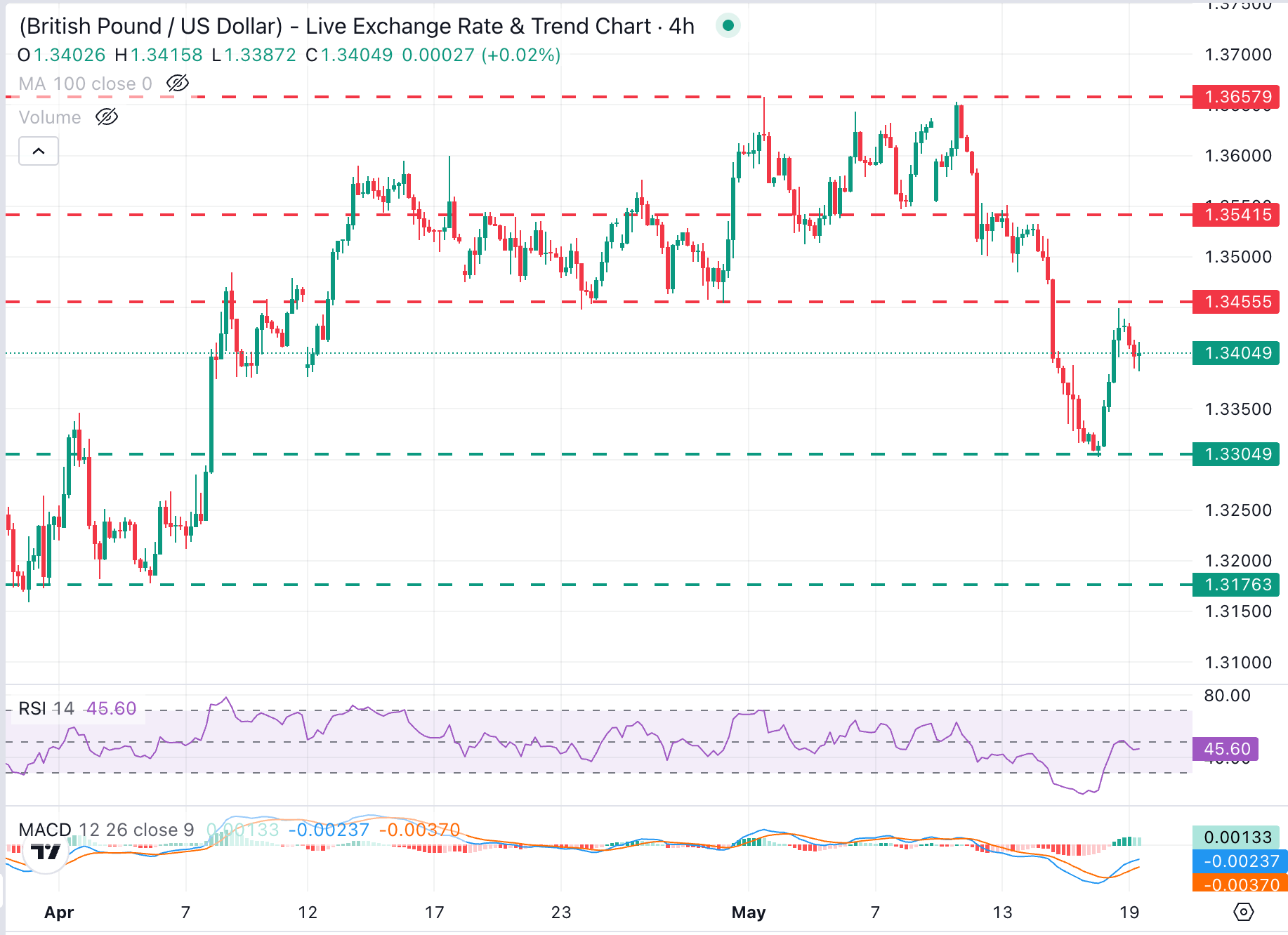
From a technical perspective, Guillermo Alcala, FX Analyst at FXStreet, sees the Pound on the defensive after last week’s sell-off: “The GBP’s near-term bias remains bearish even after Monday’s bullish engulfing candle in the daily chart has eased negative pressure. Bulls, however, seem to need additional impulse to break a previous support level at 1.3450 and shift the focus towards the mid-May highs in the 1.3530-1.3540 area.”
“On the downside, key support is at Monday’s lows at around 1.3305. A confirmation below that level would expose late March and early April highs in the area of 1.3175,” adds Alcalá.
Economic Indicator
Consumer Price Index (YoY)
The United Kingdom (UK) Consumer Price Index (CPI), released by the Office for National Statistics on a monthly basis, is a measure of consumer price inflation – the rate at which the prices of goods and services bought by households rise or fall – produced to international standards. It is the inflation measure used in the government’s target. The YoY reading compares prices in the reference month to a year earlier. Generally, a high reading is seen as bullish for the Pound Sterling (GBP), while a low reading is seen as bearish.
Read more.Next release: Wed May 20, 2026 06:00
Frequency: Monthly
Consensus: 3%
Previous: 3.3%
Source: Office for National Statistics
The Bank of England is tasked with keeping inflation, as measured by the headline Consumer Price Index (CPI) at around 2%, giving the monthly release its importance. An increase in inflation implies a quicker and sooner increase of interest rates or the reduction of bond-buying by the BOE, which means squeezing the supply of pounds. Conversely, a drop in the pace of price rises indicates looser monetary policy. A higher-than-expected result tends to be GBP bullish.
Economic Indicator
Core Consumer Price Index (YoY)
The United Kingdom (UK) Core Consumer Price Index (CPI), released by the Office for National Statistics on a monthly basis, is a measure of consumer price inflation – the rate at which the prices of goods and services bought by households rise or fall – produced to international standards. The YoY reading compares prices in the reference month to a year earlier. Core CPI excludes the volatile components of food, energy, alcohol and tobacco. The Core CPI is a key indicator to measure inflation and changes in purchasing trends. Generally, a high reading is seen as bullish for the Pound Sterling (GBP), while a low reading is seen as bearish.
Read more.Next release: Wed May 20, 2026 06:00
Frequency: Monthly
Consensus: 2.6%
Previous: 3.1%
Source: Office for National Statistics
The Bank of England is tasked with keeping inflation, as measured by the headline Consumer Price Index (CPI) at around 2%, giving the monthly release its importance. An increase in inflation implies a quicker and sooner increase of interest rates or the reduction of bond-buying by the BOE, which means squeezing the supply of pounds. Conversely, a drop in the pace of price rises indicates looser monetary policy. A higher-than-expected result tends to be GBP bullish.














