
News & AnalysisCareer

A deal with Iran was not needed by the US, President Donald Trump said in one of several posts on Truth Social on Thursday. He also said in that post that he had asked Vice President JD Vance to concentrate on what he characterised as widespread crime and corruption across Democratic-led cities and states.
Before Trump’s comments, The Wall Street Journal had reported that Vance was considering meeting senior Iranian security official Mohsen Rezaei in person to seek an end to the war. Discussions remained at a preliminary stage, with no date agreed.
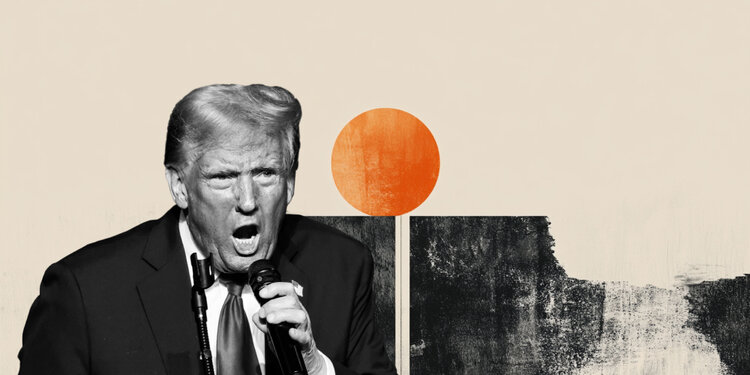
Trump sets out his position on Truth Social
I have asked Vice President Vance to focus his complete and total attention on the Massive Corruption and Crime taking place in Democrat run Cities and States throughout the U.S. The Blue States, such as Minnesota, California, Illinois, and many more, are all poorly run, corrupt disasters. Billions of Dollars is being stolen each and every month. Our Budget could be quickly BALANCED with the correction of this large scale criminal activity. CORRUPTION is in the Democrat Leadership’s blood! We don’t need a deal with Iran. Those days have long since passed. We’ve got their money, Hundreds of Billions of Dollars, and we’ve got their Strait! Thank you for your attention to this matter. President DJT
A gain of more than 1% on the day took West Texas Intermediate (WTI) to around $86.40 a barrel, as oil recovered its earlier losses following Trump’s comments.
Investors’ willingness to accept risk over a given period is commonly described in financial markets using the terms “risk-on” and “risk-off”. Optimism about the outlook characterises a “risk-on” market, encouraging investors to purchase riskier assets. By contrast, concerns about the future prompt a more cautious approach in a “risk-off” market. Investors then favour lower-risk assets that offer greater certainty of a return, even if that return is relatively modest.
A favourable growth outlook generally lifts equities and most commodities, apart from gold, during “risk-on” periods. Stronger demand also supports the currencies of major commodity-exporting nations, while cryptocurrencies tend to advance. When markets turn “risk-off”, bonds typically rise, particularly those issued by major governments. Gold performs well too, alongside safe-haven currencies including the Japanese yen, Swiss franc and US dollar.
During “risk-on” trading, gains are commonly seen in the Australian dollar (AUD), Canadian dollar (CAD) and New Zealand dollar (NZD), as well as minor currencies such as the rouble (RUB) and South African rand (ZAR). Growth in these economies depends heavily on commodity exports. Commodity prices generally strengthen when risk appetite improves, as investors anticipate that increased economic activity will generate greater future demand for raw materials.
Periods of “risk-off” trading typically support three major currencies: the US dollar (USD), Japanese yen (JPY) and Swiss franc (CHF). The dollar benefits from its role as the world’s reserve currency and from investors buying US government debt during crises. That debt is regarded as safe because the world’s largest economy is considered unlikely to default. For the yen, support comes from stronger demand for Japanese government bonds: a high proportion of these bonds are owned by domestic investors who are unlikely to sell them off, even during a crisis. Meanwhile, the Swiss franc benefits from strict Swiss banking laws that provide investors with greater protection for their capital.










The information provided on this website is of a general nature only and does not constitute personal financial advice. Before acting on any information on this website, you should consider the suitability of the information in relation to your objectives, financial situation and needs. Investing in CFDs and FX Margin Contracts carries significant risks and is not suitable for all investors. You may lose more than your initial deposit. You do not own, or have, any interest in the underlying asset. We recommend that you seek independent advice and ensure you fully understand the risks involved before trading. It is important that you read and consider the disclosure document before you acquire any product listed on the website. The information and advertisements offered on this website are not intended for use by any person in any country or jurisdiction where such use would be contrary to local laws and regulations. The Products and Services offered on this website are not intended for residents of the United States, Malaysia and Thailand.
TMGM is authorized and regulated in various jurisdictions.
Trademax Australia Limited, trading as TMGM, is regulated by the Australian Securities and Investments Commission (ASIC), AFSL no. 436416 and is located at Level 28, One International Tower, 100 Barangaroo Avenue, 2000 Sydney, NSW Australia.
Email: support@tmgm.com.au
Trademax Global Limited, trading as TMGM, is authorized and regulated by the Vanuatu Financial Services Commission (VFSC), registration number 40356 and registered at 1276, Kumul Highway, Port Vila, Vanuatu, Republic of Vanuatu.
Email: support@tmgm.com
Trademax Global Markets (SE) Limited, trading as TMGM, is authorized and regulated by the Financial Services Authority (FSA) of Seychelles, with license number SD224. The company is registered at Office No 13, Providence Estate ABIS Centre, Mahe, Seychelles.
Email: support@tmgm.com
Trademax Global Markets (International) Pty Ltd, trading as TMGM, is authorized and regulated by the Financial Services Commission, Mauritius (FSC) with license no. GB22201012, and registered at 33, Edith Cavell Street C/o IQ EQ Fund Services (Mauritius) Ltd Port Louis, 11324 Mauritius.
Email: support@tmgm.com
Copyright © TMGM. All rights reserved


