Micron Delivers Explosive Earnings, Defies Memory Cycle Narrative as Q3 Outlook Surges
Micron reported adjusted earnings per share of $12.20 for the second fiscal quarter, far exceeding analysts’ expectations of $8.79. Revenue surged to $23.86 billion, beating forecasts of $19.19 billion. Operating cash flow climbed to $11.9 billion, reflecting strong pricing power and robust demand. The board also approved a 3x0% increase in the quarterly dividend.
This strong outlook is driven by tight supply in the memory market and rising prices, primarily supported by demand from data centers and AI-related workloads. Industry pricing trends remain firm, with DRAM and NAND prices expected to rise significantly this year, backed by hyperscaler spending and enterprise demand.

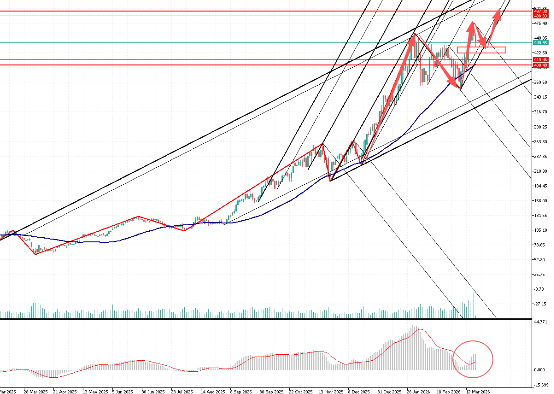
Recent pricing data suggests further upside potential. DRAM spot prices have risen sharply since the beginning of the year and are trading above contract prices, indicating continued upward momentum. Micron’s stock has surged 358% over the past year, fueled by the rapid upswing in memory pricing and demand, while supply remains constrained despite increased industry investment.
The AI boom is the key driver behind Micron’s performance surge. Demand for Nvidia GPUs continues to soar, and each new generation of chips requires more memory, tightening supply for both DRAM and NAND. To meet demand, Micron is actively expanding capacity, while competitors Samsung Electronics and SK Hynix are also ramping up production.
From a business segment perspective, Micron’s cloud memory revenue grew over 160% year-over-year to $7.75 billion. Growth in mobile and PC client segments was even more pronounced, with revenue rising from $2.24 billion to $7.71 billion compared to the same period last year.
Micron noted that as AI technology advances, computing architectures will become increasingly memory-intensive. The company believes it will be one of the biggest beneficiaries and enablers of the AI wave. Its HBM4 products for Nvidia’s Vera Rubin architecture GPUs have already entered mass production in the current fiscal first quarter, while next-generation HBM4e is expected to scale shipments starting in 2027.
Market Interpretation:
Micron expects to significantly increase capital expenditures in fiscal 2027, with more than $10 billion in additional investment related to fab construction to support growing AI-driven memory demand. In the AI era, memory has become a strategic asset for customers, and Micron is investing in its global manufacturing footprint to meet sustained demand growth, reflecting strong confidence in its long-term business outlook.