[TMGM Financial Breakfast] Rate Hike Expectations Surge — Gold Faces a Critical Test
On Thursday, gold prices came under pressure as elevated oil prices intensified inflation concerns, pushing up expectations that the Federal Reserve could raise interest rates within the year. At the same time, investors are closely monitoring developments regarding any potential de-escalation in the Middle East.
A growing market narrative is gaining traction: conflict leads to inflation, inflation forces central banks to respond, and this ultimately results in higher interest rates.
Mitsubishi UFJ Financial Group noted that since the outbreak of the conflict, gold prices have declined by about 15%. The primary driver has been rising energy prices, which have lifted inflation expectations, reduced the likelihood of rate cuts, and increased the probability of tighter monetary policy. In addition, continued ETF outflows have weighed on market sentiment, leaving gold caught between geopolitical uncertainty and shifting macroeconomic expectations.

Amid concerns that a prolonged Middle East conflict could further disrupt energy supply, crude oil prices have climbed back above $100 per barrel. Higher oil prices typically fuel inflation. While rising inflation would normally enhance gold’s appeal as a safe-haven asset, higher interest rates reduce demand for non-yielding assets such as gold.
According to CME Group’s FedWatch tool, markets are now pricing in a roughly 30% probability of a rate hike by December, while the likelihood of rate cuts has fallen to nearly zero. Before the conflict began, markets had expected at least two rate cuts this year.
U.S. President Donald Trump stated that Iran is eager to reach an agreement to end the nearly four-week conflict. However, this claim contradicts remarks from Iran’s foreign minister, who said Iran is reviewing a U.S. proposal but has no intention of entering negotiations aimed at ending the conflict.
Over the next 48 hours, gold prices are likely to be driven almost entirely by headlines related to negotiations. A more decisive market move could emerge early next week, depending on whether the United States proceeds with potential ground operations against Iran over the weekend. Trump warned that if Tehran does not accept that it has been militarly defeated, the U.S. will launch even more severe attacks.
Market Interpretation:
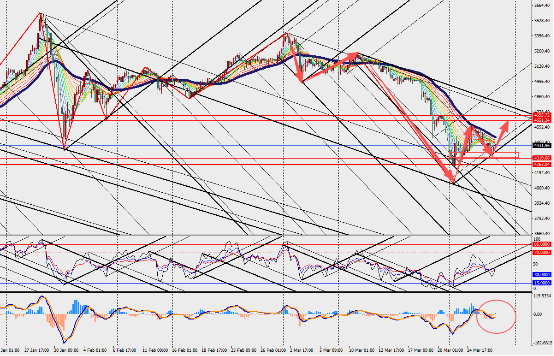
On the 4-hour chart, gold is showing a rebound after a decline, with MACD lines and volume bars converging below the zero line. If U.S. Treasury yields rise further and oil prices surge again—particularly if negotiations between the U.S. and Iran collapse—gold may continue to face downside pressure. Gold remains highly sensitive to Middle East diplomatic developments, geopolitical tensions, and their impact on monetary policy expectations.