

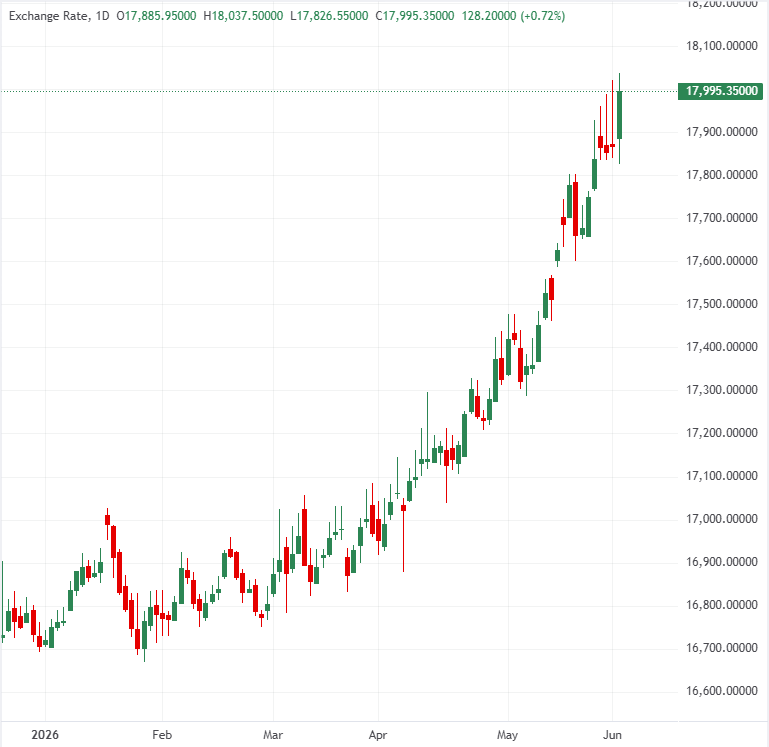
18,000 in sight: Why the Indonesian Rupiah is heading for fresh historic lows despite hefty rate hike
The Indonesian Rupiah (IDR) continues to face severe downward pressure as a combination of domestic policy uncertainty and a hostile global environment dampens sentiment toward the Asian currency. Despite aggressive defensive measures from Bank Indonesia (BI), including a surprise 50-basis-point interest rate hike in May, structural concerns regarding fiscal discipline and equity market transparency persist.
Coupled with potential rating downgrades, major financial institutions are revising downward their expectations for the Rupiah against the US Dollar.

Fiscal concerns and potential index downgrades trigger steep forecast revisions
Analysts at DBS Group Research have adjusted their outlook, forecasting a much weaker path for the Rupiah through the end of 2026. They point out that despite Bank Indonesia’s efforts to support the currency, persistent woes over credit rating downgrades and an ongoing MSCI review into the country's market status continue to drive capital away, pushing the USD/IDR cross to historic highs.
We have revised our forecasts for USD/IDR, now projecting to end 2026 slightly above 18,000, up from our previous estimate of 16,500.
External energy shocks dilute central bank intervention
Strategists at OCBC note that the impact of Bank Indonesia’s recent aggressive tightening has been severely undermined by shifting regulatory decisions at home and macroeconomic pressures abroad. Elevated global Oil prices and rising yields in developed markets are hitting oil-importing Asian economies particularly hard, making an immediate turnaround for the high-beta currency highly unlikely without external relief.
Further BI tightening may help anchor sentiment, but a durable IDR recovery likely requires clearer domestic policy signals and relief from oil, geopolitics and global yields.
Banks point to vulnerable outlook for the Rupiah
The banks project a bearish and highly vulnerable trend for the Indonesian Rupiah. DBS Group Research predicts a continued depreciation for the currency, expecting the USD/IDR pair at 18,000 by the close of 2026. Supporting this weak outlook, OCBC has also revised its forecasts, concluding that the Rupiah will remain heavily suppressed until the market receives clearer domestic policy signals and a reprieve from global yields and elevated energy costs.
(This article was created with the help of an Artificial Intelligence tool and reviewed by an editor.)














