

Many crypto firms are going bankrupt again – Should traders be worried?
The recent bankruptcy of crypto lender BlockFills is reviving painful memories for the crypto industry. A growing number of insolvencies in recent months increases the risk of a broader contagion across a market that is still recovering from the latest sharp correction. Are the next dominoes already lining up for another black swan event?
Crypto markets have been around for more than a decade and have seen many ups and downs. The most important thing that traders should observe in these volatile markets with few regulations and watchdogs is the prevalence of bankruptcy.

We have seen many bankruptcy cases in the past, and the trend has usually occurred during and early in bear market cycles. The key question this time is whether only isolated firms will fail, or whether this wave signals the early stages of a broader contagion cycle similar to what followed the collapses of Terra and FTX.
Why is bankruptcy a concern for crypto investors?
Crypto markets are liquidity-driven. If a bankruptcy occurs, liquidity is drained from the market, leading to a downward spiral that hurts crypto markets the most. Given that cryptocurrencies are a relatively new asset class with growing acceptance and a very recent regulatory framework, the prospect of bankruptcy tends to quickly spark fear and undermine market acceptance.
These young ecosystem is highly interconnected, so a failure in one sector can easily trigger a domino effect. This type of chain reaction was seen during the Tera Luna collapse in 2022, when Three Arrows Capital, a hedge fund, suffered massive losses, followed by defaults on loans to Celsius, Voyager, BlockFi, and Genesis.
A similar chain reaction was seen with FTX, which was exposed via Alameda Research, hurting cryptos like Solana, which were heavily exposed on its balance sheet.
Heavy leverage in crypto is another key factor explaining the big swings, as it fuels liquidations and accelerates every sell-off.
Some warning signs are popping up in 2026
The overall crypto market has wiped out 42% of its value, almost $2 trillion in market cap, since its October highs. This downfall has come along with a fresh wave of bankruptcies that is difficult to ignore.
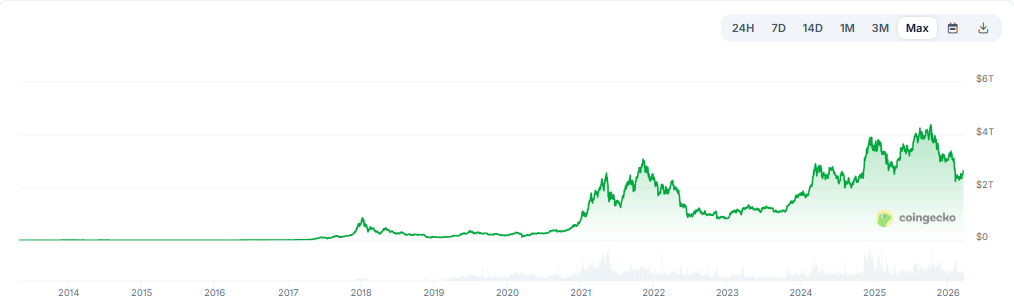
The most recent and prominent case is that of Chicago-based crypto lender BlockFills, which filed for Chapter 11 bankruptcy following weeks of turmoil. According to the filing, the company reported estimated assets of $50 million to $100 million and estimated liabilities of $100 million to $500 million, underscoring the scale of its financial distress.
This bankrupcty adds to a list that gets longer: DappRadar (shut down last November due to unsustainable costs and weak revenue), NFN8 Group (Bitcoin miner that was bankrupt after a fire at one of its main facilities), BitRiver (Russia’s largest mining operator is on the verge of bankruptcy) or Archblock (a crypto startup filing for banruptcy after being plagued with legal issues).
This wave of insolvencies could be exacerbated if the crypto market correction resumes. In that sense, the risk of further downside for Bitcoin remains elevated despite its modest rebound in recent weeks.
If this scenario unfolds, financial stress across the crypto ecosystem could intensify into 2026 and early 2027. Smaller Decentralized Autonomous Organizations (DAOs) and low-market-cap startups are likely to be the first to face insolvency, but if the wave is big, it could extend to larger platforms and even hedge funds.
Such developments are serious and should be closely monitored by traders in 2026 as this sequence suggests deepening structural fragility in the market and could act as a time bomb. The question now isn’t if more firms will fall, but how deep this domino effect could go.














