[TMGM Financial Breakfast] Gold Rebounds After Ceasefire Draft Agreement — Is the Next Move a Further Decline or a Major Reversal?
Gold has recovered from recent lows but continues to trade within a range-bound and relatively weak trend. The primary driver behind the rebound is market speculation that the United States and Iran are moving toward extending their ceasefire agreement and lifting shipping restrictions through the Strait of Hormuz. However, the agreement has yet to be finalized, leaving markets caught between easing safe-haven demand and expectations that interest rates will remain elevated.
The U.S.-Iran conflict has continued for three months since breaking out on February 28, with repeated retaliatory attacks contributing to tensions across global energy supply chains. The latest reports indicate that both sides reached a draft agreement on Thursday to extend the ceasefire by 60 days and restore normal navigation through the Strait of Hormuz. The strategic waterway handles roughly one-fifth of global oil and liquefied natural gas shipments. The draft agreement also calls for the United States to lift its blockade on Iranian ports and ease certain restrictions on Iranian oil exports. If implemented, it would represent the most significant step toward peace since the conflict began.

Both sides have previously come close to reaching agreements only to see negotiations break down due to unresolved differences, highlighting the fragile nature of the talks. Recent developments, including reports that U.S. Central Command shot down Iranian drones and struck a ground control station in Bandar Abbas, further underscore the challenges involved in enforcing any ceasefire arrangement.
The expected restoration of shipping activity through the Strait of Hormuz is easing concerns over energy supply bottlenecks. This outlook has pushed oil prices down by more than 1%, marking their largest weekly decline since early April. Daily vessel traffic through the strait has fallen by 88% since the first strikes on February 28. Should normal operations resume, the risk premium embedded in global energy markets could decline significantly.
U.S. inflation accelerated in April at its fastest pace in three years, largely driven by higher energy prices. Elevated energy costs have reinforced market expectations that the Federal Reserve will keep interest rates high into next year, with some analysts even suggesting the possibility of further rate hikes before year-end. As a non-yielding asset, gold typically faces pressure in a high-interest-rate environment because holding costs rise while the U.S. dollar becomes more attractive.
At the same time, lower oil prices may provide indirect support for gold through the inflation transmission mechanism. UBS noted that gold and oil prices generally maintain a negative correlation, as oil influences inflation and monetary policy expectations. Lower oil prices reduce the likelihood of additional rate hikes, which is supportive for gold. If shipping through the Strait of Hormuz is fully restored, energy-driven inflation pressures could ease substantially, reducing the need for further monetary tightening and offering medium-term relief for the precious metal.
Market Analysis:
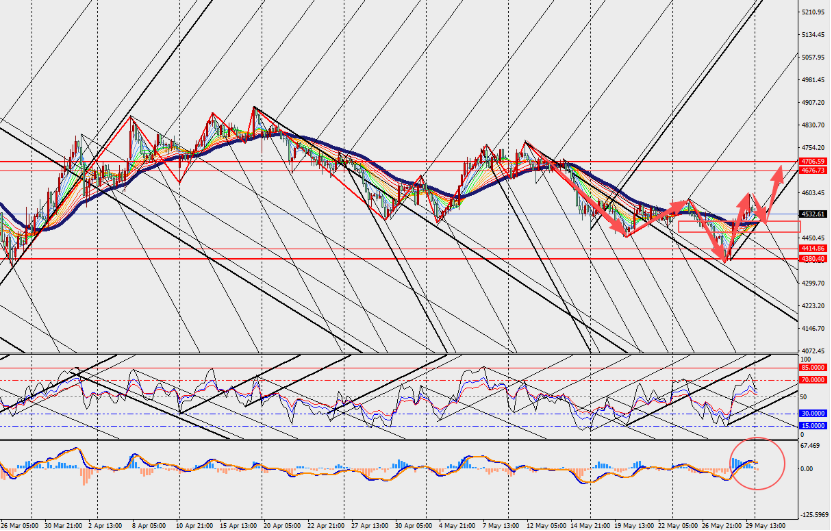
Gold remains in a corrective consolidation phase on the four-hour chart, while MACD lines and histogram bars continue to expand above the zero line. In the short term, spot gold is being influenced by declining oil prices, while its medium-term direction will depend on the evolution of inflation trends and interest-rate expectations. The impact of elevated interest rates on non-yielding assets remains the dominant theme, but the cushioning effect of lower energy prices should not be overlooked. Global markets exhibited clear consolidation patterns throughout May, with investors weighing multiple macroeconomic variables. Under current conditions, gold's role as a traditional safe-haven asset requires ongoing assessment alongside evolving economic data and monetary policy expectations.